
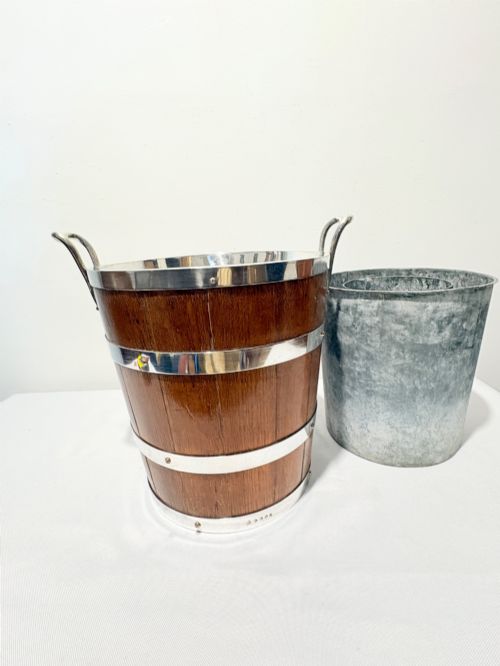


Vintage Silver Bottle Cooler
A vintage silver bottle cooler holds wine or champagne at the table, bringing heavy plate and polished metal from the Edwardian period to the mid-century into your home.

Vintage Silver Bottle Cooler
A vintage silver bottle cooler is a practical vessel designed to chill wine or champagne, appearing on this page in forms ranging from single-bottle buckets to large multiple bottle coasters and planters. You will most frequently encounter silver-plated examples produced by major European and British makers during periods such as the Edwardian era, the Art Deco years, and the mid-century.
These pieces serve equally well as functional dining accessories or decorative interior objects. Whether you select a French bistro bucket or a substantial English magnum bucket, each item reflects the prevailing metalwork aesthetics of its decade.
Materials and construction
The primary material across these pieces is silver plate, often applied over a base metal foundation to create a durable, reflective surface suitable for cooling wine. Certain items incorporate contrasting elements such as solid oak alongside the silver plate, combining wood and metal in traditional formats.
Manufacturing techniques range from heavy embossing and chasing seen in earlier Victorian and Edwardian pieces to the clean, geometric lines typical of Art Deco and mid-century modern production. Makers utilised specialised plating methods to ensure the metal could withstand frequent contact with ice and moisture at the table.
The selection spans multiple decades, featuring silver plate, copper, and oak across styles from Edwardian embossing to mid-century modernism.
Distinctions in quality
Quality in these coolers is defined by the weight of the metal and the clarity of the maker's mark or stamp. Substantial gauge silver plate and robust construction distinguish high-end workshop pieces from lighter commercial items.
The refinement of surface decoration, such as deep embossing or precise Art Deco geometric shaping, separates standard vessels from masterworks by renowned houses like Christofle, Ercuis, or James Dixon & Sons.
Christofle·Ercuis·James Dixon And Sons·Luc Lanel·Lino Sabatini
The Vintage Silver Bottle Cooler Glossary
- Silver Plate
- A thin layer of pure silver bonded to a base metal core such as copper or nickel brass. This technique allowed makers to produce large, decorative vessels at a lower cost than solid silver.
- Old Sheffield Plate
- An early method of fusing a sheet of silver to a copper ingot before rolling them into sheets together. This process creates a distinct appearance where the underlying copper occasionally shows through areas of wear.
- Magnum Bucket
- A larger vessel specifically proportioned to hold magnum-sized bottles of champagne or wine. These pieces require heavier gauge metal to support the increased weight of ice and liquid.
- Wine Coaster
- A small, flat-bottomed tray or basket designed to hold a wine bottle on the dining table. They frequently feature wooden bases with silver-plated rims to protect table surfaces from condensation.
Vintage Silver Bottle Cooler: Frequently Asked Questions
How do I clean a silver plated cooler?
Wash the interior with warm soapy water and dry thoroughly after use to prevent moisture damage. Use a gentle silver polish specifically formulated for plated items to maintain the exterior shine without removing the plating.
Avoid abrasive cloths or harsh chemical dips that can strip the silver layer from the base metal. Regular, gentle dusting is preferable to heavy polishing for daily maintenance.
Can I use these coolers for daily dining?
These vessels are built from robust metal and silver plate designed for holding ice and chilled bottles. They transition easily from formal dinner parties to casual gatherings.
Take care to dry the interior after holding melting ice to prevent water spotting. Placing a soft pad underneath the cooler protects both your dining table and the base of the metal.
How do I identify an Art Deco cooler?
Art Deco coolers typically feature geometric shapes, stepped rims, and streamlined handles that reflect 1920s and 1940s modernism. They often bear maker marks from Parisian houses associated with this period.
Unlike heavily embossed Victorian pieces, Art Deco designs rely on clean planes and functional elegance. The metalwork focuses on smooth reflective surfaces rather than ornate floral chasing.
What is the difference between a bucket and a coaster?
A bucket is deep and cylindrical, designed to hold a bottle surrounded by ice for active chilling. A coaster is shallow and wide, meant to hold a single bottle stationary on the table surface.
Coasters frequently incorporate wooden bases and low rims, whereas buckets possess vertical walls and handles. Both serve wine functions but occupy different roles during a meal.