





Silver Metal Champagne Bucket
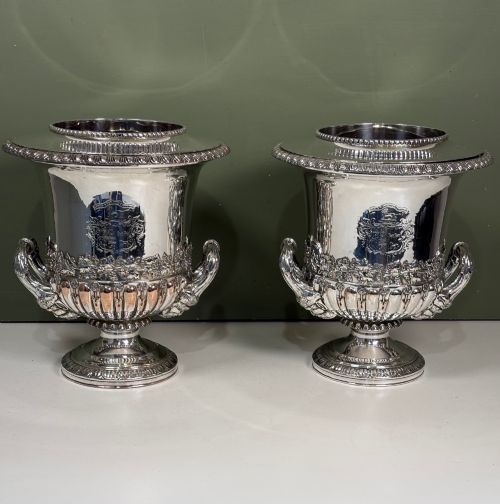
A silver metal champagne bucket brings a proper sense of occasion to the table, and these pieces span the nineteenth century through to the mid-twentieth century.

Silver Metal Champagne Bucket
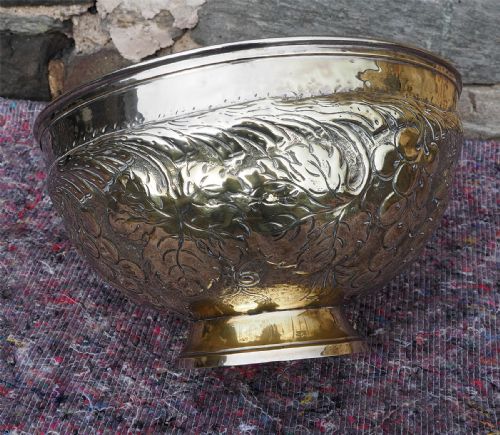
A silver metal champagne bucket takes several distinct forms across the periods, appearing most frequently as wine coolers, ice buckets, and champagne coolers. Buyers searching for a silver metal champagne bucket will encounter items ranging from nineteenth-century punch bowls and old Sheffield plated vessels to robust twentieth-century examples.
The selection on this page draws heavily from French bistro styles, Art Deco designs, and Victorian rococo revival pieces. Makers and manufacturers such as Christofle, WMF, and Elkington dominate the heavier plated and metal forms seen here.
Vessels emerge from varied domestic and commercial contexts, including Parisian restaurants and private dining rooms. The overarching purpose remains the chilling of wine and champagne for the table, uniting forms that span pewter, base metal, silver plate, and chrome.
What varies in quality
Quality rests upon the weight of the underlying metal, the crispness of the chased or embossed detail, and the integrity of the plating. Substantial gauge metal provides structural solidity and thermal retention.
The distinction between standard commercial plating and fine old Sheffield plate or maker-marked Christofle items marks the upper tier of the range. Maker attribution and designer involvement, such as the work of Luc Lanel, elevate certain vessels significantly.
Materials represented include silver plate, Sheffield plate, pewter, copper, base metal, chrome, and glass.
Christofle·WMF·Elkington·Luc Lanel
The Silver Metal Champagne Bucket Glossary
- Sheffield Plate
- A fused composite of silver and copper produced by heating the metals together before rolling them into sheets. This technique predates modern electroplating and leaves a characteristic copper edge where the layers meet.
- Silver Plate
- A thin layer of silver bonded to a base metal core such as brass, copper, or nickel silver. The process became widespread in the nineteenth century through electroplating methods developed by firms like Elkington.
- Art Deco
- A design style of the 1920s and 1930s characterised by streamlined geometric forms, symmetry, and machine-age modernity. Pieces from this era often utilise chrome or simplified silver-plated surfaces.
- Art Nouveau
- An international style of the late nineteenth and early twentieth century inspired by natural forms, featuring sinuous plant tendrils, flower heads, and asymmetrical lines.
- Pewter
- A malleable metal alloy consisting primarily of tin, combined with copper and antimony. It produces a subdued, tactile finish often seen in functional vessels originating from European bistros and taverns.
Silver Metal Champagne Bucket: Frequently Asked Questions
How do I clean a silver plated bucket?
Use a soft cloth and a dedicated silver cream designed for plated items to maintain the surface without removing the thin layer of precious metal.
Avoid abrasive pads or harsh chemical dips that strip the plating and expose the underlying base metal.
Can these buckets be used for daily dining?
These vessels were engineered for heavy hospitality and domestic use, making them durable enough for regular service.
Ensure the interior is dried thoroughly after use to prevent moisture damage or tarnishing.
What is the difference between old Sheffield plate and silver plate?
Old Sheffield plate is physically fused by heating a layer of silver to a copper ingot before rolling, creating a distinct sandwich effect.
Standard silver plate involves depositing a layer of silver onto a base metal via an electrical current.
How do I identify an Art Deco piece?
Look for clean geometric lines, streamlined bodies, and a total absence of floral or natural ornamentation.
Materials like chrome and stark cylindrical forms often indicate a 1930s provenance.