


Vintage Shop Display Unit
These vintage shop display units are commercial survivors from past centuries, offering robust storage and display space for modern interiors.
Vintage Shop Display Unit
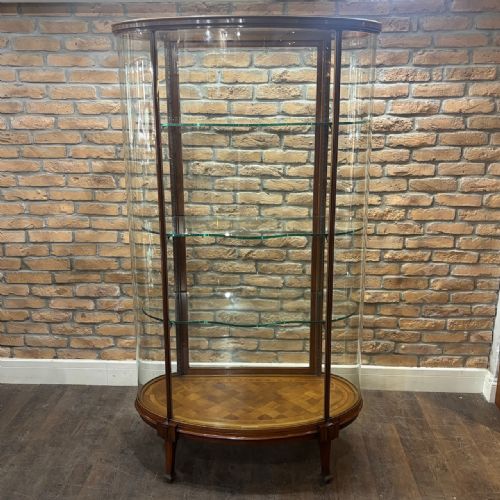
A vintage shop display unit serves as a functional storage or display piece originally designed for commercial retail environments. Buyers searching this phrase encounter various forms, most commonly haberdashery counters, bank of drawers, and glass-fronted cabinets.
The selection ranges from Victorian chemist shop fittings and Edwardian oak cabinets to 1930s French bookcases and Art Deco sewing units. These pieces originate from commercial contexts such as draper shops and paint merchants, translating commercial utility into domestic furniture.
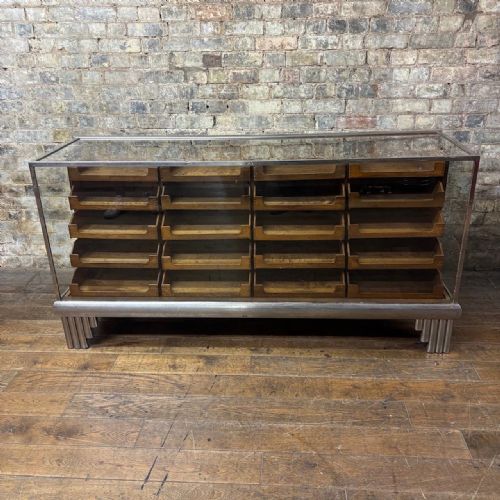
Wooden counters and multi-drawer units dominate the current offerings, often retaining original glazing, brass hardware, or painted finishes. Each piece reflects the specific trade requirements of its original era, from small countertop needle cabinets to massive multi-drawer storage blocks.
Materials and construction methods
Construction relies heavily on durable hardwoods like mahogany, oak, and walnut, alongside utilitarian softwoods such as pine. Cabinet makers paired these sturdy timbers with glass panes, brass frames, and cast iron or chrome elements to withstand heavy daily retail use.
Joinery techniques focus on longevity and practical utility, evident in multi-drawer banks and stacking modular bookcases. Original painted finishes, brass-framed glass counters, and specialised hardware indicate high-grade commercial fabrication.
Listings feature pieces spanning the Victorian era, Edwardian period, and the 1930s, constructed from oak, mahogany, pine, brass, and glass.
Evaluating construction and originality
Quality separates based on the integrity of the original materials and the preservation of utilitarian hardware. Finer examples retain their original glass, brass framing, and functional drawer pulls without extensive replacement parts.
The presence of maker signatures, specialised commercial branding, or untouched period paint surfaces elevates the standing of a piece. Robust timber construction and smooth operation in multi-drawer units distinguish superior commercial craftsmanship.
F. Sage & Co·Dudley & Co·Saml. Elliott & Sons
The Vintage Shop Display Unit Glossary
- Haberdashery cabinet
- A specialised multi-drawer storage unit with glass fronts or trays, originally used in drapery shops for selling small sewing goods and ribbons. These pieces are prized by collectors for their compartmentalized storage.
- Chemist shop fitting
- Heavy-duty pharmacy and apothecary cabinetry featuring numerous small drawers and shelving, constructed for organising medicinal ingredients. They typically display robust timber frames and historic labeling.
- Shop counter
- A substantial commercial display and service table, often fitted with glass display panels on top and storage drawers or shelving facing the shopkeeper. These form the centrepiece of many retail-inspired interiors.
- Display stand
- An elevated or vertical framework utilising brass, iron, or wood to showcase merchandise in a retail setting. They offer compact vertical storage while maximising visibility.
Vintage Shop Display Unit: Frequently Asked Questions
What is a vintage shop display unit?
A vintage shop display unit is a piece of commercial furniture salvaged from retail environments, designed to store and exhibit goods.
These items range from multi-drawer haberdashery counters to glass-fronted cabinets originating from Victorian and 20th-century shops.
How were haberdashery cabinets used?
Haberdashery cabinets were utilised in drapery and sewing shops to keep small items like threads, buttons, and ribbons organised and visible to customers.
Shop assistants pulled out shallow glass-topped drawers to display stock without handling the items directly.
How do I style a shop display unit at home?
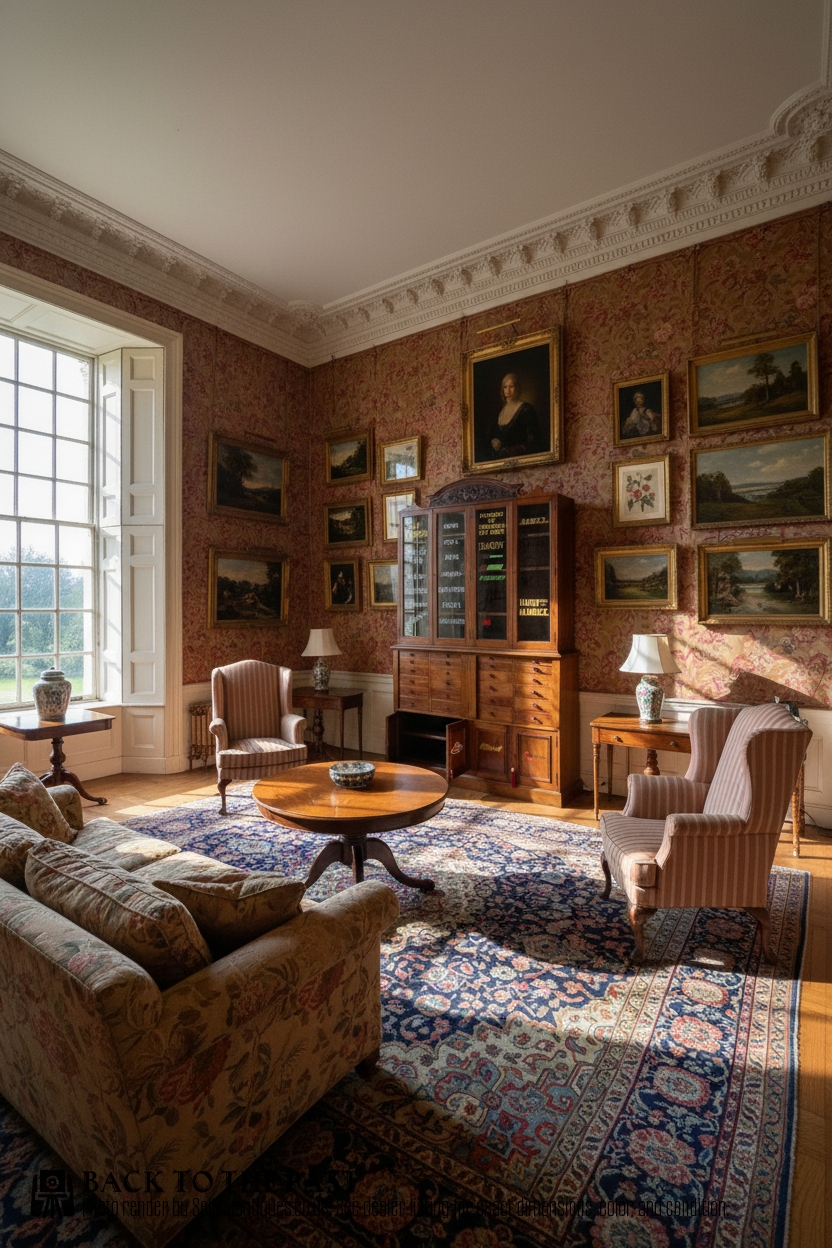
These units work well in kitchens, studies, or living rooms to store tableware, collections, or books while providing a clear view of the contents.
Glass-fronted cabinets and drawer banks bring industrial and commercial character into domestic spaces.
How do I date a shop display unit?
Dating relies on identifying materials, hardware styles, and construction methods characteristic of periods like the Victorian era, Edwardian period, or the 1930s.
Maker plaques, brass framing details, and original paint finishes also help determine the era of manufacture.