



Shop Fitting Drawers Cabinet
Shop fitting drawers cabinet pieces are multi-drawer units built for commercial trade, offering deep storage and period character for modern interiors.
Shop Fitting Drawers Cabinet
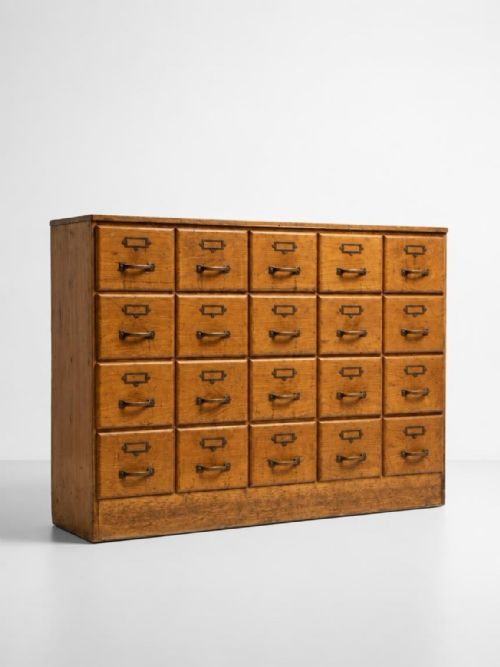
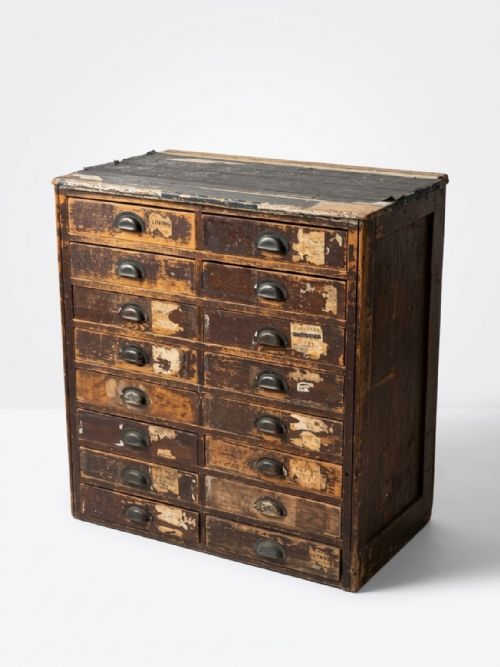
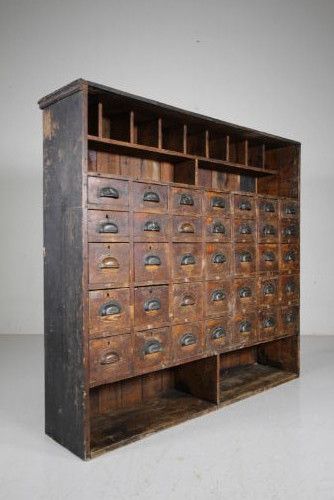
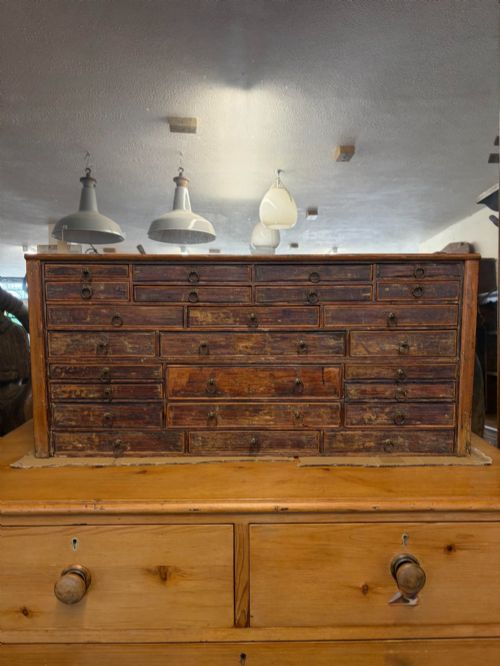
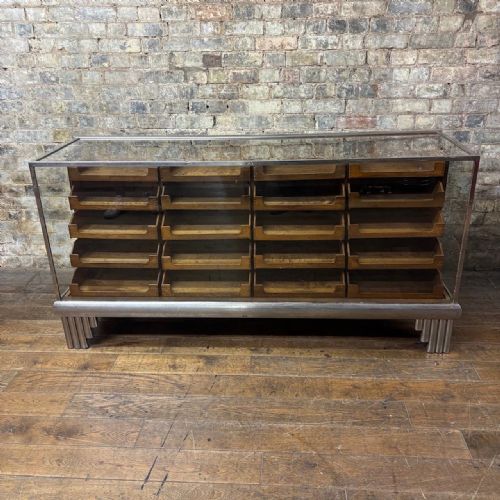
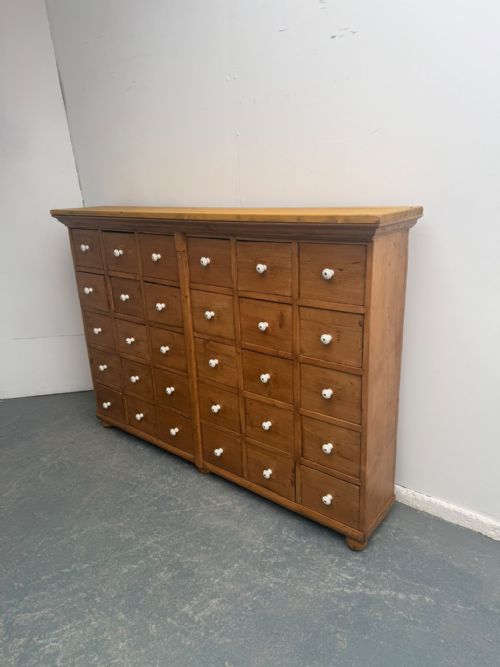
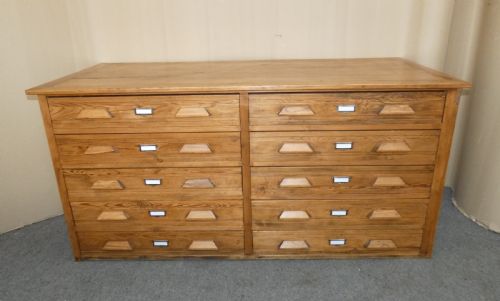
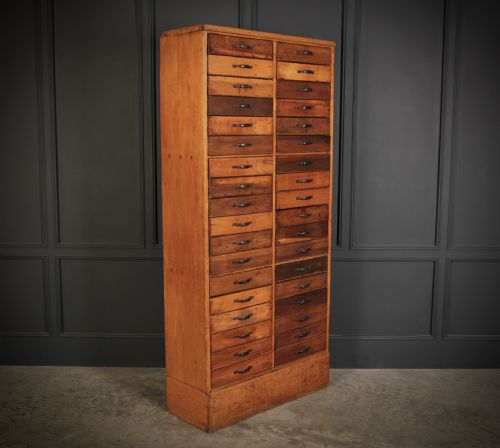
When you search for a shop fitting drawers cabinet, you encounter banks of multi-drawer units, haberdashery counters, and shop displays originating from commercial premises. The most common versions on this page are tall banks of pine or oak drawers built for nineteenth-century and early twentieth-century trade.
These items span several distinct periods including Victorian and 1930s designs, reflecting the changing needs of chemists, drapers, and general merchants. Forms range from large fifty-drawer pine shop fittings to compact walnut jewellers cabinets and oak counters.
Origins vary across English, French, and Hungarian workshops, showing regional preferences in timber choice and paint finish. Many retain original painted surfaces in white, cream, or light green alongside exposed fruitwood, mahogany, and walnut.
Materials and construction methods
Makers relied on solid timber construction using pine, oak, mahogany, walnut, and fruitwood to build robust frames capable of withstanding heavy daily commercial use. Drawer construction typically involves traditional joinery designed to support frequent opening and closing in busy retail environments.
Hardware details feature brass, iron, and chrome pulls, handles, and label holders that served a purely functional purpose in the original shop setting. Glass panels appear on display cases and counters, allowing merchandise to be viewed while kept secure.
Listings feature pieces spanning the nineteenth century through to the 1930s, constructed in pine, oak, mahogany, walnut, and fruitwood.
Judging quality in commercial storage
Scale and proportion set the better pieces apart, particularly those featuring exceptionally high drawer counts or substantial timber dimensions. The retention of original painted finishes or untouched patinated wood surfaces distinguishes superior examples from heavily restored ones.
Hardware integrity and maker provenance elevate specific cabinets, especially those retaining authentic brass pulls or branded shop attribution. The quality of the underlying timber carcass and the smooth operation of numerous drawers indicate superior workshop origin.
Luxmore's of Ilfracombe·Dudley & Co
The Shop Fitting Drawers Cabinet Glossary
- Bank of drawers
- A large multi-drawer storage unit built to hold extensive stock in a retail or commercial setting. These pieces often feature dozens of uniform drawers arranged in a grid.
- Haberdashery counter
- A shop display counter incorporating drawers or glass viewing sections designed specifically for selling sewing materials, threads, and small drapery goods. They combine counter space with accessible storage.
- Shop fitting
- Fixtures and furniture built specifically for commercial interiors rather than domestic use. These items prioritise robust construction and utilitarian efficiency.
- Drapery cabinet
- A large storage chest used in fabric and clothing shops to organise textiles and haberdashery items. They frequently utilise numerous shallow drawers.
- Patina
- The surface appearance developed through age, wear, and polishing over decades of use. Collectors value an untouched patina for its historical authenticity.
Shop Fitting Drawers Cabinet: Frequently Asked Questions
What were shop fitting drawers cabinets originally used for?
These units served as functional storage in nineteenth and early twentieth-century retail environments such as drapers, chemists, and general merchants.
Shopkeepers used the numerous drawers to organise small stock items like threads, buttons, and dry goods for easy customer selection.
How do I fit a large bank of drawers into a modern home?
Large multi-drawer cabinets function well in kitchens as islands or larders, providing substantial storage capacity for utensils and dry goods.
In studies or hallways, they offer deep organisation for papers and household items while introducing strong architectural character.
Are painted finishes on these cabinets original?
Many pieces retain their original painted surfaces in colours such as white, cream, and light green applied during their commercial life.
Traces of wear and layers of paint reveal the working history of the cabinet rather than modern decorative treatment.
How do I distinguish a Victorian shop fitting from a later piece?
Victorian examples typically feature solid pine or walnut construction with traditional hand-cut joinery and heavy brass or iron hardware.
Later pieces from the 1920s and 1930s often incorporate oak, chrome details, or glass display elements suited to modern retail display.