

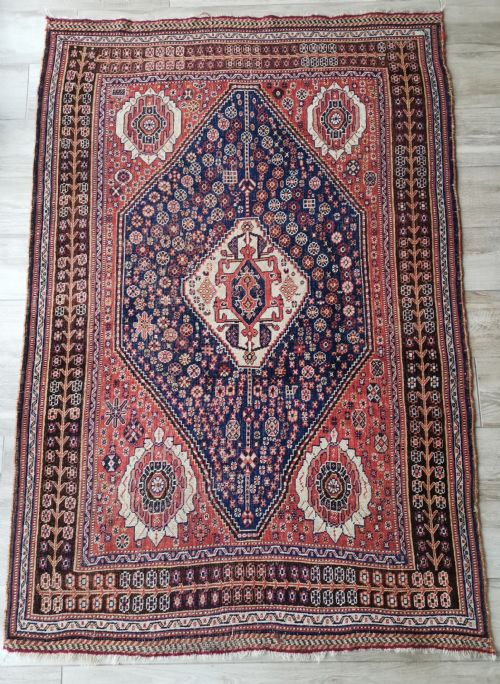
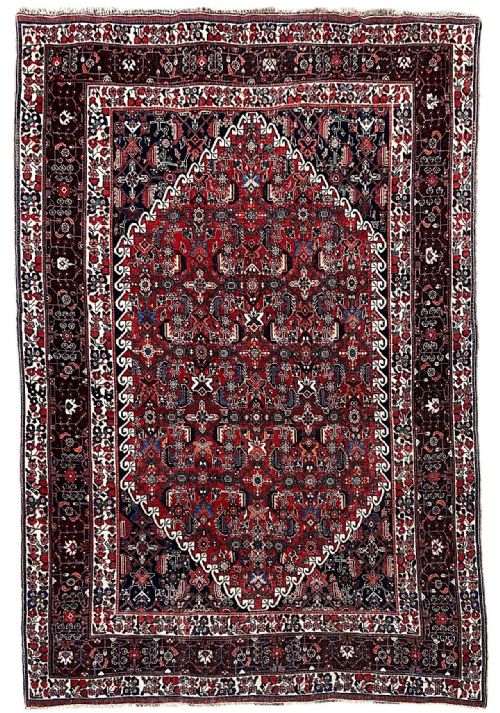
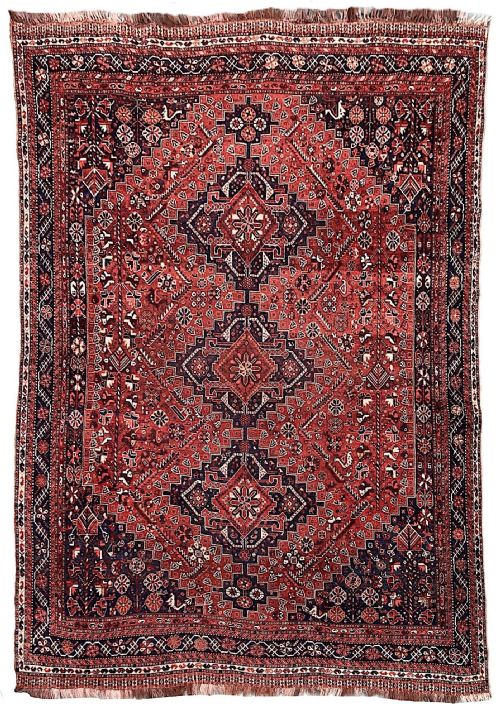


Vintage Shiraz Wool Carpet
These vintage shiraz wool carpets are hand-woven tribal floor coverings from south-west Persia, prized for their rich geometric patterns and dense nomadic wool.
Vintage Shiraz Wool Carpet
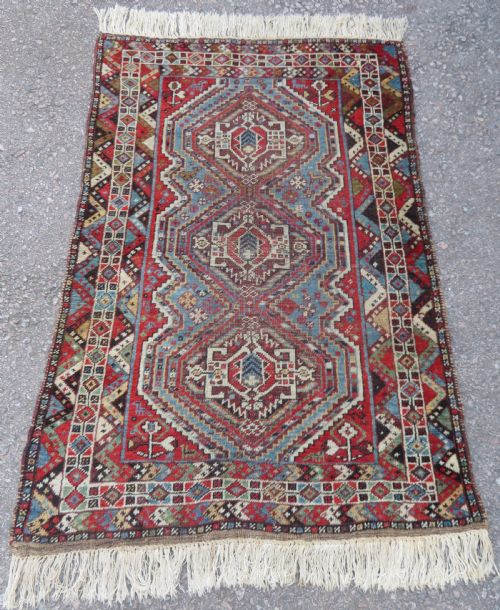
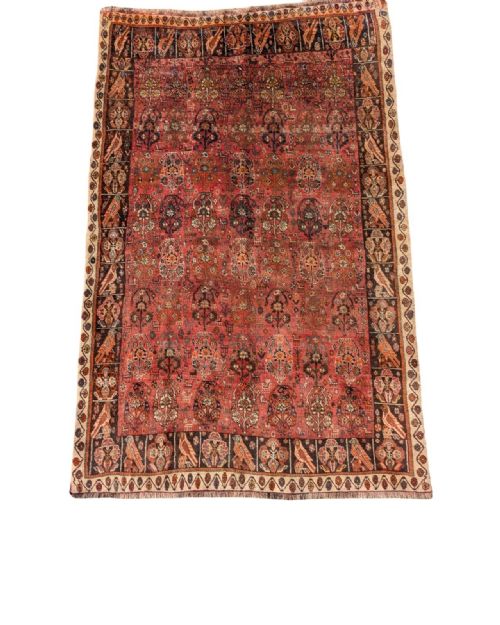
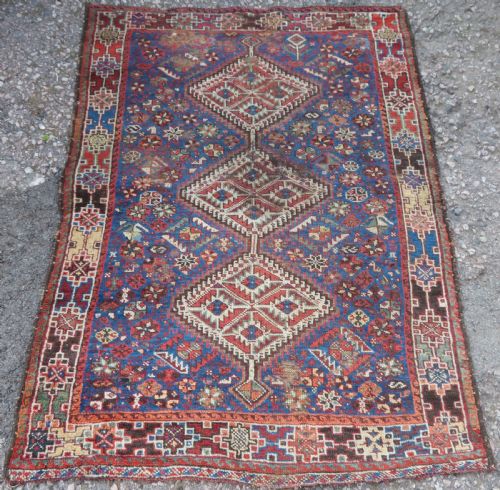
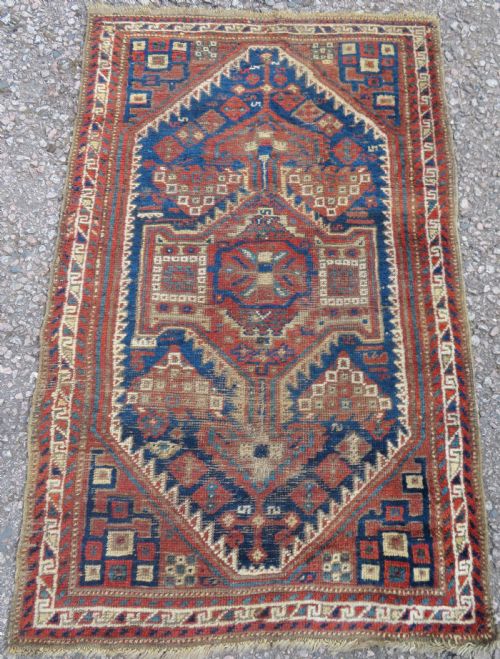
When someone searches for a vintage shiraz wool carpet, they are looking at south Persian tribal weaving from the late nineteenth century through to the 1930s. The selection on this page centres primarily on Qashqai and Khamseh tribal rugs, alongside general Shiraz region pieces.
These floor coverings emerge from nomadic and village traditions in south-west Persia, taking the form of smaller tribal rugs up to substantial room-size carpets. The designs draw heavily upon traditional motifs, including centre medallions, repeated boteh patterns, and occasionally architectural elements such as the pillars of Persepolis.
What varies in quality
Quality in these carpets rests on the tightness of the knotting and the consistency of the hand-woven pile across the surface. Finer examples show precise geometric definition within medallions and borders, reflecting greater skill in the tribal workshop or nomadic camp.
The vibrancy and depth of the natural dyes also divide the standard of pieces, alongside the overall integrity of the wool. Carpets retaining full pile and strong regional coloration occupy the upper tier of the range, while heavily distressed items show the wear of prolonged daily use.
Listings span from the 1880s through to the 1930s, documenting classical Persian tribal and nomadic rug production in wool, cotton, and natural dyes.
The Vintage Shiraz Wool Carpet Glossary
- Medallion
- A central ornamental motif set in the middle of the carpet field. These designs often dictate the symmetry of the surrounding tribal patterns.
- Boteh
- A Paisley-like almond motif representing a floral shoot or cypress tree. This shape appears frequently across Persian Shiraz and Qashqai tribal weaving.
- Nomadic
- Describing pieces created by wandering tribal groups rather than settled village workshops. These rugs often display spontaneous variations in geometry and colour.
- Pile
- The upright wool loops or tufts forming the usable surface of the carpet. Full-piled versions retain their original dense depth from the weaving process.
Vintage Shiraz Wool Carpet: Frequently Asked Questions
Where were vintage Shiraz carpets made?
These carpets originate from south-west Persia, produced by nomadic and village confederacies such as the Qashqai and Khamseh tribes.
The region encompasses distinct tribal weaving traditions that share local materials and dyeing techniques.
How do I identify a Qashqai rug?
Qashqai rugs often feature geometric centre medallions, intricate tribal motifs, and wool woven on traditional upright or horizontal looms.
Many examples incorporate natural dyes and motifs like the boteh pattern or regional animal and plant symbols.
Are these carpets made from pure wool?
The pieces listed utilise hand-woven wool for the pile and surface design, frequently paired with cotton foundations.
Natural dyes give the wool its distinct colour palette, which mellows gracefully over the decades.
How should I care for an antique tribal rug?
Keep these wool carpets out of direct sunlight to protect the natural dyes and vacuum gently without a rotating brush.
Professional specialist cleaning is recommended for antique Persian rugs to preserve the hand-woven structure.