


Vintage Ships Clock
A vintage ships clock brings authentic nautical history into a room, offering precise timekeeping housed in robust maritime brass or mahogany casings.
Vintage Ships Clock
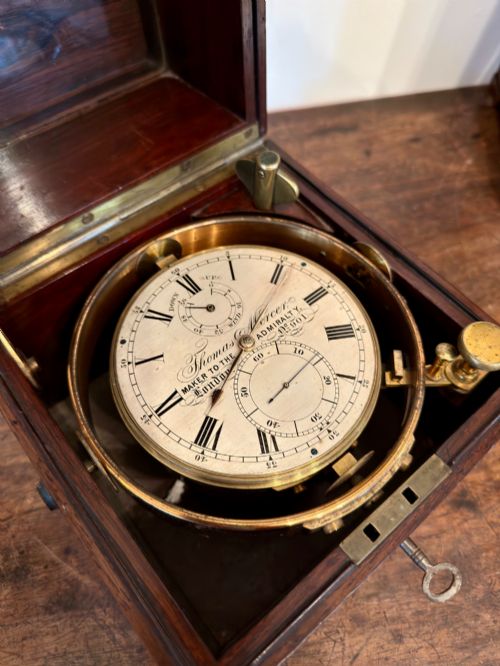
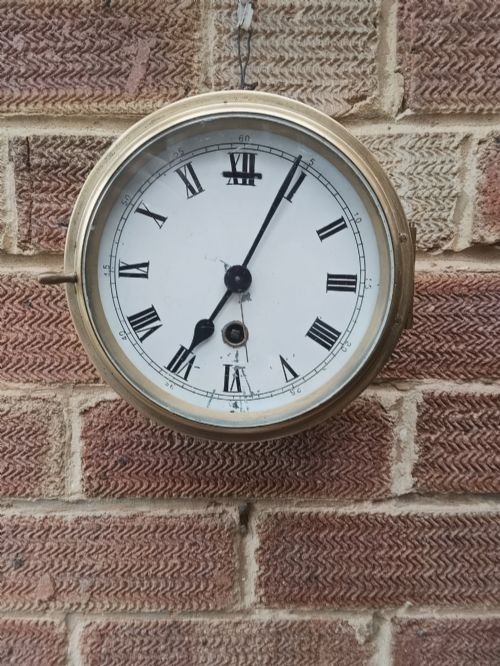
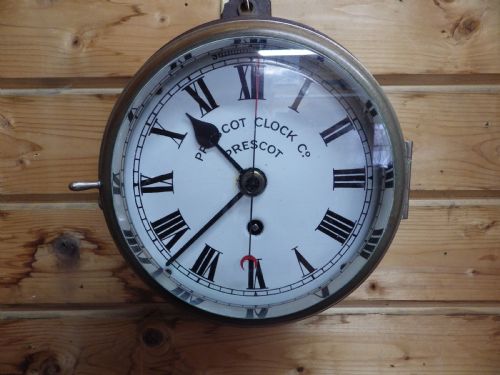
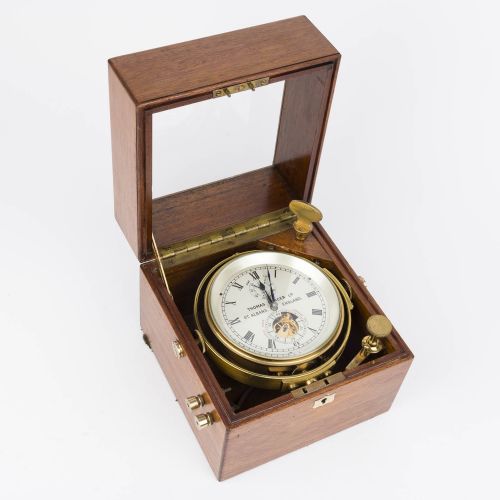
A vintage ships clock is a dependable timekeeper designed for maritime service, appearing in forms such as heavy brass bulkhead wall pieces, desk models, and intricate marine chronometers.
The selections on this page span the nineteenth century through to the mid-twentieth century, capturing utilitarian engine room instruments alongside decorative French mantel pieces and Art Deco automaton clocks featuring moving ships.
Collectors encounter bulkhead clocks designed to withstand marine conditions alongside specialised radio room models and fusee movement timepieces from notable makers.
Materials and construction
Heavy brass and glass form the primary housing for bulkhead clocks, protecting the delicate internal movements from salt air and moisture aboard ship.
Mahogany woodwork appears frequently in cases and wall mounts, while silvered metal dials provide clear legibility under difficult lighting conditions.
Intricate fusee movements and chain mechanisms drive the timekeeping in traditional examples, ensuring consistent tension and accuracy over multi-day periods.
Distinctions in quality
Quality separates standard mass-produced bulkhead models from precision marine chronometers produced by specialised makers with complex twin fusee movements.
The sophistication of the dial design, the clarity of the enamel work, and the weight of the cast brass case indicate the original purpose and grade of the instrument.
Mercer of London·Thomas Mercer·Litherland Davies Of Liverpool·James McCabe·Gay Vicarino·Sestrel·Smiths Empire
The Vintage Ships Clock Glossary
- Bulkhead clock
- A sturdy timepiece designed to be mounted directly to the wall of a ship cabin or wheelhouse. These clocks usually feature heavy brass bezels and secure screw or hinge fastenings.
- Marine chronometer
- A highly accurate portable timekeeper used for navigation at sea. They are often housed in gimbaled wooden boxes to maintain a level position regardless of ship movement.
- Fusee movement
- A conical pulley mechanism connected to the mainspring by a chain or cord. This system equalizes the pulling power of the spring as it winds down to maintain steady timekeeping.
- Radio room clock
- A specialised timepiece featuring coloured segments on the dial. These markings indicate mandatory radio silence intervals for distress monitoring.
- Four glass clock
- A mantel clock enclosed by glass panels on all four sides. This construction allows full visibility of the movement and escapement within.
Vintage Ships Clock: Frequently Asked Questions
How do I wind a fusee ships clock?
A fusee ships clock requires a specialised winding key inserted into the dial face to tension the mainspring via the chain and cone mechanism.
Care must be taken not to overwind the movement, stopping as soon as resistance is felt to protect the historical components.
Where were bulkhead clocks mounted?
Bulkhead clocks were mounted on the walls of ship cabins, chart rooms, and engine rooms where timekeeping was critical for navigation and watch duties.
The heavy brass casing protected the internal mechanism from damp maritime environments.
How do I identify a marine chronometer?
A marine chronometer is identified by its high-precision movement, often mounted in gimbals within a specialised wooden box.
These pieces were built strictly for celestial navigation rather than general cabin timekeeping.
Can I hang a heavy brass clock on a normal wall?
A heavy brass bulkhead clock requires secure wall fixings into solid masonry or studwork due to the substantial weight of the metal casing and glass.
Proper anchoring ensures the piece remains safe and stable over time.