


Vintage Ship Painting Canvas
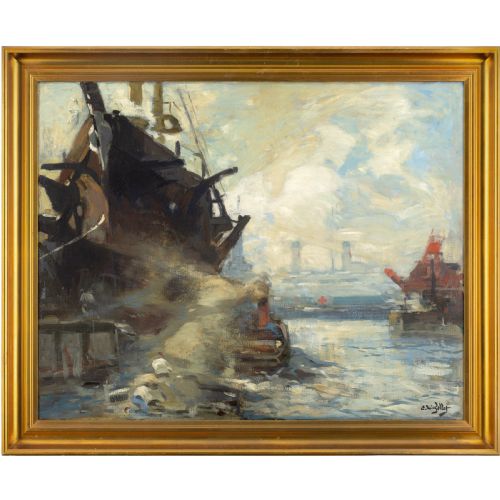
These vintage ship painting canvas works capture maritime history through oil on canvas from the nineteenth and twentieth centuries.
Vintage Ship Painting Canvas
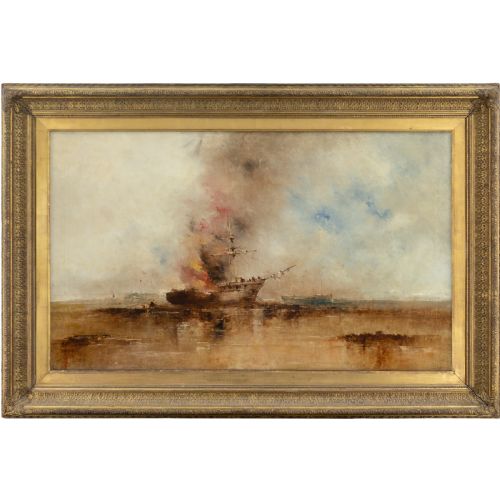
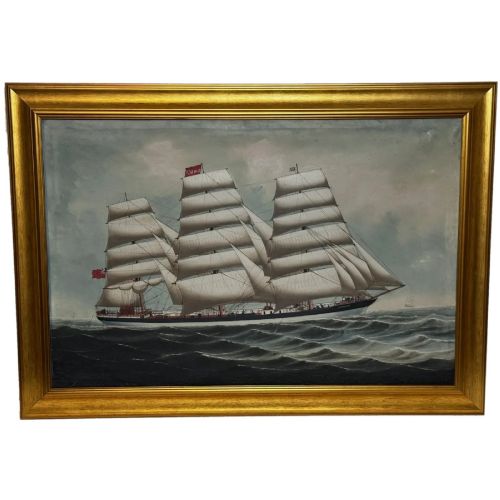
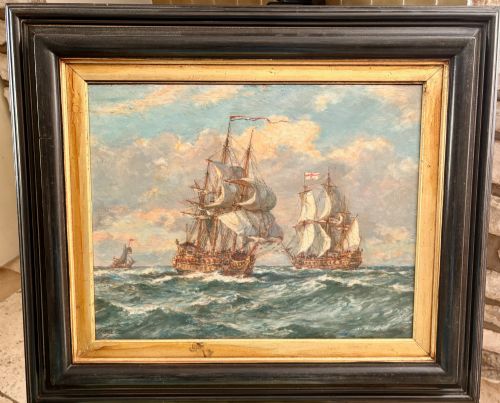
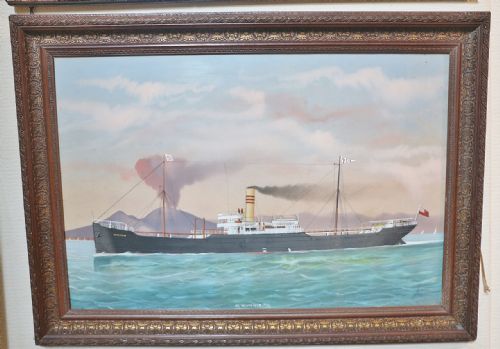
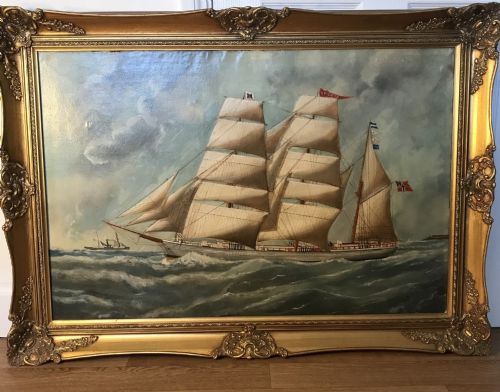
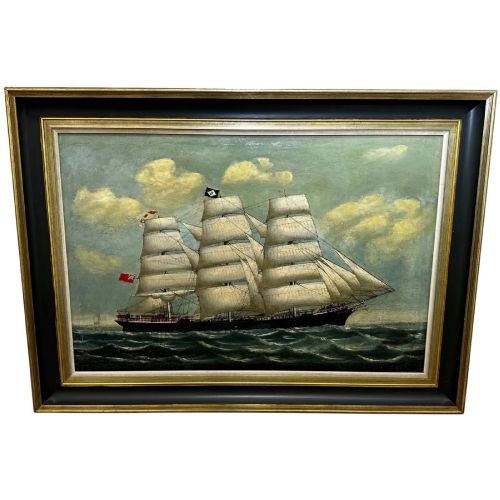
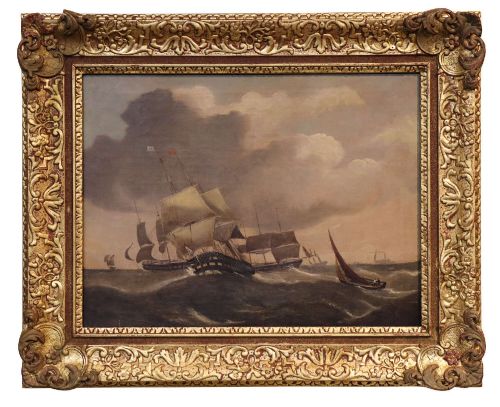
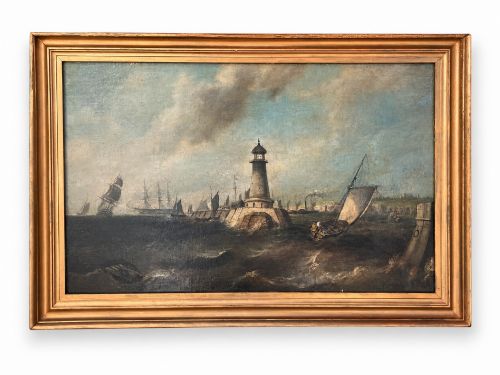
A vintage ship painting canvas presents maritime scenes, naval engagements, and coastal vessels rendered in oil paint upon woven fabric supports. These works range from early Victorian compositions depicting heavy seas to mid-twentieth-century depictions of steamships and schooners.
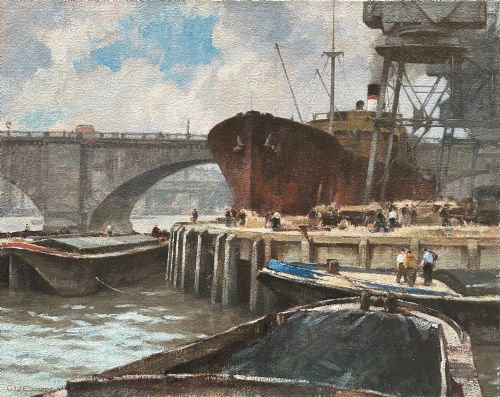
Collectors encounter framed oils executed by named marine artists alongside atmospheric works by English and European schools. The subjects span historical sail, commercial barques, lighthouses, and harbour views created across the nineteenth and twentieth centuries.
The most common examples on this page are nineteenth-century and Edwardian oil paintings on canvas showing sailing vessels, coastal shipping, and maritime trade routes. These vary from intimate evening seascapes to large canvases recording specific ships and historical events.
How they were made
Artists built these works using oil paint applied to stretched canvas supports, sometimes enhanced with giltwood frames and gold leaf accents. The technique relies on layered oil colours to render the movement of water, atmospheric light, and the rigging of wooden and steel vessels.
Many works incorporate fine brushwork for maritime details combined with looser applications of paint for stormy skies and choppy waves. Canvases are typically mounted on wooden stretchers and housed within period frames that reflect Victorian and Edwardian framing traditions.
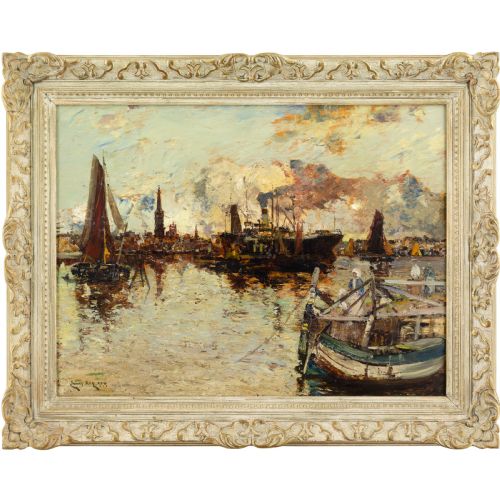
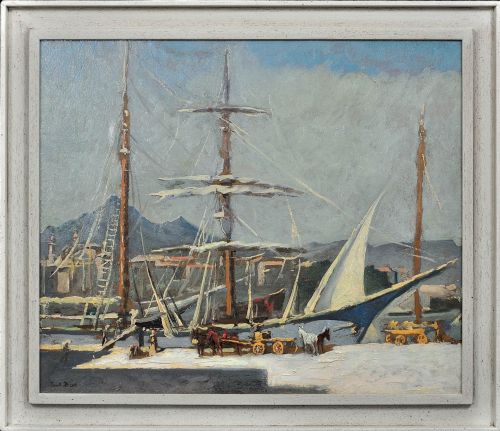
Some nineteenth-century canvas paintings record fierce sea battles and sinking hulks alongside remarkably peaceful days in Antwerp harbour.
What varies in quality
Quality rests in the artist's command of maritime architecture, rigging accuracy, and the natural behaviour of water in varying weather conditions. Superior examples demonstrate a confident handling of light and perspective, distinguishing accomplished marine painters from provincial or decorative studio work.
The sophistication of the canvas preparation, pigment retention, and the integrity of the original wood stretcher frame also mark the distinction between tiers. Works retaining their period frames and clear historical provenance command greater consideration from serious collectors.
Eugène-Louis Gillot·William McAlpine·James Kay RSW·Bernard Gribble·Paul Bret·Bernard Benedict Hemy·Cyril Walduck Edwards·Abraham Hulk I·George Shaw·Dion Pears
The Vintage Ship Painting Canvas Glossary
- Canvas
- A heavy woven fabric used as a surface for oil painting. It is typically stretched tightly across a wooden frame before application of the paint.
- Oil paint
- A slow-drying paint made by mixing pigments with oils such as linseed. This medium allows for rich blending and deep tonal variations in marine scenes.
- Barque
- A sailing ship with three or more masts having square sails on the foremast and mainmast and mizzen sails fore-and-aft rigged. These commercial vessels appear frequently in 19th-century maritime art.
- Pierhead painting
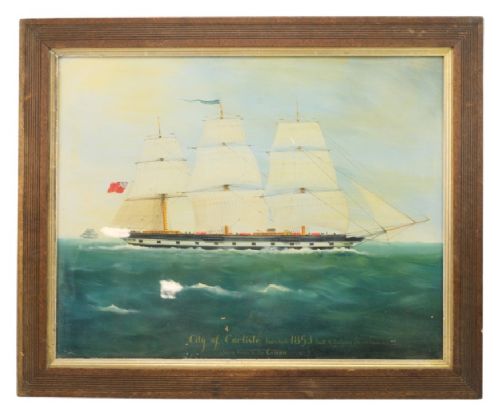
- A specialised genre of marine art depicting specific merchant or naval vessels entering or leaving port. These were often commissioned by ship captains or owners.
- Giltwood
- Wood carved and covered with a thin layer of gold leaf or gold paint. It is commonly found on the ornate frames housing antique oil paintings.
Vintage Ship Painting Canvas: Frequently Asked Questions
How do I date a vintage ship painting canvas?
Dating relies on the rigging and type of the vessel depicted, along with the stretcher construction and artist signatures. Costume details and framing styles also offer reliable clues to the period.
Evidence on this page spans the 18th century through to the 1960s, capturing the transition from sailing barques to steamships and twentieth-century commercial vessels.
What subjects are common in marine paintings?
Common subjects include tall ships in stormy seas, naval battles, lighthouse coastal scenes, and portraits of specific merchant vessels arriving in port. Artists often recorded named ships engaged in historical events or daily trade.
Historical records on this page feature specific vessels such as the Cutty Sark, the RMS Lusitania, and various naval cruisers operating off European coasts.
How should I clean an oil painting on canvas?
Surface dust should be removed very gently with a soft, dry brush by someone experienced in textile care. Moisture and standard household cleaners must be avoided entirely.
Canvas paintings often accumulate grime over the decades, and professional conservation is recommended for any cleaning beyond light surface maintenance.
Why are some marine paintings attributed to specific schools?
Unsigned works are frequently attributed to regional schools based on painting style, subject matter, and the handling of light and water. These attributions link anonymous works to known artistic communities.
Listings here include examples from the English School and various Victorian marine traditions working across British and European coastal ports.