


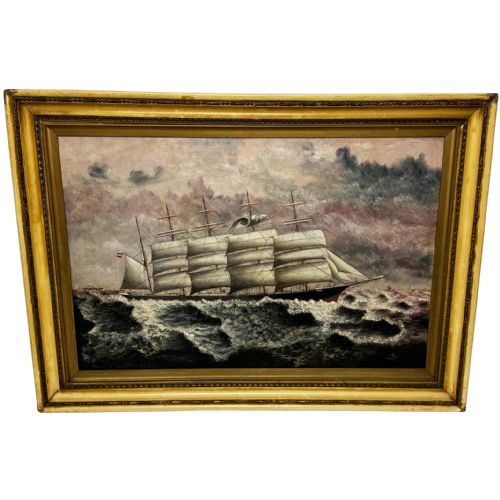


Gilded Wood Marine Painting
These gilded wood marine painting works capture coastal and maritime scenes within period frames, bringing nineteenth-century waters directly onto the wall.
Gilded Wood Marine Painting
A gilded wood marine painting captures maritime subjects, coastal views, and nautical scenes set within period frames. When searching for a gilded wood marine painting, buyers encounter works ranging from nineteenth-century coastal vistas to Edwardian harbour depictions.
The selections on this page span the nineteenth century, Edwardian era, and the early twentieth century. Common formats include oil on canvas, oil on board, and watercolour paintings featuring ships, storms, and shipping off various coasts.
How they were made
Artists utilised oil paint and watercolour on canvas, wood panels, or board to render maritime water and shipping scenes. These works relied on traditional brushwork techniques typical of European and British maritime art traditions.
The accompanying frames combine wood bases with gilt, gold leaf, or gilded finishes. These surrounds were shaped to complement the marine subjects and protect the edges of the canvas or panel.
Gilded Wood Marine Painting Retail Price Guide 2026
Typical asking prices for gilded wood marine painting among the pieces listed under this phrase on Sellingantiques today, from the lower quarter to the upper quarter. They describe what is for sale here now, not the wider market.
Several coastal scenes include watchful fishermen and robust dogs keeping a close eye on the maritime activity from the shore.
What varies in quality
Quality rests upon the execution of the marine subject and the handling of light and water. Stronger pieces demonstrate confident brushwork in rendering ships, waves, and atmospheric coastal conditions.
The condition and finish of the surrounding wood and gilt frame contribute to the overall integrity of the piece. Original frames that retain their gold leaf match the visual weight of the painting far better than later replacements.
The Gilded Wood Marine Painting Glossary
- Gilt wood
- Wood surfaces covered with a thin layer of gold leaf or metallic gilt. This finish provides a reflective border that frames the marine artwork.
- Oil on canvas
- Pigment mixed with drying oil applied to stretched fabric. This medium allows for deep colour saturation and textured brushwork suitable for turbulent seas.
- Maritime art
- Depictions of ships, boats, harbours, and coastal views. This genre encompasses historical shipping scenes and nineteenth-century coastal life.
- Watercolour painting
- Pigments suspended in a water-based solution applied to paper or board. This technique produces translucent washes often employed for atmospheric coastal scenes.
Gilded Wood Marine Painting: Frequently Asked Questions
What periods do these paintings date from?
The works span the nineteenth century, the Edwardian period, and into the early twentieth century. Dates align with historical painting styles found across European maritime art.
Individual pieces reflect the artistic conventions of their specific decade, from Victorian coastal scenes to later maritime depictions.
How should I care for a gilt frame?
Keep gilded wood frames away from direct sunlight and fluctuating moisture levels to preserve the metal leaf. Dust gently with a soft, dry brush without applying cleaning solutions.
Avoid touching the gilt surface directly, as natural oils from the skin can degrade the metallic finish over time.
Where were these marine scenes painted?
Subjects include British coastal locations such as Whitby and the Thames, alongside Dutch waters, Italian harbours, and the Isle of Wight. Artists often travelled to working ports to observe shipping activity firsthand.
Foreign scenes reflect nineteenth-century European travel and the popularity of continental marine subjects among collectors.
What subjects appear in these works?
Common subjects include sailing ships navigating open waters, barges on rivers, and figures gathered along stormy or calm coasts. Harbour scenes and vessels off foreign shores also feature prominently.
Each composition documents historical watercraft, from five-masted ships to traditional coastal fishing boats.