


Vintage Sewing Tool Case
A vintage sewing tool case keeps needles, threads and thimbles safe in silver, wood and leather.
Vintage Sewing Tool Case
A vintage sewing tool case gathers together the implements needed for needlework, from simple thimble holders to elaborate compendiums. When you search for a vintage sewing tool case, you encounter objects designed to house specific accessories like scissors, silk skein holders and cotton winders.
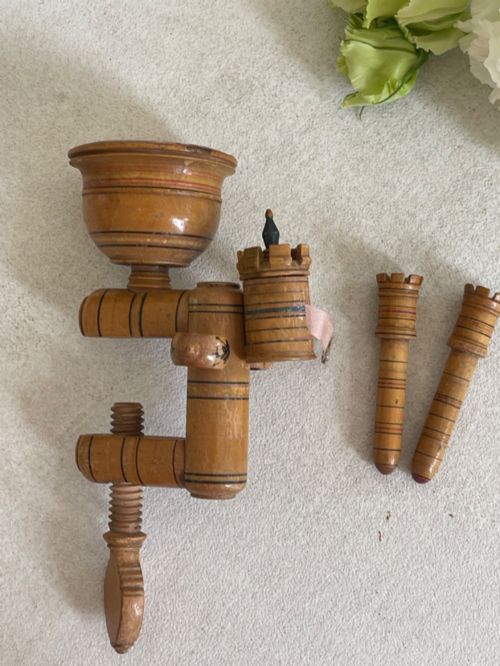
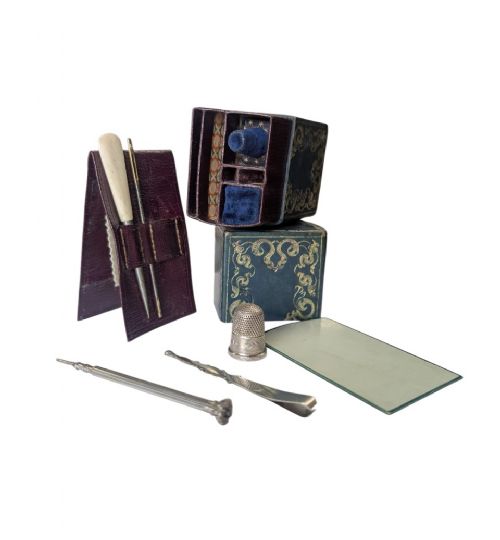
The pieces appearing on this page span several distinct periods, including Georgian, Victorian, Edwardian and George V eras. Forms range from turned wood treen and Tunbridge ware clamps to fitted leather cases and French silver gilt compendiums.
Continental examples often take the form of ornate chatelaine cases or etui boxes. English makers produced functional pieces in sterling silver and boxwood, catering to the domestic needleworker.
Materials and construction
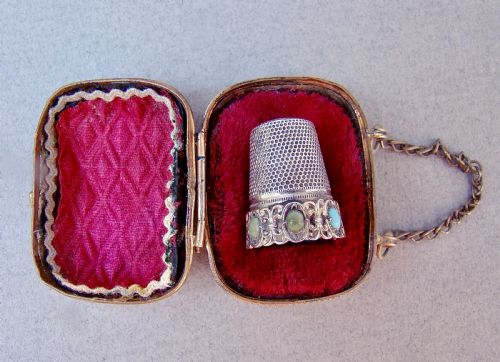
Silversmiths shaped sterling silver and silver gilt into chatelaine cases and cotton holders, frequently adding pierced floral scrollwork or cut steel embellishments. Stone settings and ormolu mounts occasionally decorated the more elaborate French pieces.
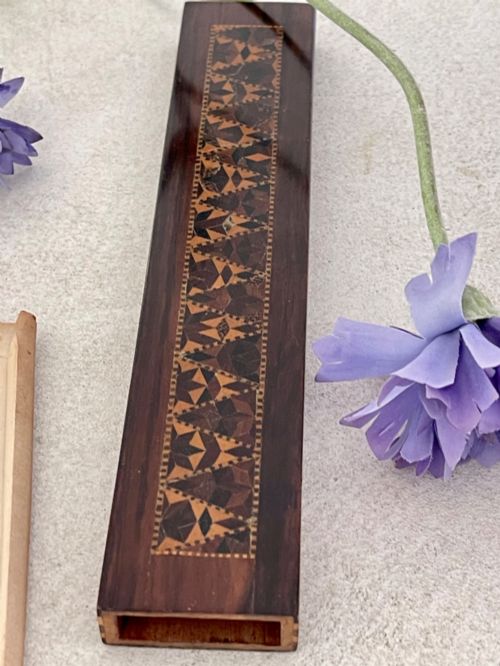
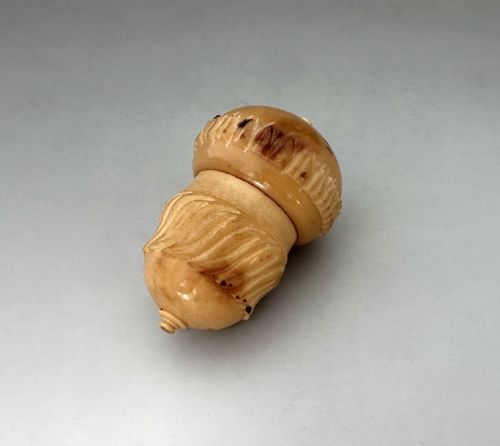
Woodworkers utilised boxwood and turned wood to create treen clamps, silk skein holders and corozo nut cases. Tunbridge ware incorporated meticulous mosaic woodwork patterns into small sewing containers.
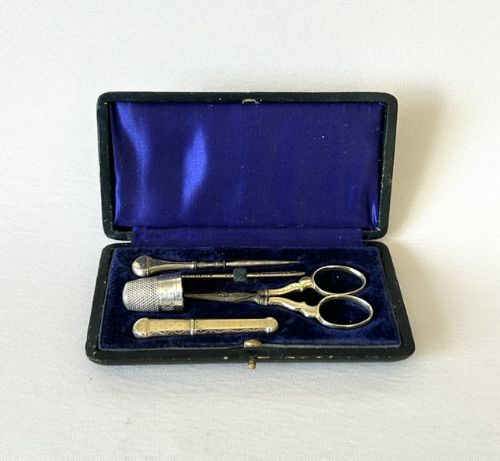
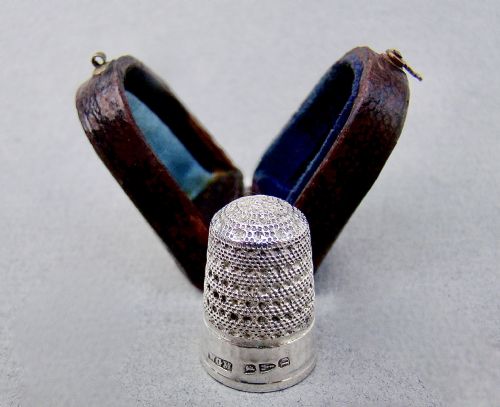
Interiors were lined with velvet and silk to cushion delicate steel scissors, gold scissors sheaths and silver thimbles.
Distinctions in quality
Quality rests upon the crispness of the metalwork, such as the depth of pierced scrollwork on a silver cotton holder or the precision of ormolu mounts. Finer examples retain their original matching contents, from the specific scissors to the correctly sized thimble.
In wood, the intricacy of the Tunbridge ware mosaic or the smooth execution of turned boxwood distinguishes standard utility items from finer bespoke pieces. The survival of clean velvet or silk linings also marks out a superior example.
Walter George Myers
The Vintage Sewing Tool Case Glossary
- Compendium
- A fitted case containing a comprehensive selection of related tools. These versatile containers held multiple implements for sewing in one portable unit.
- Chatelaine
- A decorative belt hook worn with suspended chains carrying everyday household items. Sewing tool cases were frequently hung from these hooks for ready access.
- Etui
- A small ornamental case used for holding needles, scissors or cosmetics. French versions often housed gold and silver sewing implements.
- Tunbridge ware
- Woodworking featuring microscopic mosaic tiles arranged to form pictorial designs. This technique decorated nineteenth-century boxes and clamps.
Vintage Sewing Tool Case: Frequently Asked Questions
What did a sewing case contain?
These cases typically held implements like scissors, thimbles, cotton winders and silk skeins. Different variants accommodated specific tasks ranging from basic mending to intricate embroidery.
Fitted interiors ensured each tool had a dedicated slot to prevent damage during transport.
How do I date a silver case?
Silver pieces often feature hallmarks stamped directly into the metal indicating the assay office and year of production. Comparing stylistic cues such as Georgian rococo scrollwork or Victorian floral motifs provides further chronological context.
Maker marks also help narrow down the specific decade of manufacture.
What is Tunbridge ware?
Tunbridge ware describes wooden objects decorated with tiny mosaic tiles arranged to form geometric or pictorial patterns. Craftsmen used various natural wood timbers to create these detailed surface designs without painting.
This technique appeared on small boxes and sewing clamps during the nineteenth century.
How were chatelaine cases worn?
A chatelaine featured a belt hook or clip from which suspended chains hung down at the waist. Sewing cases, scissors sheaths and watch keys attached to these chains for practical daily use.
This arrangement allowed needleworkers to keep essential tools immediately to hand.