


Antique Sewing Etui
An antique sewing etui is a fitted case or holder for needlework implements, prized for its miniature craftsmanship and elegant containment of daily tools.
Antique Sewing Etui
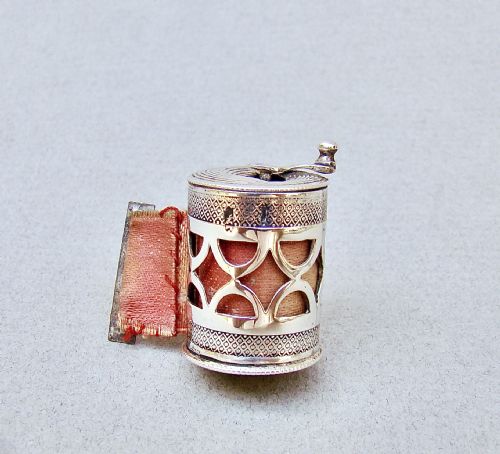
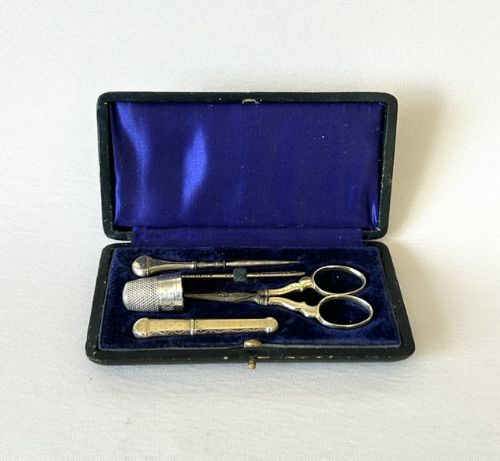
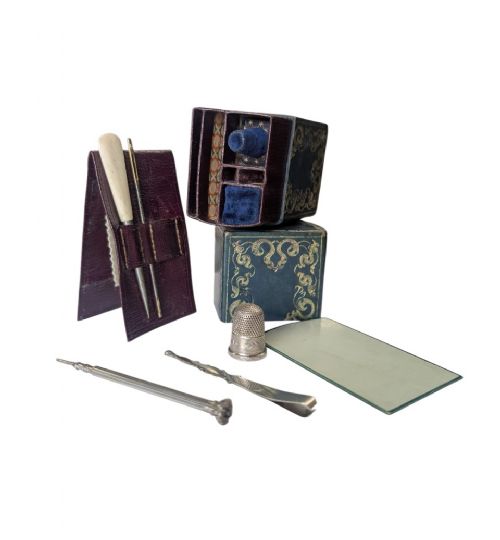
When you search for an antique sewing etui, you encounter small decorative containers designed to hold needles, scissors, bodkins, and thimbles. These pieces range from pocket-sized cases to elaborate desk boxes and chatelaine companions.
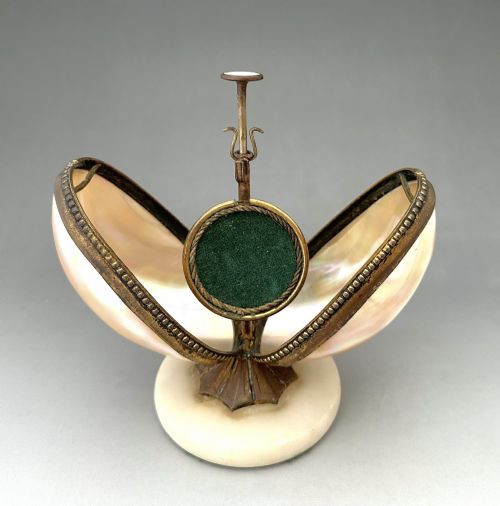
The versions most frequently met on this page are French and English examples spanning the eighteenth and nineteenth centuries. They appear in diverse forms, including drum-shaped tape measures, figural pieces shaped as champagne bottles, and Palais Royal mother-of-pearl boxes.
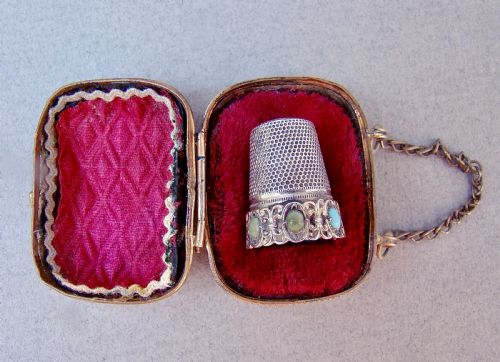
Makers housed these tools in fitted interiors lined with velvet and silk, often incorporating compartments for multiple sewing accessories. Collectors find them in materials from carved fruit wood to precious metals and enamel.
What varies in quality
The standard of an antique sewing etui depends largely on the integrity of its fitted interior and the completeness of its original tools. Pieces retaining their matching set of steel or silver implements achieve a higher degree of desirability.
Material choice and decorative execution dictate the upper tier of the range, seen in finely chased silver, detailed enamel, and complex mother-of-pearl carving. Simpler brass or wooden cases represent more utilitarian domestic production.
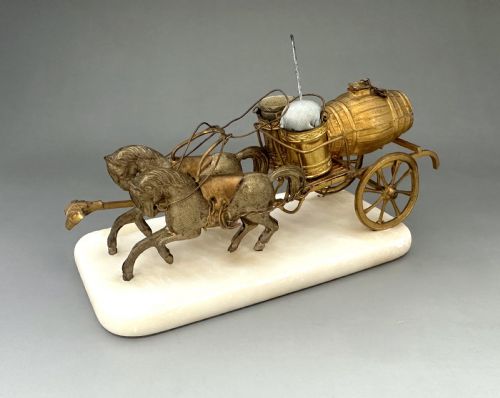
One recorded sewing companion takes the exact form of a tiny carved horse-drawn vehicle.
The Antique Sewing Etui Glossary
- Etui
- A small ornamental case used for holding needles, cosmetics, or other articles. It typically fits into a pocket or hangs from a chatelaine.
- Bodkin
- A thick, blunt needle with a large eye used for drawing tape or cord through a hem. They often match the other metal tools stored inside an etui.
- Chatelaine
- A decorative belt hook worn with a series of suspended chains carrying household utilities such as scissors and keys. Etuis were frequently hung from these hooks.
- Ormolu
- Gilded bronze used for furniture mounts and decorative cases. It provides a bright gold finish on metal decorative elements.
Antique Sewing Etui: Frequently Asked Questions
What tools go inside an antique sewing etui?
These cases typically hold a combination of small implements needed for needlework, such as scissors, bodkins, tweezers, and thimbles.
Many also include miniature ear scoops, folding knives, or small pencils nestled into velvet-lined slots.
How do I date an antique sewing etui?
Dating relies on material combinations, decorative styles, and any hallmarking present on silver or gold mounts. Georgian pieces often feature rococo motifs or enamel, while Victorian examples introduce diverse industrial materials.
Changes in silhouette and construction techniques also help separate eighteenth-century pieces from later nineteenth-century revivals.
Were these cases meant for travel?
Many etuis were designed for portability, allowing women to carry essential sewing tools during travel or social visits. Pocket-sized and chatelaine versions kept implements secure and accessible on the person.
Larger compendiums and musical sewing boxes remained stationary on dressing tables or writing desks.
How should I clean the interior lining?
Silk and velvet linings require gentle dry dusting with a soft brush to remove accumulated debris without damaging fragile fibres. Water and liquid cleaners must be avoided entirely to prevent staining and rot.
Fragile textiles age naturally, and minor wear is accepted as part of their history.