



Vintage Sewing Desk
A vintage sewing desk brings both historic charm and clever compartment design to a room.
Vintage Sewing Desk
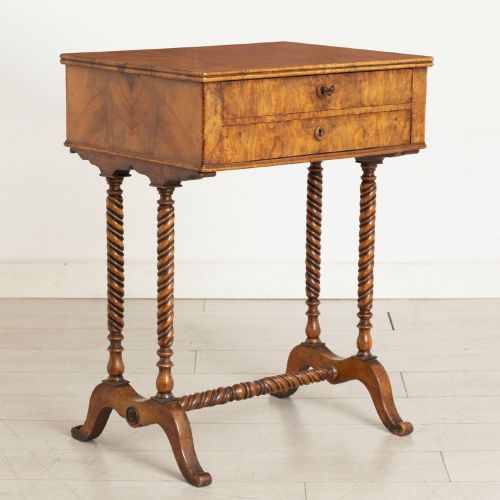
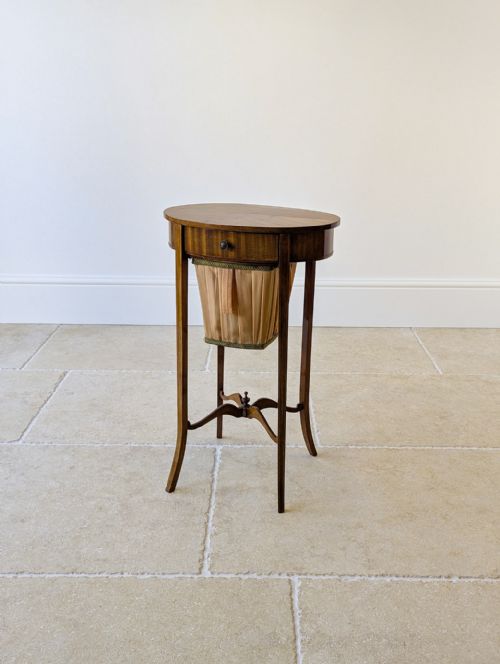
A vintage sewing desk is designed for needlework and domestic crafts, offering hidden storage within elegant table forms. These pieces often appear as work tables or needlework tables from the Victorian, Edwardian, and early twentieth-century periods.
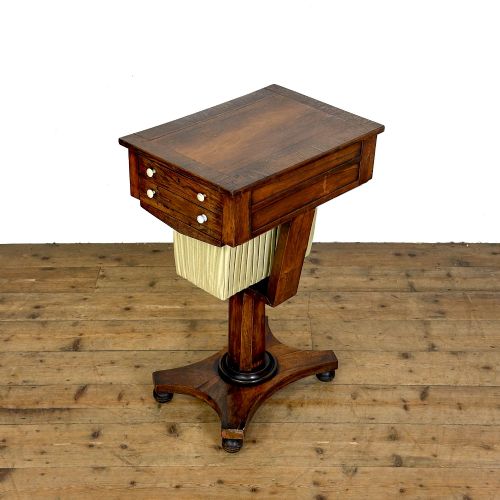
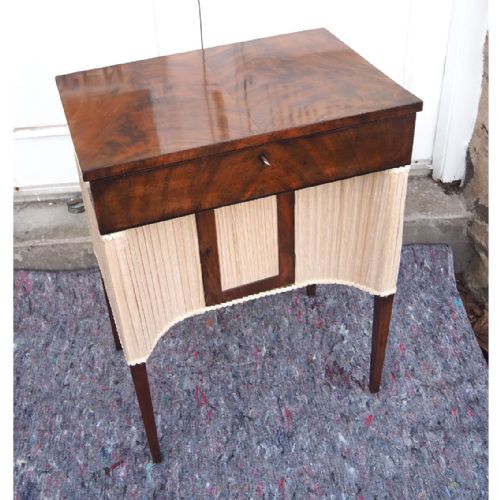
The version most commonly met on this page is the wooden work table, featuring fitted interiors for threads and accessories. Walnut and mahogany examples span the nineteenth century and the Edwardian era.
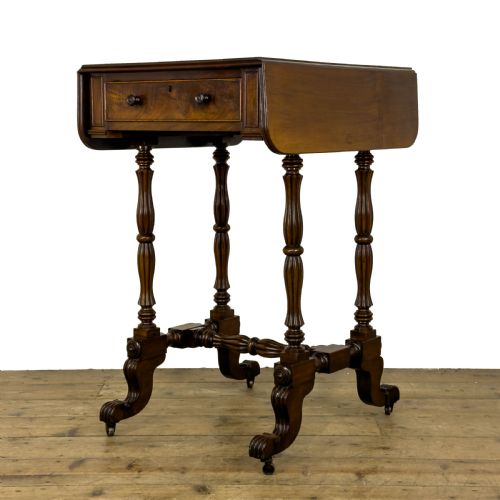
Makers integrated compartments, drop leaves, and shallow drawers beneath the main surface. Such furniture served as a functional centre for ladies to manage sewing tasks in the drawing room.
Evaluating the craftsmanship
Quality rests in the precision of the joinery and the complexity of the interior fitments. Superior examples reveal carefully organised compartments and smooth drawer movements rather than basic partitions.
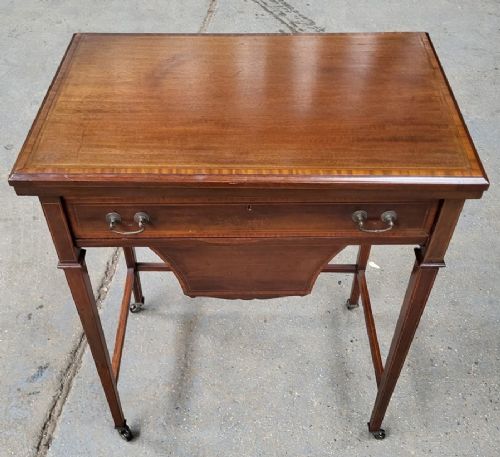
The richness of the wood figuring and the subtlety of any inlay elevate a piece significantly. Finer tables maintain proportion and structural integrity alongside their decorative purpose.
The furniture spans multiple periods including Regency, Victorian, Edwardian, and early industrial twentieth century.
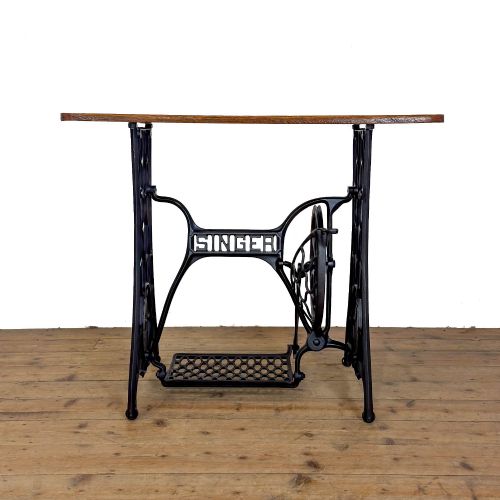
Waring & Gillow·Singer
The Vintage Sewing Desk Glossary
- Work table
- A small occasional table fitted with drawers or fabric bags designed for needlework and sewing implements. These items combine display surfaces with practical storage.
- Cross-banded
- A border technique where veneer strips run perpendicular to the main wood grain. This adds a decorative framing effect to table tops and drawer fronts.
- Drop leaf
- A hinged flap at the side of a table that folds down to save space or lifts to extend the surface area.
- Inlaid
- Ornamentation created by embedding contrasting materials like lighter woods or metal into the primary surface of the furniture.
- Pin cushion
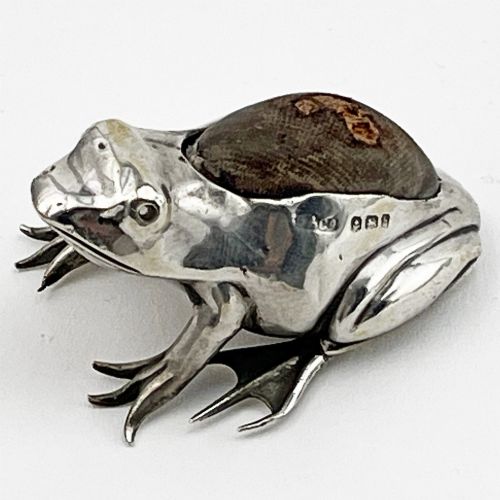
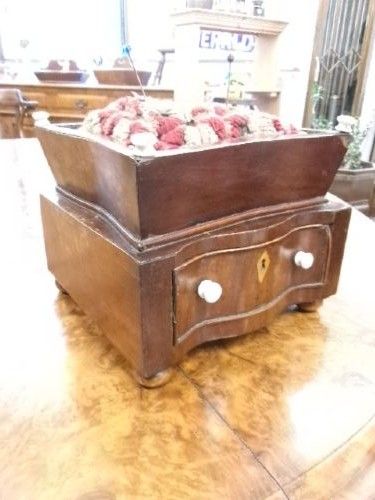
- A small stuffed pad used for holding pins during sewing, sometimes fashioned in novelty shapes out of sterling silver and velvet.
Vintage Sewing Desk: Frequently Asked Questions
What is a vintage sewing desk used for today?
These tables function well as compact writing desks, bedside tables, or hallway accents where surface space is limited. Their internal compartments remain useful for organising small household items.
Many collectors also use them to display antique sewing accessories, pin cushions, and small silver pieces within a traditional interior.
How do I date an Edwardian sewing table?
Edwardian pieces often feature lighter satin walnut or inlaid mahogany timbers with restrained decorative motifs reflecting the early twentieth century. Construction techniques from this era balance traditional joinery with emerging machine methods.
Comparing the hardware styles and secondary woods helps narrow the manufacturing period between the late nineteenth century and the outbreak of the First World War.
Which woods are most common on this page?
Mahogany and walnut appear most frequently across the Victorian and Edwardian listings, sometimes enhanced by rosewood or satin walnut veneers. These timbers were chosen for their stability and capacity for fine polishing.
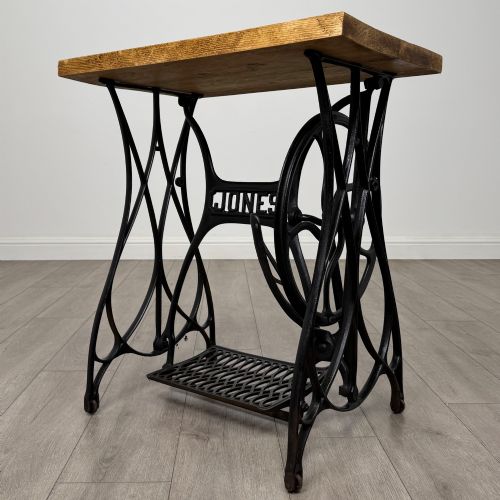
Occasional examples incorporate oak or industrial iron supports when associated with workshop or machine-based furniture forms.