

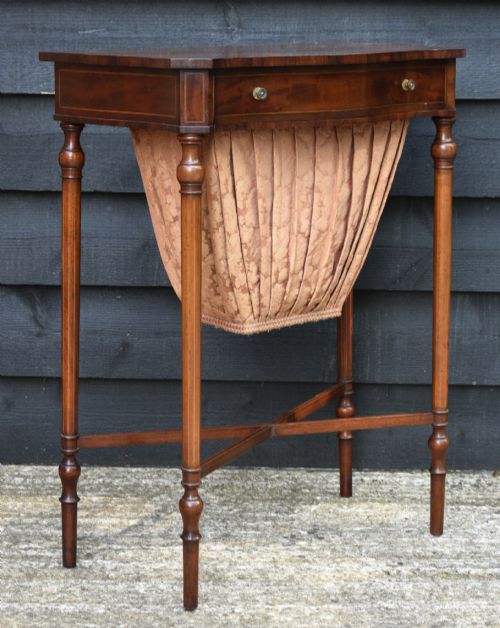
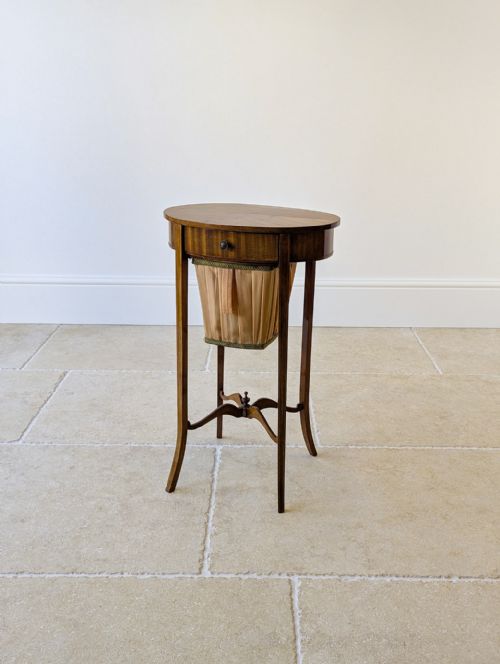


Mahogany Pouch Table
A mahogany pouch table is a practical sewing or work table with a suspended fabric bag designed to hold needlework.
Mahogany Pouch Table
A mahogany pouch table is a compact item of furniture primarily used for domestic sewing, needlework and craft tasks. These pieces combine a tabletop surface with a fabric receptacle underneath, usually made from silk or similar textiles, to store wool, thread and unfinished projects.
The versions met on this page span several key periods, including Georgian, Regency, William IV, Victorian and Edwardian eras. Forms appear as work tables, sewing tables, occasional tables and side tables, often featuring drop leaves or pedestal bases.
Origins trace back to late eighteenth-century and nineteenth-century workshops, where cabinetmakers designed them for ladies to use in drawing rooms and parlours. They survive today as versatile occasional items that function effectively beside seating in modern rooms.
How they were made
Cabinetmakers constructed the frames principally from mahogany, occasionally incorporating satinwood, boxwood or specimen wood veneers for decorative contrast. Timber selection focused on rich grain patterns and durability for daily domestic use.
Inlaid stringing, brass fittings, bone details and integrated silk or cotton fabric bags completed the construction. Joinery techniques included drop leaves supported by folding brackets and pedestal columns fixed to stable foot platforms.
Listings feature mahogany work tables spanning the Georgian, Regency, William IV, Victorian and Edwardian periods, alongside satinwood and boxwood details.
What varies in quality
The standard of timber selection and the precision of inlaid woodwork set finer examples apart from simpler pieces. Cabinetmakers who utilised carefully matched mahogany grains and delicate boxwood stringing produced more distinguished furniture.
Structural refinement also defines the range, seen in the grace of lyre ends, serpentine shaping, and well-turned pedestals. The integrity of the original fabric pouch and accompanying interior compartments influences the overall character of the piece.
The Mahogany Pouch Table Glossary
- Pouch table
- A work or sewing table featuring a suspended fabric bag for holding needlework materials. This pouch is typically gathered on a wooden frame beneath the main drawer.
- Work table
- A multi-purpose small table equipped with drawers and compartments for domestic tasks such as sewing and writing. These items were popular during the Georgian and Regency periods.
- Drop leaf
- A hinged tabletop flap that can be raised to extend the surface area or lowered when space is limited. Brass hinges and folding wooden brackets commonly support the leaves.
- Inlay
- A decorative technique where contrasting materials such as satinwood or boxwood are inserted into recesses within the mahogany surface. This creates geometric patterns or borders.
- Stringing
- A narrow strip of contrasting wood inlaid into the timber surface to form delicate decorative lines along table edges and drawer fronts.
Mahogany Pouch Table: Frequently Asked Questions
What is a mahogany pouch table?
A mahogany pouch table is a compact nineteenth-century sewing or work table featuring a suspended fabric bag beneath the main body. It provided a dedicated space for ladies to store needlework, thread and small craft items in the parlour.
These pieces combine a functional tabletop surface with clever internal compartments and a soft gathering bag. They serve today as elegant and practical side tables.
How were sewing tables used?
Georgian and Regency ladies used these tables while sitting to sew, embroider or mend garments. The drawers and internal trays kept needles and pins organised, while the fabric pouch held wool and fabric.
Over time, they transitioned from active craft furniture to decorative occasional tables. Their compact proportions made them useful beside armchairs and sofas.
How do I identify a Regency work table?
Regency work tables often display classical architectural influences, including pedestal columns, brass paw feet and lyre-shaped supports. Cabinetmakers favoured rich mahogany timbers during this era.
Details such as brass ring handles and finely turned pillars help distinguish pieces from this period. They often feature drop leaves and integrated silk pouches.
What wood was used for these tables?
Mahogany served as the primary timber for these sewing and work tables, valued for its rich colour and strength. Makers frequently enhanced the appearance using satinwood and boxwood veneers.
Additional materials included brass for castors and handles, bone for key escutcheons, and silk or cotton for the fabric pouches. Secondary timbers were often utilised for internal drawer linings.