

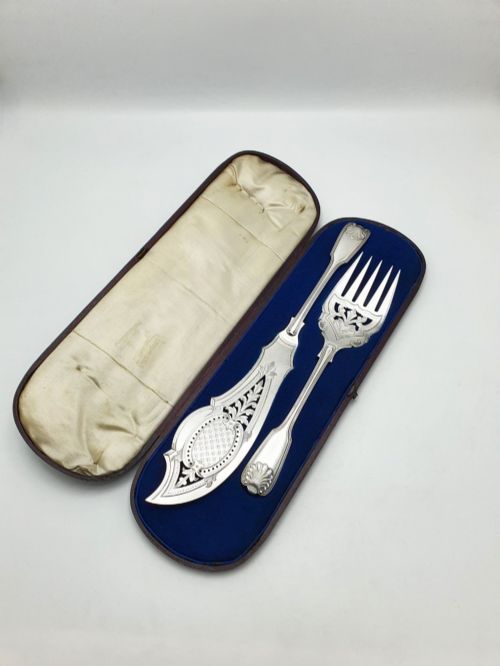


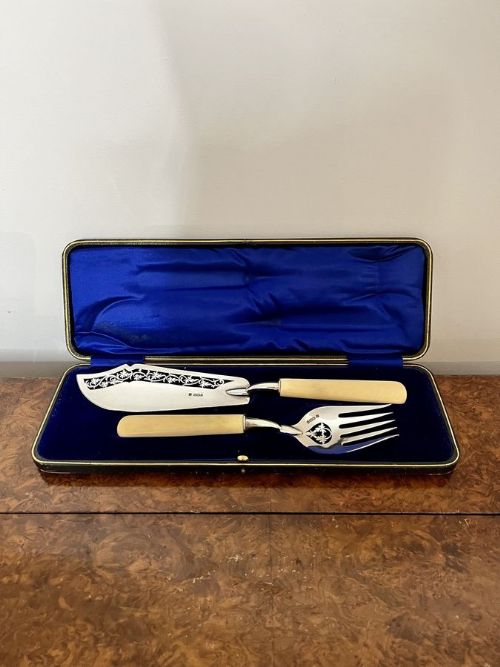


Vintage Serving Fork
These vintage serving fork pieces are practical heirlooms of silver and plate designed to grace any dining table.
Vintage Serving Fork
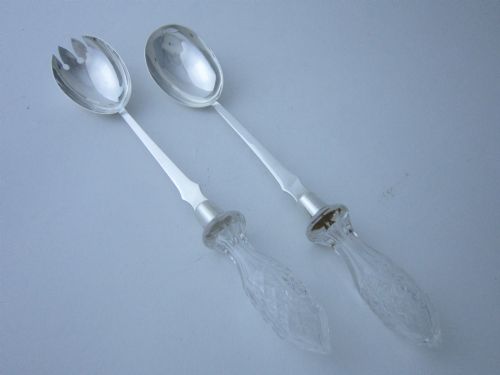
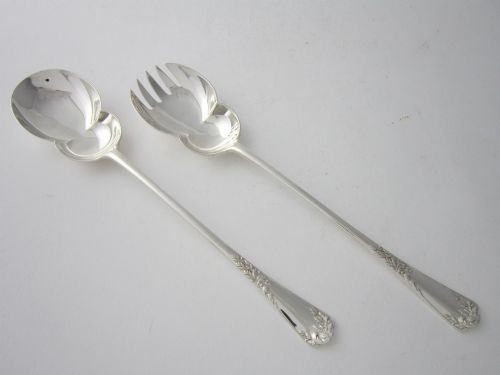
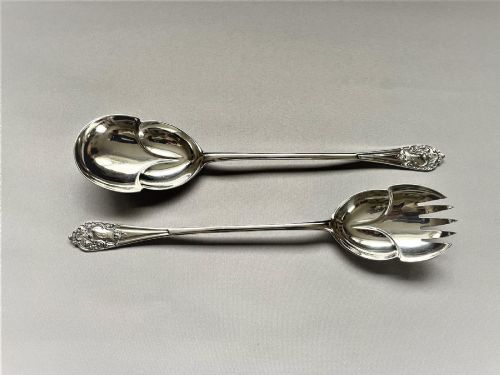
A vintage serving fork is a specialist dining implement intended for sharing dishes, appearing across forms such as fish servers, salad servers, and dedicated pickle or sardine forks. These pieces date from the nineteenth and twentieth centuries, spanning Victorian, Edwardian, Art Nouveau, and Art Deco periods.
How they were made
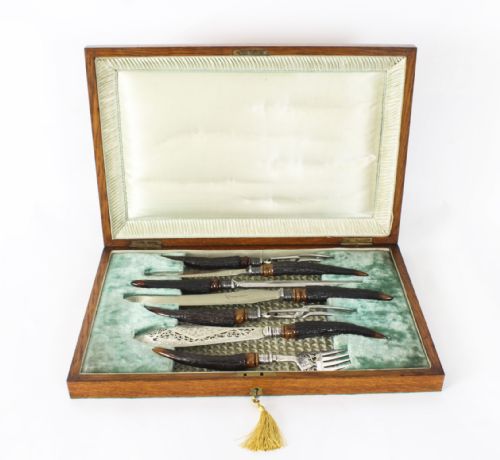
Metals such as sterling silver and silver plate form the primary structure of these items, shaped through traditional casting and smithing techniques. Handles frequently incorporate organic materials like stag antler, horn, and mother of pearl.
Detailing often relies on hand engraving, chasing, and glass components, particularly seen in salad servers combining silver with cut crystal or glass bowls.
Vintage Serving Fork Retail Price Guide 2026
Typical asking prices for vintage serving fork among the pieces listed under this phrase on Sellingantiques today, from the lower quarter to the upper quarter. They describe what is for sale here now, not the wider market.
Hunting and dog engravings decorate some nineteenth century fish server sets, bringing field sports straight to the dining table.
What varies in quality
Quality rests in the crispness of the engraved decoration and the integrity of the join between metal tines and organic handles like antler or horn. Makers marks and assay office stamps also elevate the standing of a piece.
The presence of original fitted boxes and matching sets indicates superior production, whereas heavier wear to silver plating marks the lower end of the range.
William Devenport·Georg Jensen·Alvin
The Vintage Serving Fork Glossary
- Sterling silver
- A silver alloy containing 92.5 percent pure silver by mass, standard for quality British tableware. It provides a durable and lustrous medium for intricate fork tines.
- Silver plate
- A layer of silver applied to a base metal core, common in nineteenth century serving cutlery. It offers the appearance of solid silver at a different scale of production.
- Assay office
- A statutory body that tests and marks precious metals for purity. Marks indicate the town of testing, such as Chester, Birmingham, or Sheffield, alongside the date letter.
- Rat tail
- A traditional strengthening ridge running down the back of a fork bowl or spoon bowl. It originates from earlier centuries and reappears on Edwardian serving pieces.
Vintage Serving Fork: Frequently Asked Questions
What is a vintage serving fork used for?
These forks serve specific dining functions, from lifting fish portions and tossing salads to serving pickles, sardines, or bread.
They were designed for communal dishes at the Victorian and Edwardian table, rather than individual use.
How do I clean sterling silver forks?
Clean sterling silver items with a soft cloth and a specialised silver polish formulated to preserve antique surfaces.
Avoid abrasive materials that might wear down hand engraving or damage organic handles such as mother of pearl or stag antler.
Are silver plated forks durable?
Silver plated items feature a layer of pure silver over a base metal, offering robust daily utility if handled with care.
Over decades of use, the underlying metal may become visible on high points, which forms part of their antique character.
How do I identify an Edwardian fork?
Edwardian pieces date from the reign of King Edward VII between 1901 and 1910, often displaying hallmarks with specific date letters.
Stylistically, they frequently draw on earlier Victorian motifs while incorporating lighter Art Nouveau influences.