



Vintage Serpentine Table
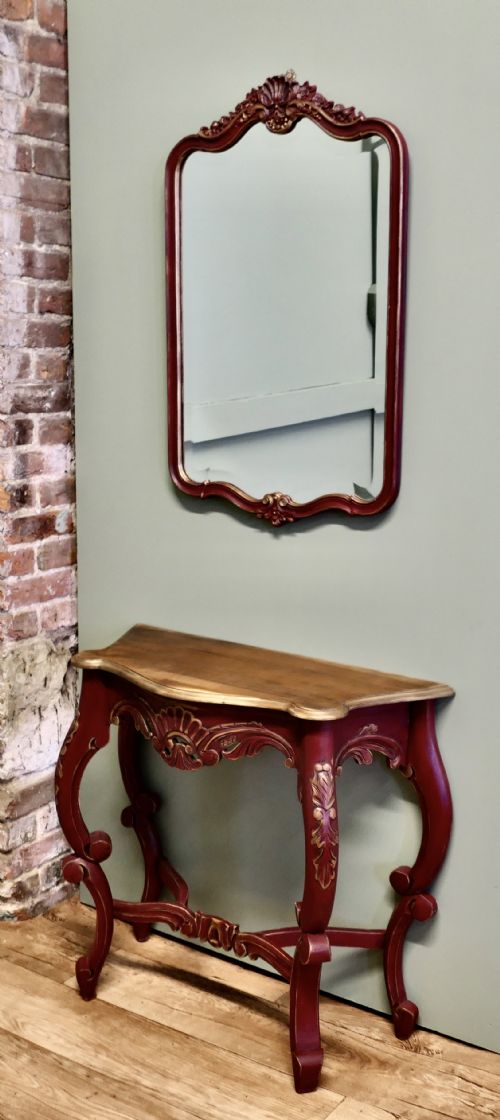
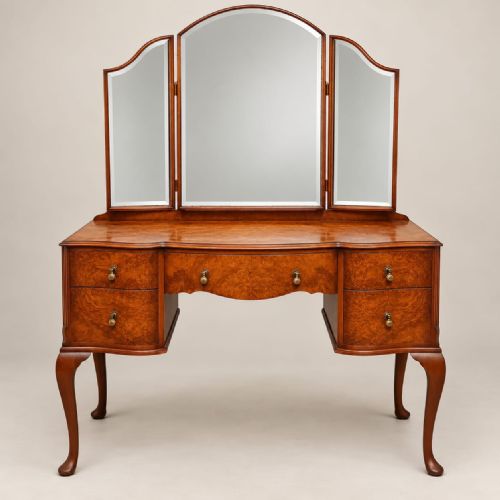
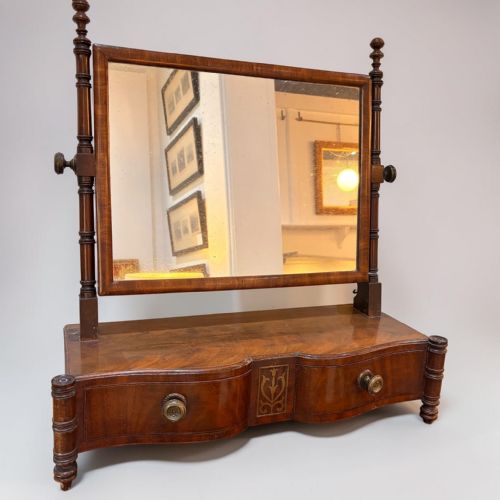
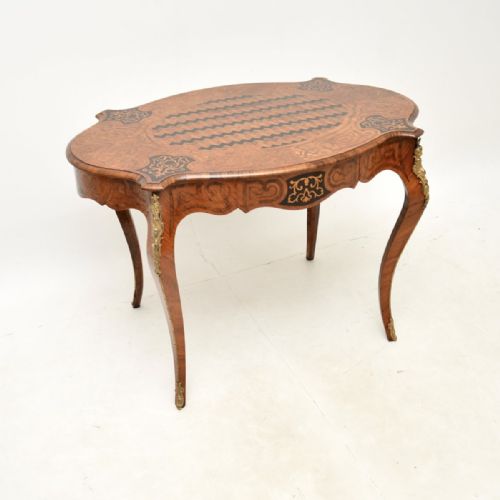
A vintage serpentine table brings an undulating silhouette to a room, offering desks, sideboards, and consoles shaped in walnut, mahogany, and marble.
Vintage Serpentine Table
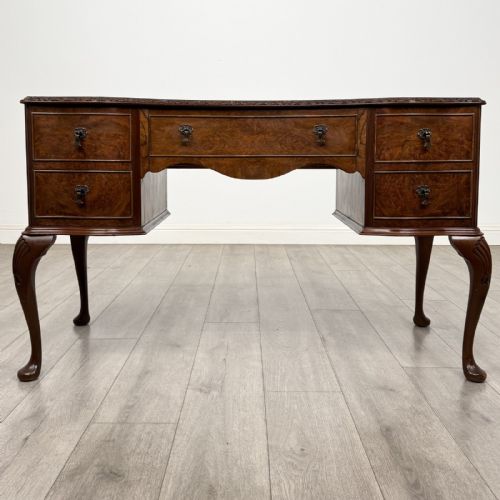
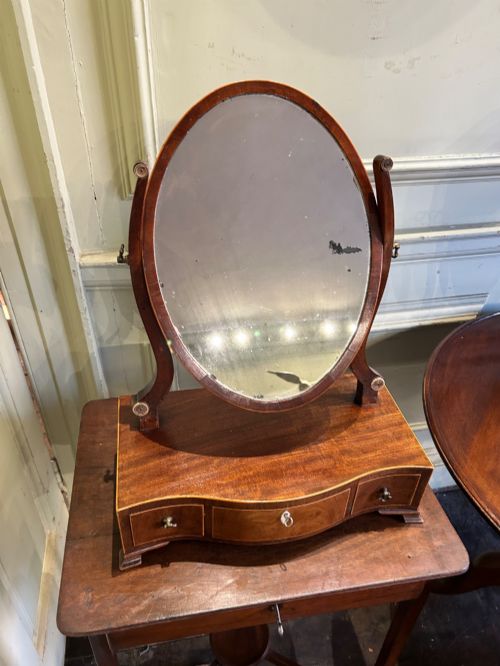
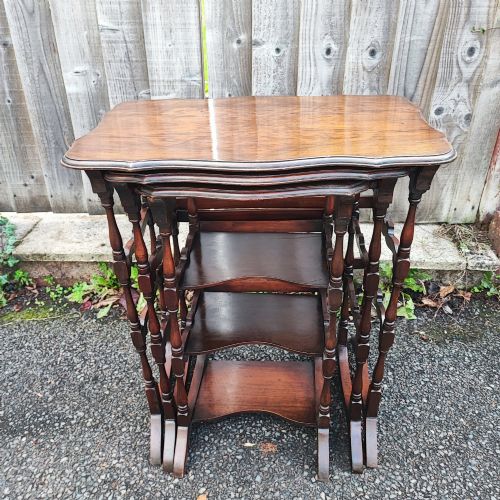
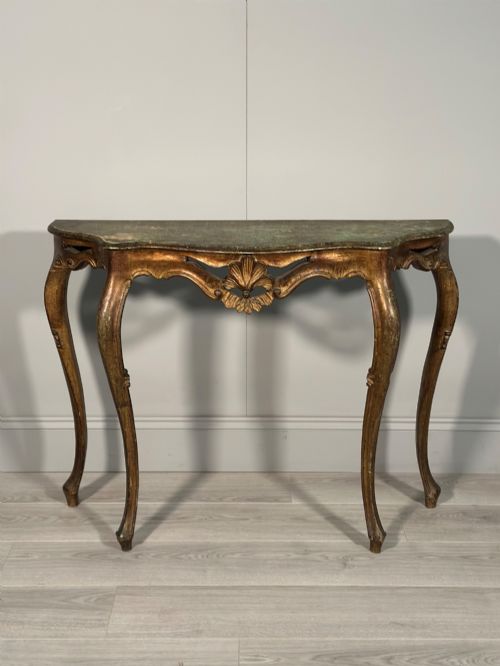
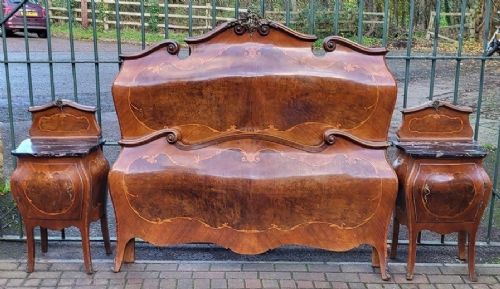
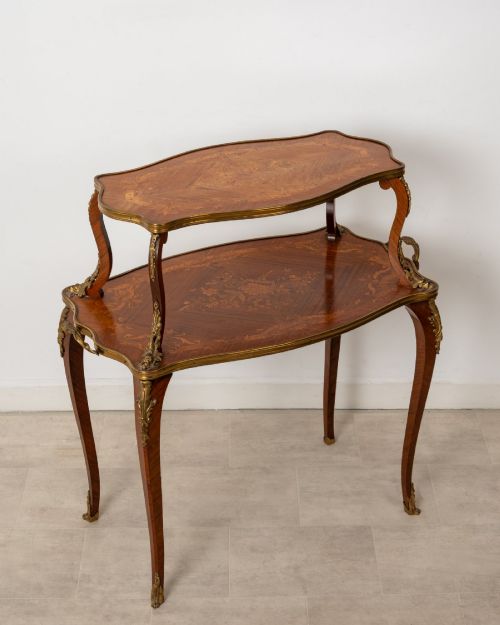
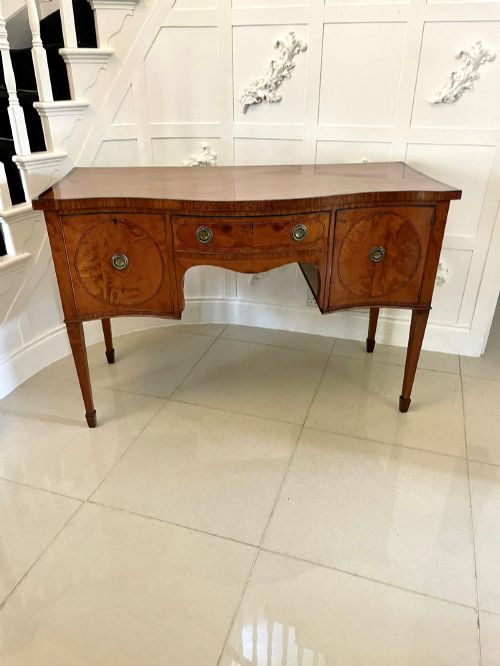
A vintage serpentine table takes many forms across this collection, appearing most frequently as desks, console tables, and bedside cabinets with a distinctively curved front edge. These pieces emerge from periods spanning the nineteenth century through the nineteen-thirties, reflecting Edwardian tastes and various revival movements.
Makers and designers channel earlier aesthetics, producing items aligned with Queen Anne style, Louis XV revival, and Georgian design principles. Buyers encounter these curved forms in domestic settings ranging from formal hallways to bedrooms, executed in diverse scales and timber varieties.
Materials and Construction Techniques
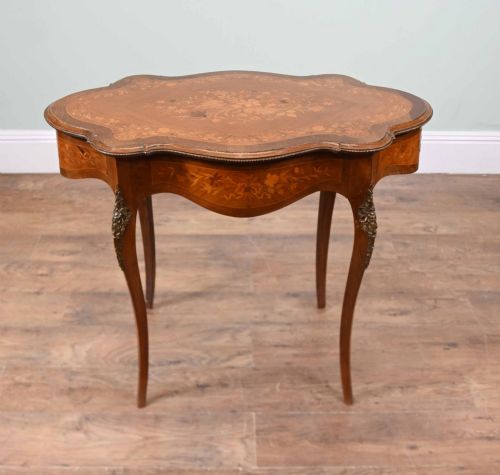
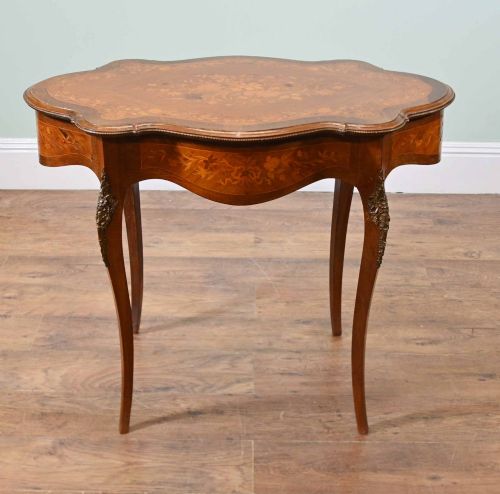
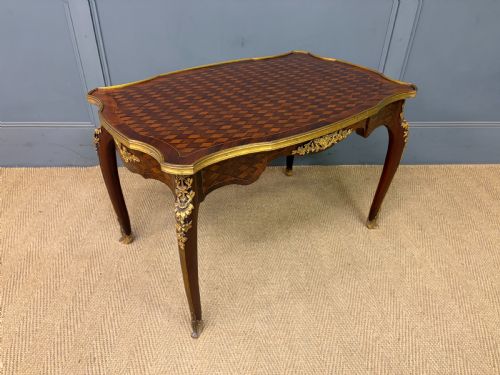
Craftsmen construct these pieces using solid timbers and decorative veneers, applying mahogany, walnut, and burr walnut across the curved framework. Marquetry, parquetry, and floral inlay appear on select surfaces, complemented by brass mounts, ormolu, and inset leather writing panels.
The characteristic undulating front requires precise woodworking to shape the solid wood and veneer to the curving contour. Marble tops feature on several console tables and bedside cabinets, supported by carved wood bases or gilt console frames.
Vintage Serpentine Table Retail Price Guide 2026
Typical asking prices for vintage serpentine table among the pieces listed under this phrase on Sellingantiques today, from the lower quarter to the upper quarter. They describe what is for sale here now, not the wider market.
Materials span mahogany, walnut, burr walnut, kingwood, satinwood, marble, brass, and ormolu.
Judging the Quality of Curved Furniture
Quality reveals itself in the harmony of the undulating line and the depth of the timber grain, particularly where burr walnut or figured mahogany is selected for the curved front. The precision of the inlay work and the integration of decorative veneers across a complex shape dictate the refinement of the piece.
Secondary elements such as original brass hardware, well-fitted marble tops, and detailed carving on console bases separate standard production from more ambitious examples. The fluidity of the serpentine curve itself governs the visual success of the design.
The Vintage Serpentine Table Glossary
- Serpentine
- A furniture front or edge that curves outward in the centre and inward at the sides, resembling a snake's movement. This contour defines the primary silhouette of the pieces grouped under this search.
- Burr Walnut
- Timber taken from a walnut tree growth, yielding highly figured, swirling grain patterns. It is frequently utilised on the veneered surfaces of desks and tables.
- Marquetry
- Decorative patterns formed by inserting small pieces of wood veneer into a background panel. It appears in floral and geometric designs on French-influenced tables and cabinets.
- Ormolu
- Gilt bronze mounted onto furniture as decorative ornamentation. This material accents the frames and mounts of revival console tables and cabinets.
- Console Table
- A table designed to stand against a wall, frequently topped with marble and supported by carved or gilt legs. These pieces function in entrance halls and reception rooms.
Vintage Serpentine Table: Frequently Asked Questions
Where should I place a serpentine console table?
A serpentine console table suits hallways and reception rooms where its curved front provides a focal point without blocking circulation.
Pairs of matching marble-topped versions also function well as bedside cabinets or lamp tables flanking a bed or sofa.
How do I identify a Louis XV revival piece?
Louis XV revival pieces exhibit characteristic asymmetry, flowing curves, and floral marquetry or kingwood veneers. Ormolu mounts and cabriole legs frequently accompany these French-influenced designs.
They date primarily from the nineteenth and early twentieth centuries rather than the original eighteenth-century period.
What maintenance do marble-topped tables need?
Marble tops require gentle cleaning with a damp cloth and mild soap to protect the polished stone surface from staining and acid erosion. Avoid placing acidic liquids directly onto the marble.
Waxing the wooden bases separately preserves the finish of walnut and mahogany timbers.
Are these desks practical for daily work?
Many Edwardian and revival desks feature fitted drawers and leather-lined writing surfaces suitable for modern writing tasks. Their dimensions accommodate contemporary chairs while maintaining a compact footprint.
Pedestal and writing table variants offer internal storage for stationery and small items.