


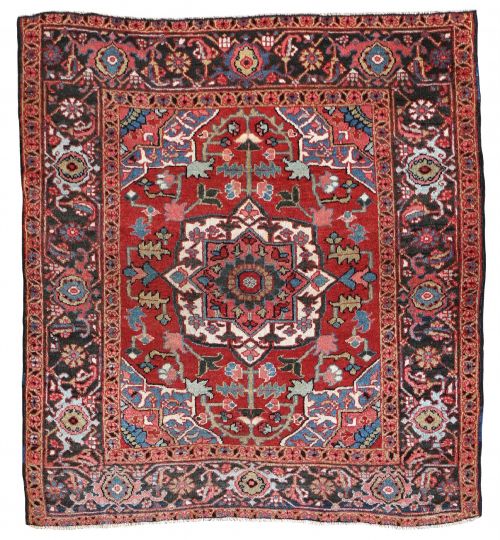


Vintage Serapi Style Rug
A vintage serapi style rug brings bold geometry and rich Northwest Persian Heriz character directly to your floor.
Vintage Serapi Style Rug
When you search for a vintage serapi style rug, you are looking at hand-knotted room-size carpets and hallway runners originating from the Northwest Persian Heriz region. These pieces span the decades from the late nineteenth century through the early twentieth century, specifically appearing across the eighteen-eighties, eighteen-nineties, nineteen-hundreds, nineteen-tens, nineteen-twenties, and nineteen-thirties.
The most common formats you will encounter on this page are large area rugs and long runners. They serve as durable floor coverings designed to anchor a room with traditional Persian artistry.
Makers in this tradition structured their compositions around geometric medallions and all-over designs. Each piece reflects the distinctive visual vocabulary of Northwest Persian Heriz weaving.
Materials and construction
These floor coverings are constructed using wool and cotton. Wool forms the pile, providing resilience and warmth underfoot, while cotton serves as the foundation for the warp and weft threads.
Weavers tied the wool pile by hand onto cotton foundations to create dense and durable textiles. This traditional technique ensures the structural integrity required for large carpets and narrow runners.
Vintage Serapi Style Rug Retail Price Guide 2026
Typical asking prices for vintage serapi style rug among the pieces listed under this phrase on Sellingantiques today, from the lower quarter to the upper quarter. They describe what is for sale here now, not the wider market.
Every runner in this collection began as raw wool sheared from sheep in the mountains of Northwest Persia over a century ago.
Evaluating the weaving
Quality in these rugs lies in the crispness of the geometric drawing and the balance of the composition. Better examples display precise execution in their large medallions and all-over motifs.
The handle and density of the wool pile also separate finer examples from standard production. A tightly packed knot count gives the carpet a firm, heavy feel that lies flat and withstands decades of foot traffic.
The Vintage Serapi Style Rug Glossary
- Heriz
- A style of carpet originating from the Northwest region of Persia. These pieces are known for their bold geometric designs and robust construction.
- Runner
- A long, narrow carpet format used primarily in hallways and corridors. They feature extended proportions to fit confined spaces.
- Warp
- The vertical foundation threads stretched lengthwise on the loom. Cotton is commonly used for these structural elements.
- Weft
- The horizontal threads passed across the warp to hold the knots in place. Together, warp and weft form the sturdy backing of the rug.
Vintage Serapi Style Rug: Frequently Asked Questions
What is a Heriz carpet?
A Heriz carpet is a hand-knotted floor covering from Northwest Persia. These pieces feature distinctive geometric medallions and traditional motifs.
They date from the late nineteenth century into the twentieth century and are known for their durable wool and cotton construction.
How do I use a runner rug?
Runner rugs are long, narrow carpets designed specifically for hallways and corridors. They add warmth and colour to transitional spaces in the home.
When placing a runner, ensure it leaves visible borders of flooring on either side to properly frame the walkway.
How do I date these rugs?
Dating relies on stylistic analysis, structural examination, and historical records of weaving traditions. Pieces in this category generally originate between the eighteen-eighties and the nineteen-thirties.
Examining the wear patterns, wool quality, and dye characteristics helps place a carpet within this multi-decade span.
Are these rugs durable?
Yes, these carpets are exceptionally durable due to their traditional hand-knotted wool pile and cotton foundations. They were built to withstand heavy daily use in busy rooms.
Regular care and proper padding help preserve the wool pile and structural integrity for years to come.