



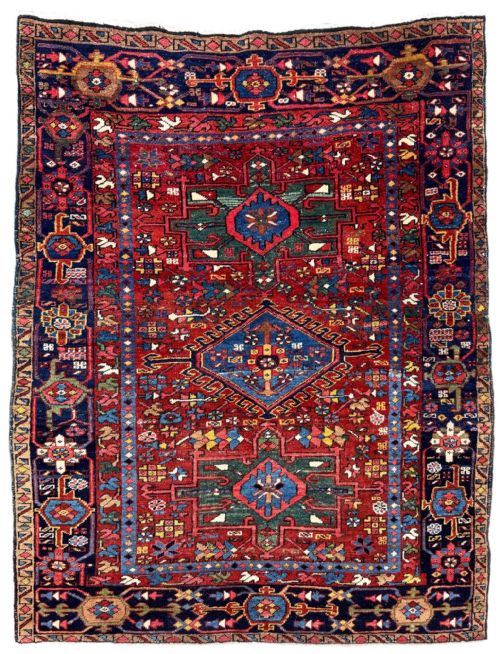


Vintage Serapi Rug
A vintage serapi rug brings bold geometric balance and enduring floor warmth to any room.
Vintage Serapi Rug
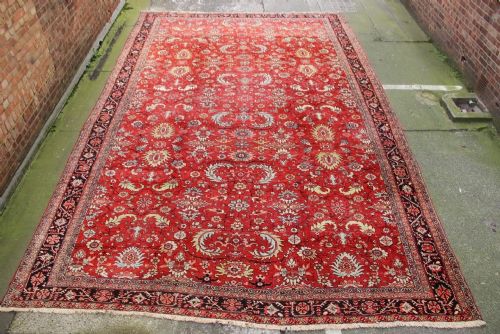
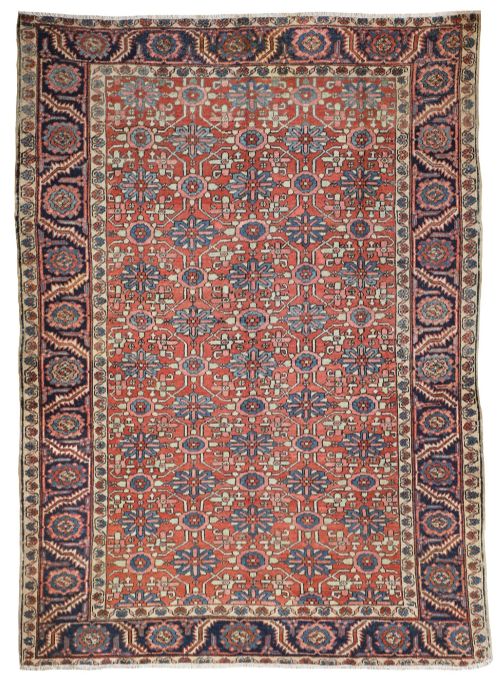
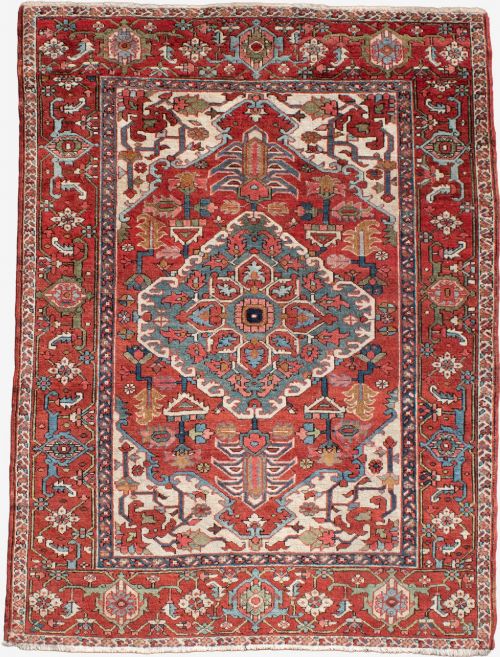
A vintage serapi rug is a large floor covering or runner rooted in Persian Heriz and traditional Persian styles. These woven pieces emerge from periods spanning the late nineteenth century into the early decades of the twentieth century, specifically from 1870 to 1930.
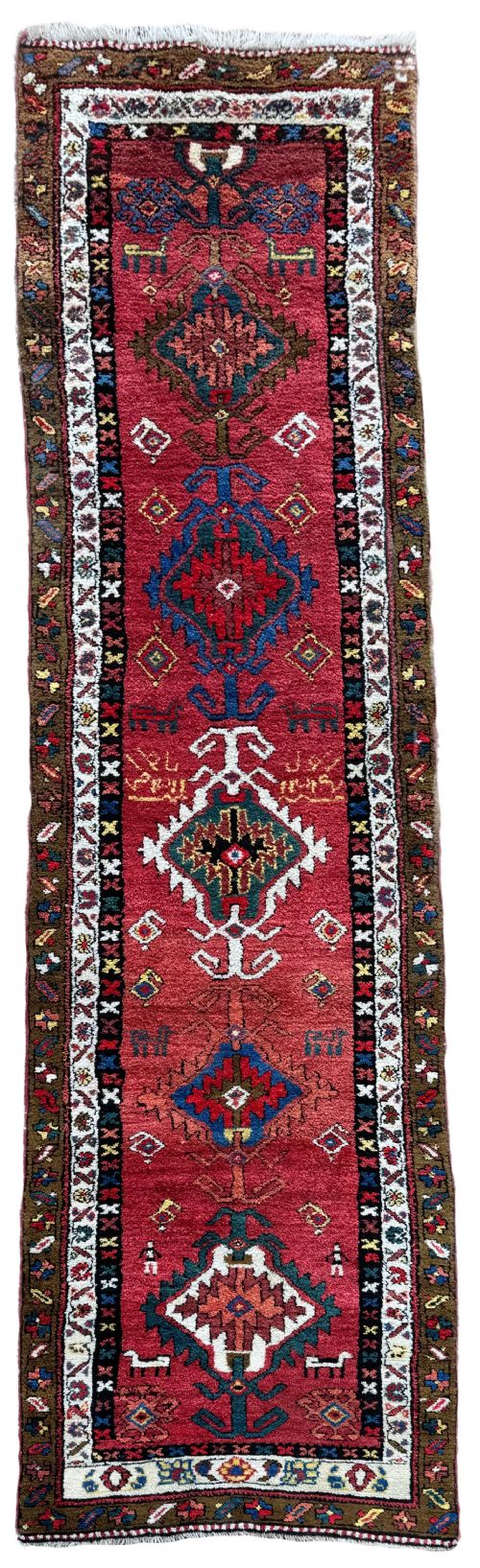
Buyers encounter formats ranging from compact area rugs to substantial gallery carpets and long hallway runners. The predominant forms carry large geometric patterns and distinctive central medallions that define the aesthetic of Northwest Persian workshops.
How they were made
Makers constructed these floor coverings utilising durable wool pile knotted firmly onto sturdy cotton foundations. This pairing of natural materials provided the structural integrity needed to withstand decades of foot traffic in domestic spaces.
Weavers relied on traditional hand-knotting techniques passed down through generations in Persian regions. Natural dye stuffs infused the wool with rich colour palettes that aged gracefully over centuries.
Vintage Serapi Rug Retail Price Guide 2026
Typical asking prices for vintage serapi rug among the pieces listed under this phrase on Sellingantiques today, from the lower quarter to the upper quarter. They describe what is for sale here now, not the wider market.
Listings span seven decades of production, incorporating wool and cotton across rug, runner, and carpet formats.
What varies in quality
Knot density and structural tightness dictate the resilience of each woven textile across its lifespan. Carpets with finer, more uniform knotting maintain their geometric precision and structural integrity far better than looser examples.
The clarity and balance of the central medallion design separate standard room coverings from superior artistic achievements. Artisans who maintained strict symmetry and harmonious colour saturation created pieces with lasting visual impact.
The Vintage Serapi Rug Glossary
- Medallion
- The prominent central ornamentation found in the middle of the field. This focal motif often anchors the entire geometric composition of the textile.
- Runner
- A long, narrow carpet format designed specifically for corridors and hallways. These pieces manage linear spaces while displaying repeating patterns.
- Pile
- The upright yarn surface formed by the knotted wool loops on a carpet. Walking compresses this soft upper layer over many years of use.
- Foundation
- The underlying grid of warp and weft threads that supports the knotted wool pile. Cotton provides a strong and stable base for these heavy floor coverings.
Vintage Serapi Rug: Frequently Asked Questions
Where were these rugs made?
These floor coverings originate from Persian regions, specifically drawing on traditions from the Heriz district in Northwest Persia.
Local artisans produced these textiles using wool and cotton materials across the late nineteenth and early twentieth centuries.
How do I care for my rug?
Protect the wool pile by vacuuming gently without a rotating brush bar to prevent fibre damage.
Keep the cotton foundation away from excessive moisture and utilise a quality underlay to reduce friction against hard floors.
What size do these rugs come in?
The available formats range from small area rugs to large gallery carpets exceeding four metres in length.
Narrow runners are also common for hallways, alongside square and rectangular room-sized carpets.
How do I identify the period?
Dating relies on stylistic markers, knotting structure, and recorded production eras spanning from 1870 to 1930.
Earlier pieces often display specific geometric variations and natural dye traits characteristic of nineteenth-century Persian weaving.