
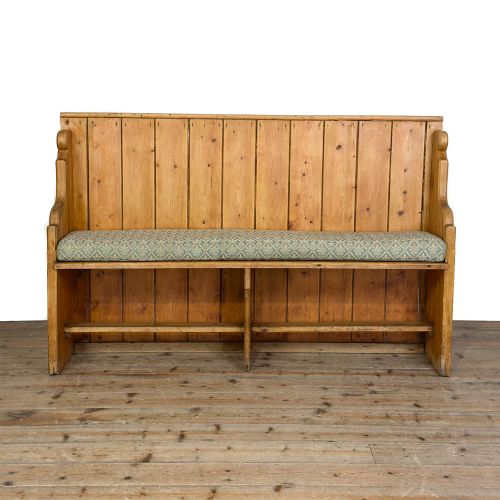
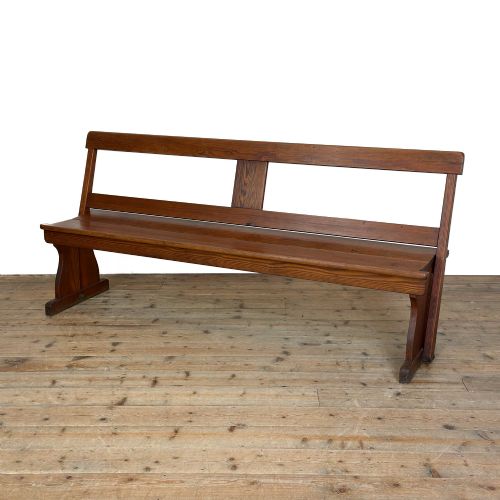
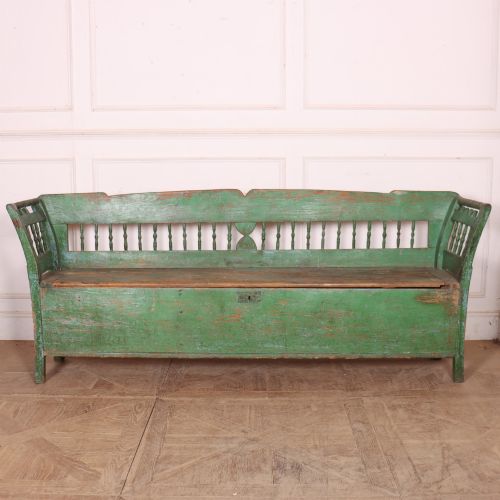
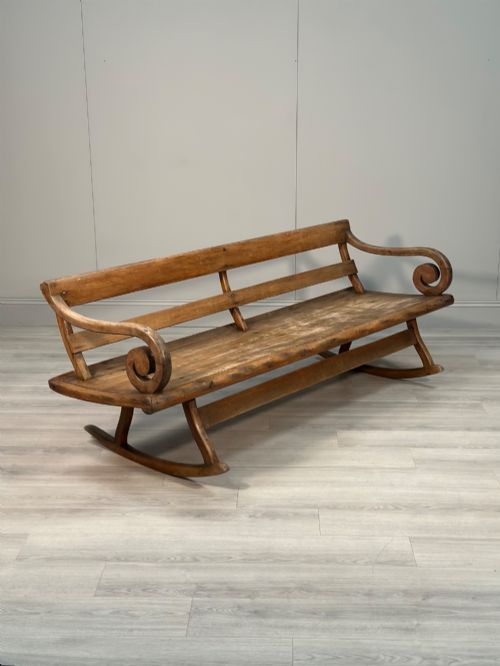
Vintage Seating Settle
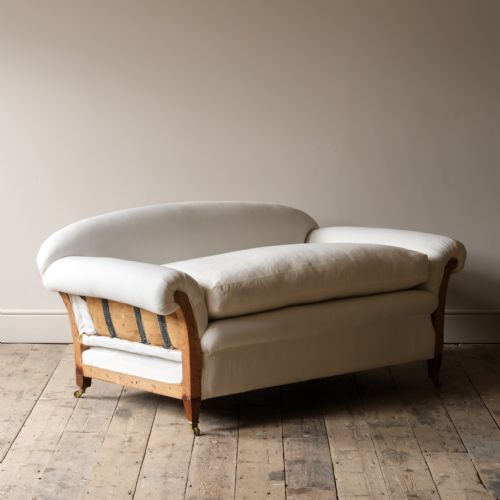
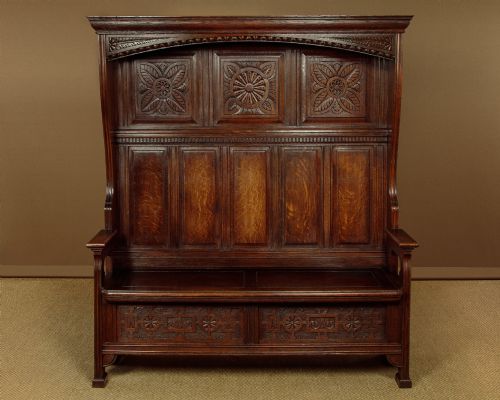
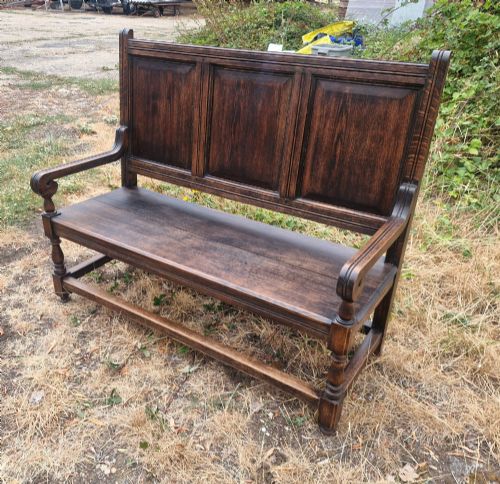
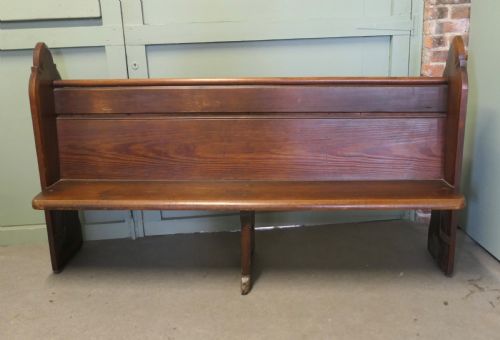
These vintage seating settle pieces are robust wooden benches designed to anchor a hallway or kitchen with practical storage and high-backed comfort.
Vintage Seating Settle
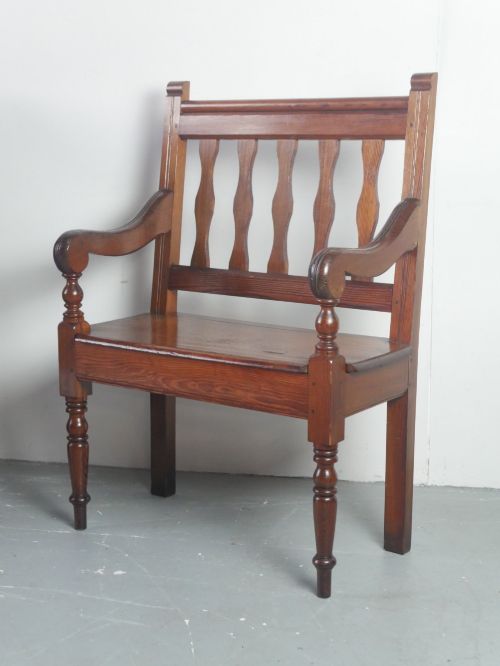
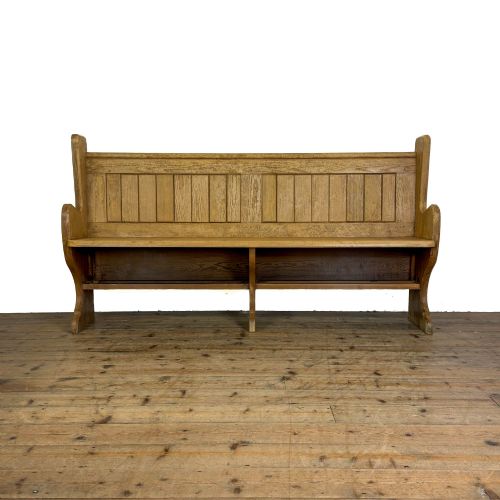
A vintage seating settle provides high-backed timber accommodation that traditionally kept draughts away from firesides and doorways. These communal seats emerge in forms ranging from simple church pews and tavern benches to elaborate panelled box settles with lift-up lids for storage.
The versions most commonly met on this page date from the nineteenth and early twentieth centuries, spanning Victorian, Edwardian, and Arts and Crafts movements. Buyers encounter regional variations too, including Hungarian folk art benches and English country pine pieces.
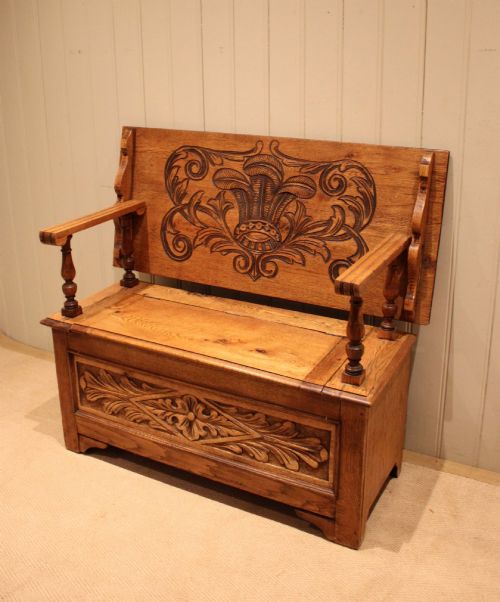
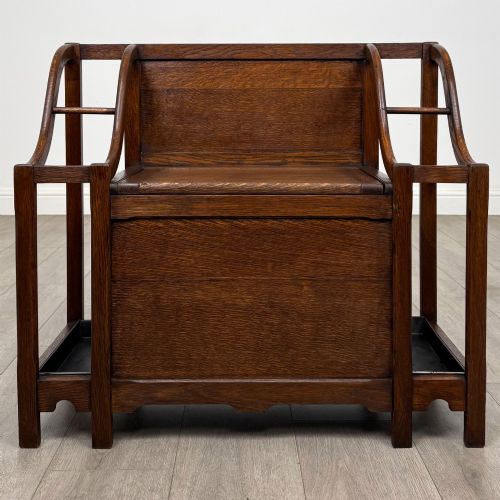
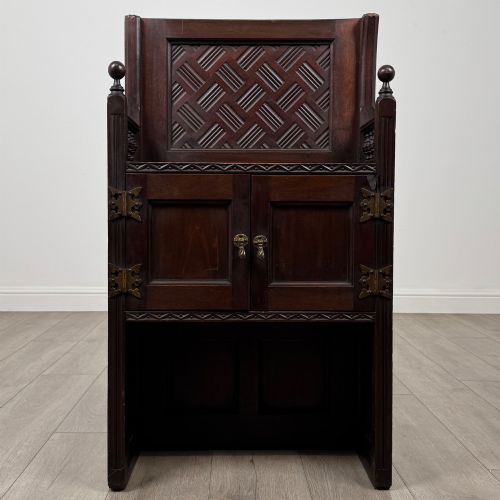
Makers adapted these forms into monks benches that double as tables, and hall seats that incorporate umbrella stands or boot stores. Their sturdy construction makes them practical for modern mudrooms, kitchens, and large hallways.
Materials and construction methods
Makers relied principally on solid oak and pine, supplemented by walnut, mahogany, and occasional iron or brass hardware. Timber was selected for its structural strength to endure heavy daily use in domestic and institutional settings.
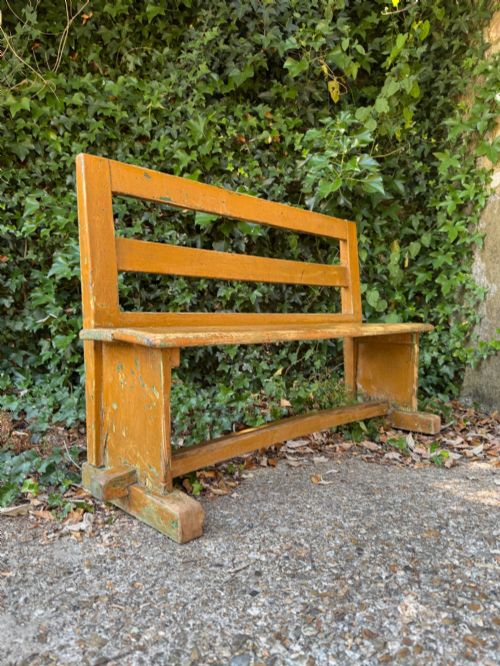
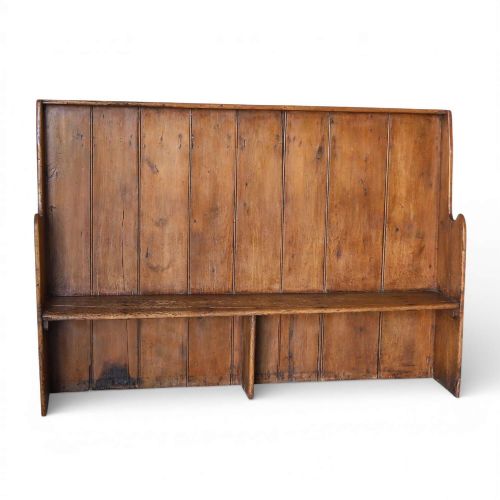
Joinery methods include panelled construction, tongue-and-groove planking, and traditional pegging for framework. Surfaces were finished with wax, honey brown patina, or decorative paint layers in blue, grey, green, or black.
Carving and turnings define the decorative approach, particularly within the Jacobean Revival and Arts and Crafts traditions. Many pieces combine functional elements like flip-over tops and hinged seats without compromising stability.
The furniture forms span church pews, chapel benches, corner sofas, and hall seats equipped with boot storage or umbrella stands.
Distinguishing quality in timber benches
Quality rests in the integrity of the timber selection and the retention of original surfaces, whether waxed grain or early painted finishes. Pieces retaining untouched patination command greater interest than those stripped down or heavily restored.
Structural refinement separates standard utilitarian furniture from exceptional cabinet work. Well-made examples feature integrated storage boxes with sound hinges, tight joinery in the high backs, and crisp, hand-carved details rather than crude assembly.
Liberty·Shapland & Petter
The Vintage Seating Settle Glossary
- Settle
- A wooden bench with a high back, solid arms, and often a closed base or box seat. This form protected sitters from cold draughts in historical interiors.
- Monks Bench
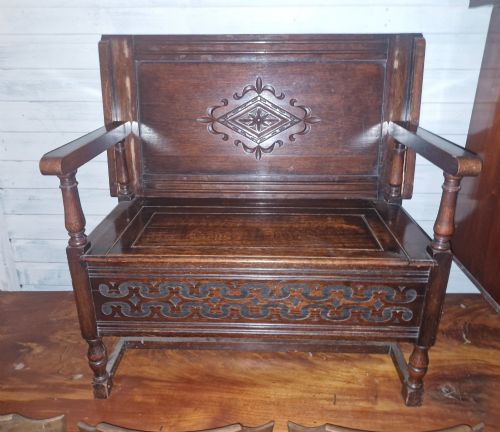
- A multifunctional furniture piece featuring a hinged top that folds over to convert the backrest into a table surface. It offers dual utility for compact spaces.
- Box Settle
- A bench incorporating a storage compartment beneath the hinged seat. It provides concealed space for blankets, boots, or household items.
- Patina
- The surface sheen and colour developed by timber and paint over decades of handling and exposure. It indicates age and careful maintenance.
- Cassapanca
- An Italian wooden bench featuring a chest base and a backrest, often elaborately carved. These grand seats served as status furniture in Renaissance and revival interiors.
Vintage Seating Settle: Frequently Asked Questions
Where should I place a settle?
A vintage settle suits entrance hallways, boot rooms, and large kitchens where its high back and solid presence provide both seating and a strong focal point. Many models include lift-up seats or compartments that double as storage for shoes and textiles.
In larger open-plan living spaces, these benches create natural partition lines or cosy reading corners. Their narrow footprint allows them to sit flush against walls without obstructing walkways.
How do I maintain a wooden bench?
Maintain waxed pine or oak furniture by applying a quality beeswax polish sparingly to nourish the timber and preserve its natural patina. Avoid placing antique seating near direct heat sources or in strong sunlight to prevent wood splitting.
Painted surfaces require gentle cleaning with a dry or barely damp cloth, avoiding abrasive chemical cleaners that strip historical finishes. Check hinges and joints periodically to ensure structural stability remains sound.
What is a monks bench used for?
A monks bench serves as a dual-purpose item of furniture that converts from a high-backed seat into a table by folding the backrest forward. This clever mechanism provided dining space and seating within a single footprint in older homes.
Today, they function well as hallway pieces where the table top provides a surface for post and keys before lifting to reveal storage underneath.
How do I date a church pew or settle?
Dating relies on examining the timber species, tool marks, joinery techniques, and overall stylistic influences such as Arts and Crafts or Jacobean Revival. Nineteenth-century pine and Victorian oak pieces often display hand-sawn markings or peg construction that distinguishes them from later reproductions.
Original painted surfaces, where present, offer clues through pigment analysis and wear patterns consistent with period interiors.