


Vintage Sconces
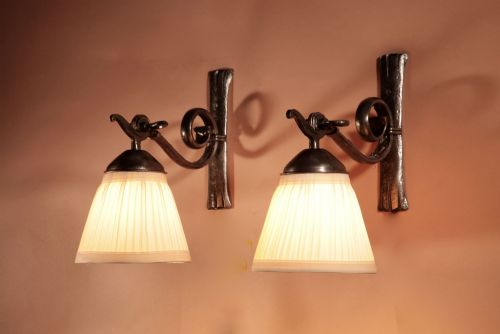
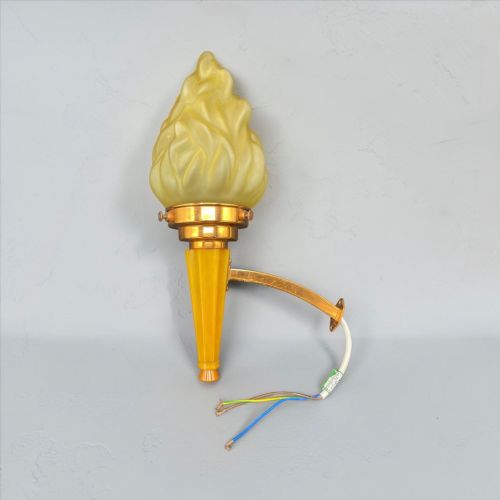
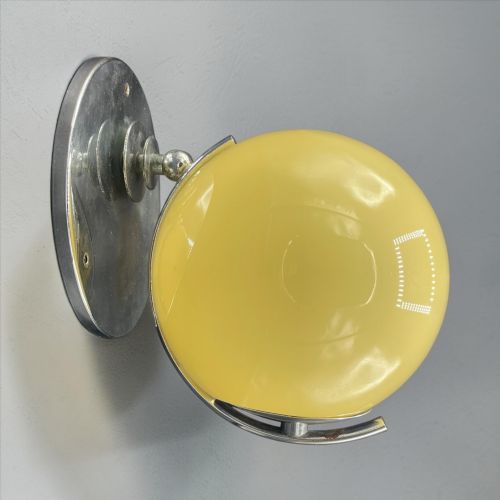
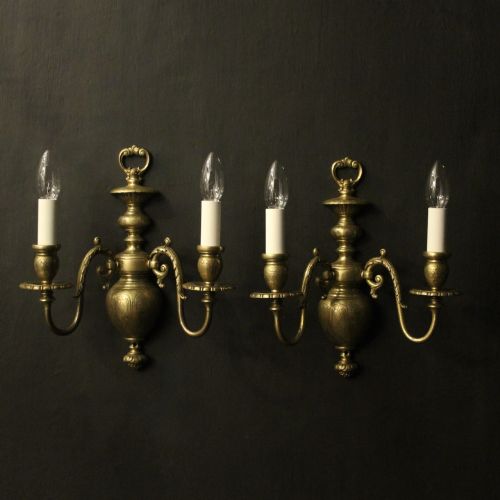
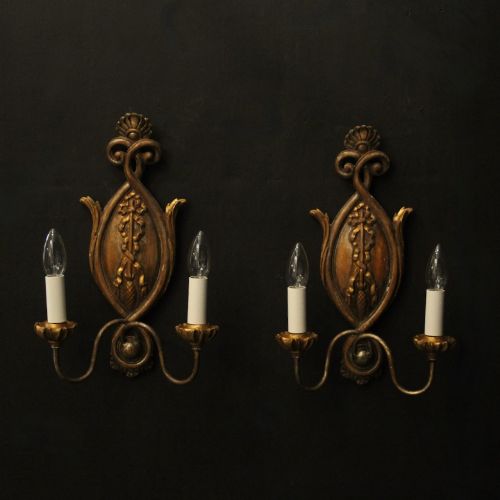
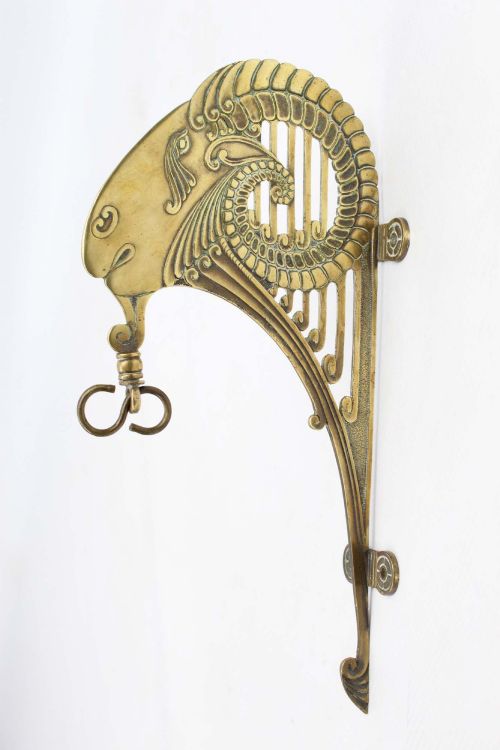
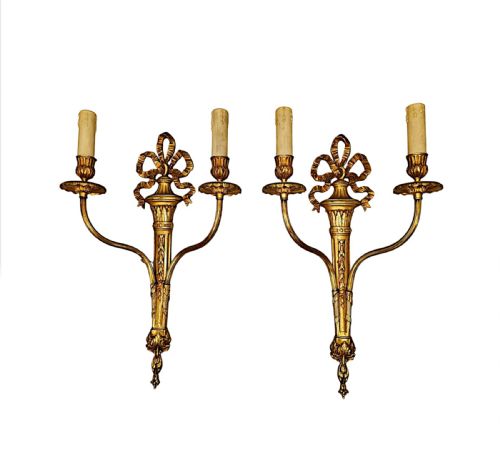
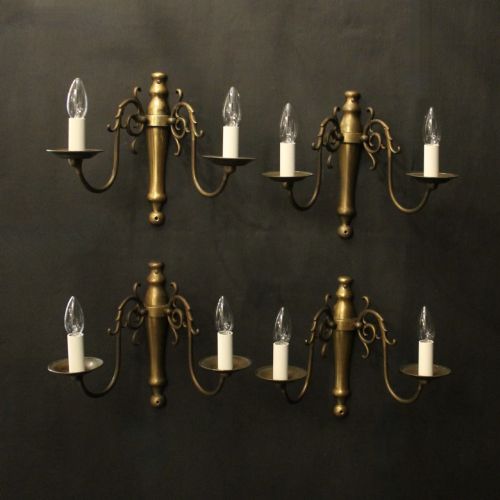
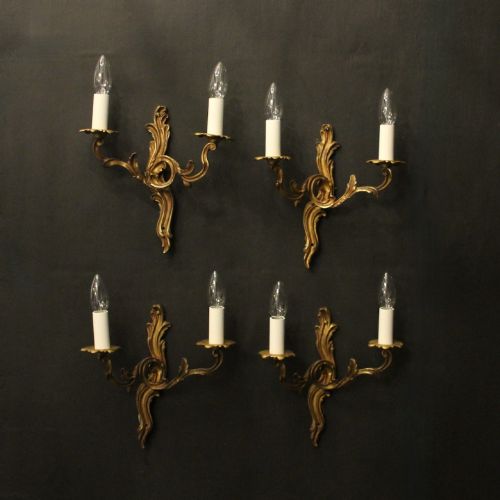
These vintage sconces bring period illumination to a room, spanning styles from French Rococo and Art Deco to Arts & Crafts.
Vintage Sconces
Vintage sconces encompass wall-mounted light fixtures and candle holders designed to illuminate interiors from the nineteenth century through the mid twentieth century. Buyers seeking these pieces encounter a diverse selection of wall lights, girandoles, and candle brackets originating from English, French, and Florentine workshops.
The most prevalent examples on this page date from the Edwardian era and the nineteen-twenties, incorporating brass, bronze, and giltwood. Forms range from simple single-arm brackets to elaborate multi-branch French gilded fixtures and carved wood designs.
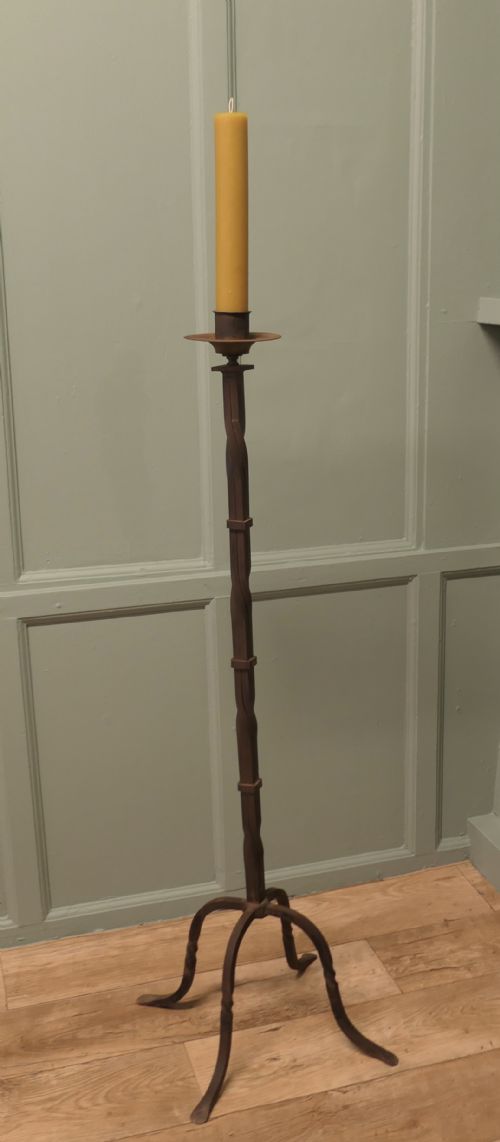
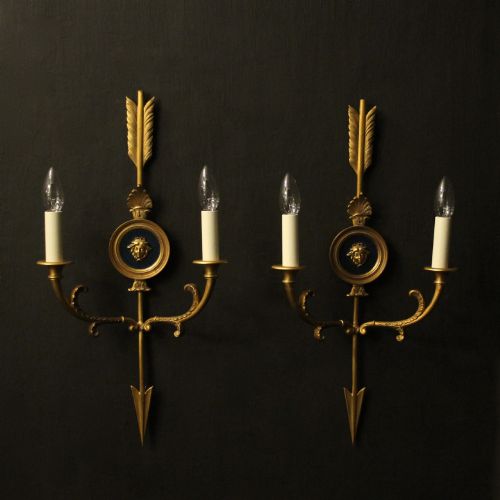
Makers and designers of the period utilised varied materials such as copper, wrought iron, and crystal to achieve distinct aesthetic impacts. Pieces often reflect specific regional tastes, including Florentine silver giltwood and French empire styling.
How they were made
Metalwork forms the backbone of these pieces, utilising cast brass, forged wrought iron, and chased bronze. Craftsmen frequently applied gilt or silver plating to bronze and brass bases to enhance decorative presence.
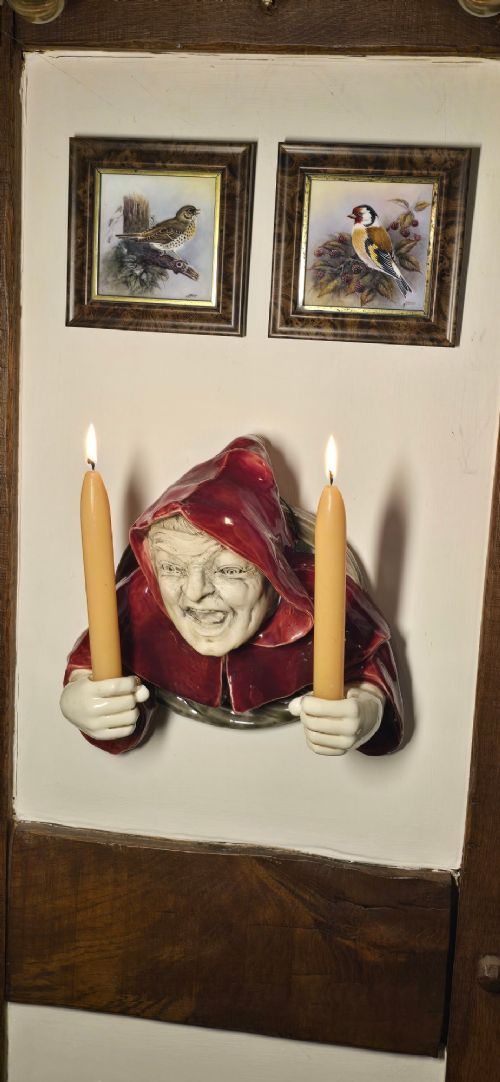
Wooden components, particularly in Florentine and carved wall brackets, rely on traditional joinery and hand-carved giltwood or burr walnut. Artisans integrated glass shades, crystals, and ceramic elements like parian ware and Delft pottery into the metal frameworks.
Listings feature brass, bronze, giltwood, and copper across periods from the nineteenth century to nineteen fifty.
What varies in quality
The degree of hand-finishing on metal castings and carved wooden elements dictates the refinement of a piece. Crisp detail in the chasing of bronze or the carving of giltwood separates standard production items from superior examples.
Material integrity and the survival of original surface treatments, such as gilding or silver plating, define the standing of individual sconces. Cohesion between original mounts, structural brackets, and associated glass or crystal components adds to the integrity of the object.
Geoffrey Bellam·W.A.S. Benson·Maison Baguès·Villeroy & Boch
The Vintage Sconces Glossary
- Girandole
- An ornamental branched candlestick or light fixture designed to be mounted on a wall, often incorporating a mirror to reflect the light. These pieces frequently appear in Florentine giltwood styles.
- Ormolu
- Gilded bronze, where a finely ground high-carat gold mercury amalgam is applied to a bronze object. This technique appears widely on French empire and nineteenth-century wall lights.
- Chamberstick
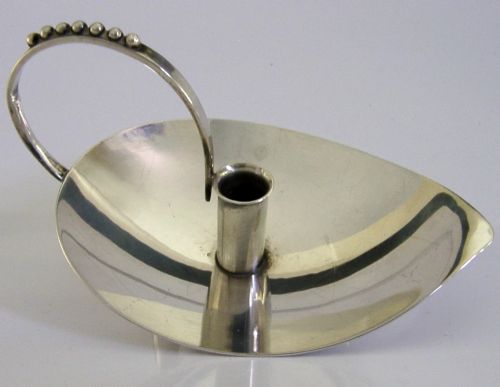
- A portable candlestick fitted with a shallow pan and a handle for carrying from room to room. Some examples are adapted for wall hanging or table use.
- Parian ware
- A type of unglazed biscuit porcelain resembling white marble, utilised for sculptural wall brackets and decorative mounts during the nineteenth century.
Vintage Sconces: Frequently Asked Questions
How do I install vintage wall lights?
Most vintage sconces require professional electrical installation to secure the mounting plate safely to wall studs and integrate older wiring with modern circuits.
For pieces designed originally for candles, such as girandoles or chambersticks, mounting involves simple mechanical fixing without electrical considerations.
What rooms suit vintage sconces best?
Sconces suit hallways, living rooms, and bedrooms where ambient wall lighting creates a warm atmosphere.
Pairs or sets of four function effectively flanking mirrors, fireplaces, or beds to balance illumination across a space.
How do I date an antique sconce?
Dating relies on examining manufacturing techniques, material choices, and stylistic markers such as Art Deco geometry or French Rococo curves.
Makers' marks, screw types, and the composition of the metal or wood also help establish the period of manufacture.
Can I mix different styles of sconces?
Mixing styles like Arts & Crafts copper with French gilt bronze introduces textural contrast and depth to an interior scheme.
Keeping a common element such as metal tone or scale helps unify disparate pieces within the same room.