






Vintage Scientific Gauge
These vintage scientific gauge instruments measure pressure, temperature, and wind, offering precise engineering housed in brass, mahogany, and glass for modern display.
Vintage Scientific Gauge
A vintage scientific gauge encompasses instruments designed for measurement in domestic, industrial, and maritime settings, spanning the eighteenth century through the early twentieth century.
Makers shaped these pieces during the Georgian, Victorian, and Edwardian eras, utilising materials suited to precision tasks.
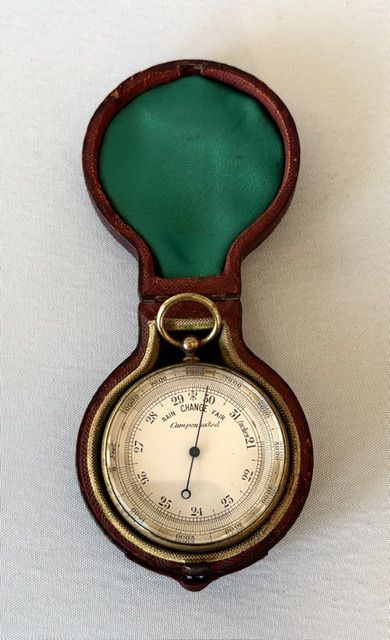
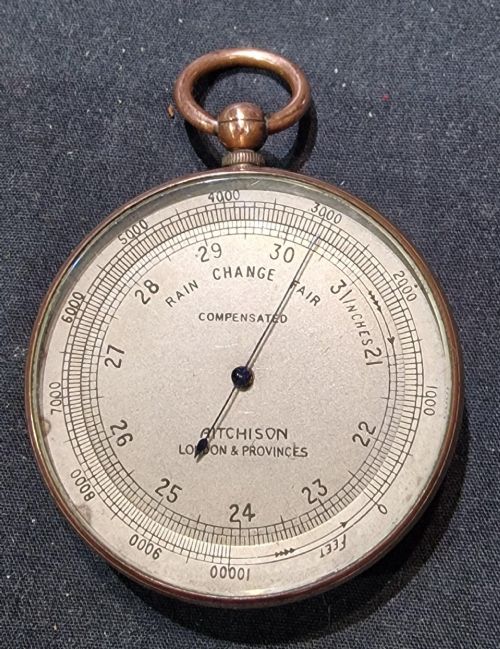
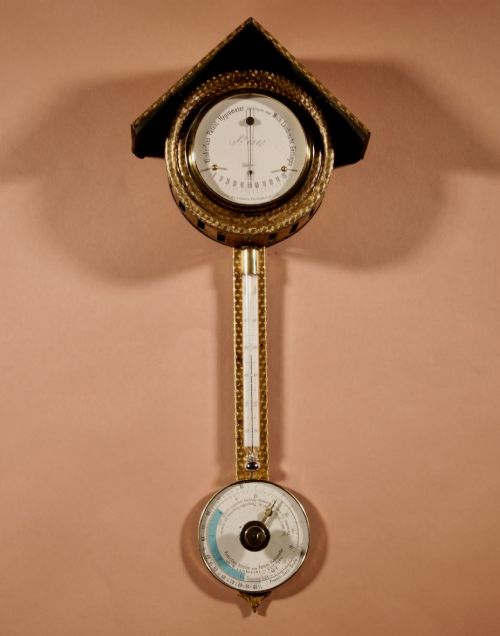
On this page, buyers encounter barometers, thermometers, hygrometers, and anemometers housed in wood or metal cases, often retaining original fitted packaging.
Materials and Technique
Craftsmen built instrument cases from dense timbers such as mahogany, rosewood, beech, and boxwood, frequently employing fine inlay or ebonising for finish.
Internal mechanisms rely on brass, steel, and glass components, paired with dials featuring engraved or printed markings.
Vintage Scientific Gauge Retail Price Guide 2026
Typical asking prices for vintage scientific gauge among the pieces listed under this phrase on Sellingantiques today, from the lower quarter to the upper quarter. They describe what is for sale here now, not the wider market.
An eighteenth-century excise officer required a boxwood slide rule to measure the volume of spirits in transit.
The Measure of Quality
Quality rests in the legibility of the dial scales, the crispness of the maker's engraved signatures, and the integrity of the fitted cases.
Fine examples retain original glass lenses, unpolished metal surfaces, and working mechanical parts that demonstrate the maker's precision.
The sophistication of the mechanism, from simple pocket barometers to recording rain gauges and anemometers, dictates the standing of the piece.
Wilh Lambrecht Gottingen·Poulenc Freres of Paris·Short And Mason London·Alfred Apps·George Adams·Patrick Adie·Negretti And Zambra·J Hicks·C F Casella·Alexander Wright·Dollond Of London·W Watson And Sons
The Vintage Scientific Gauge Glossary
- Barometer
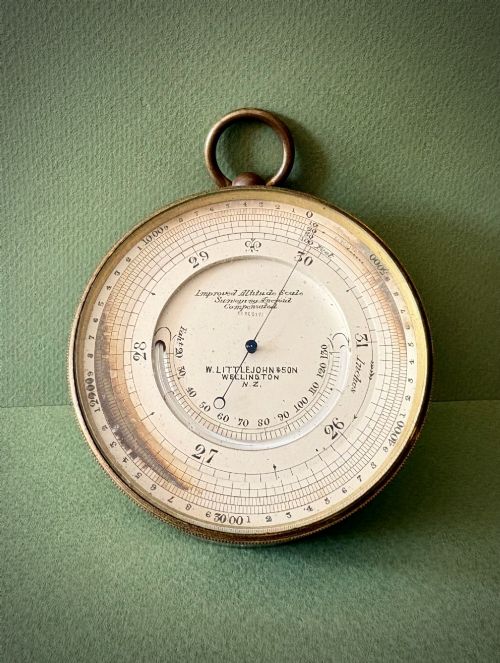
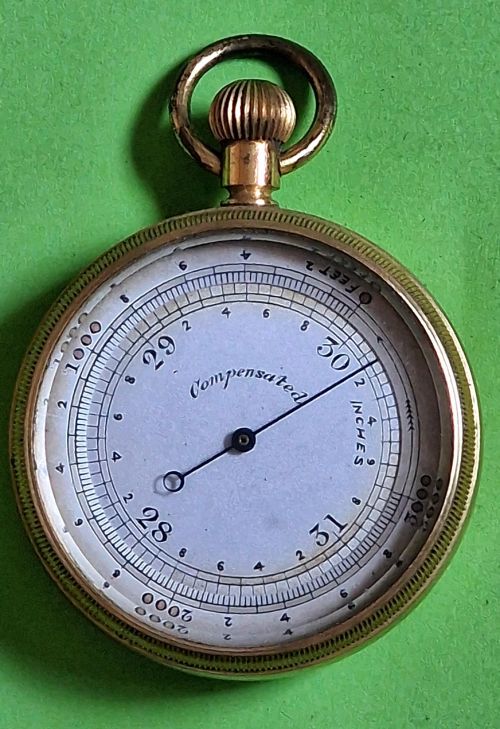
- An instrument used for measuring atmospheric pressure to forecast weather changes. Many examples utilise aneroid movements housed in wood or brass frames.
- Anemometer
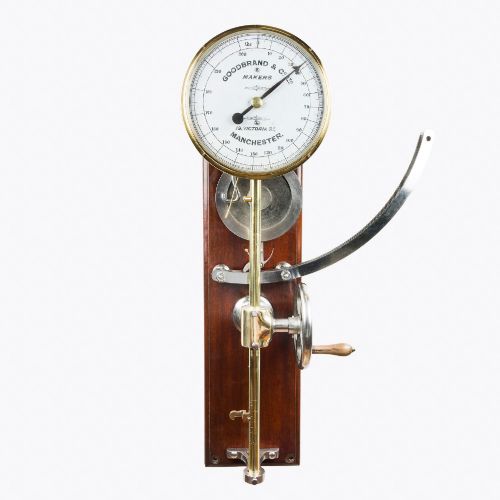
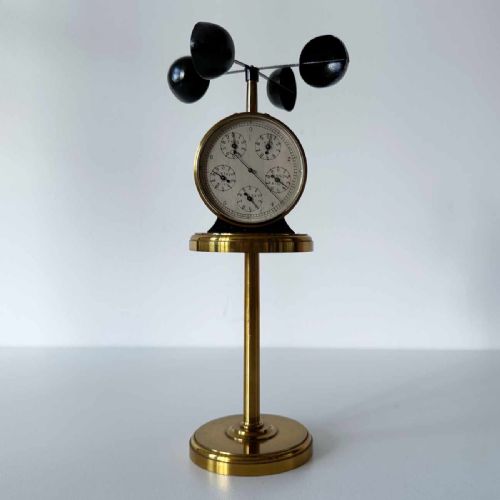
- A device designed to measure wind speed and pressure. These instruments often feature rotating cups mounted on pedestals or cased for portable use.
- Hygrometer
- A tool that measures humidity in the air. Hair hygrometers utilise human or animal hair to detect moisture shifts.
- Barograph
- A recording barometer that traces atmospheric pressure onto a rotating paper chart over time. These units typically incorporate a drawer for spare charts.
- Galvanometer
- An electromechanical instrument used for detecting and measuring small electric currents. Victorian examples are frequently found in fitted wooden cases.
Vintage Scientific Gauge: Frequently Asked Questions
How do aneroid barometers work?
Aneroid barometers measure atmospheric pressure without liquid by using a small, flexible metal box called an aneroid cell. This sealed capsule expands or contracts with pressure changes, moving a needle across the dial face.
Most Victorian and Edwardian examples on this page utilise this mechanism, housed in carved wood or brass desk and wall mountings.
What is a recording barograph?
A barograph is a mechanical weather station that plots barometric pressure continuously onto a paper chart fitted to a rotating drum. A pen arm connects to stacked aneroid cells to record the data.
These instruments are usually mounted in mahogany cases equipped with storage drawers for spare charts and ink.
How should I display these instruments?
Scientific instruments suit desktop display, wall mounting, or placement within dedicated shelving where their mechanical details remain visible. Keeping them away from direct heat sources protects delicate wooden cases and paper charts.
Many portable versions include original leather or velvet-lined travel cases that offer an alternative method for safe presentation.
Are these gauges still accurate?
While many barometers and thermometers retain functional movements, older instruments serve primarily as decorative historical objects. Calibration requires professional adjustment against known standards.
The primary appeal lies in the Victorian and Edwardian craftsmanship, engraved brass dials, and intricate glass components.