

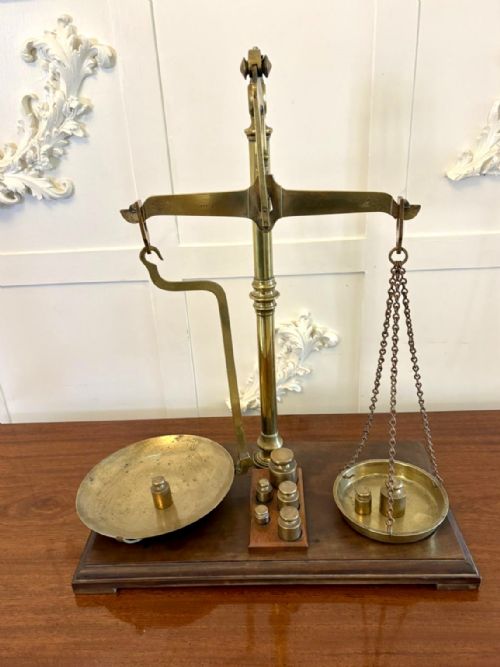


Vintage Scaling Instrument
These vintage scaling instrument listings bring together precision brass, mahogany, and steel tools used for measuring, weighing, and calculation.
Vintage Scaling Instrument
A vintage scaling instrument encompasses a wide variety of scientific, navigational, and drafting tools designed for precise measurement and calculation. Buyers searching this phrase encounter balances, testers, thermometers, and navigational devices spanning from the eighteenth century through the mid-twentieth century.
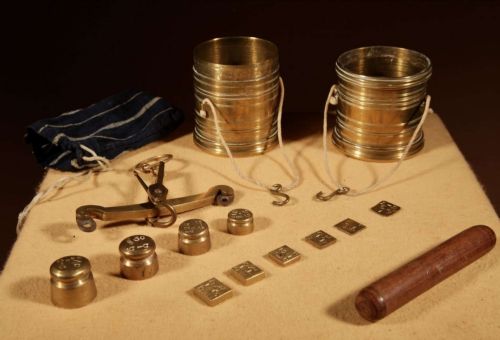
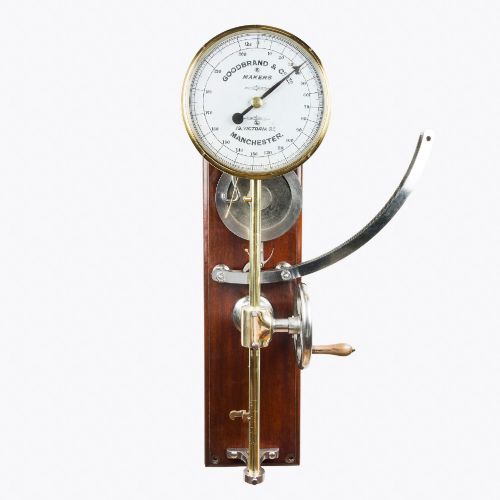
The most common forms on this page include mahogany-cased thermometers, apothecary balances with brass beams, and specialised linen testers or yarn strength testers. These objects originate from domestic workshops and scientific makers across Britain and Europe, reflecting the rigorous measurement needs of trade, science, and industry in earlier eras.
How they were made
Makers constructed these instruments using durable metals such as brass and steel for delicate mechanisms, structural beams, and graduated scales. These metal components were frequently paired with dense hardwoods like mahogany and ebony for fitted storage cases and mounting bases.
Meticulous hand-assembly governed the production of these devices, incorporating inset glass tubes, bone indicators, and velvet-lined compartments to protect sensitive components. Engraved markings and calibrated scales were manually etched or stamped to ensure precise readings for commerce and scientific investigation.
Listings feature scientific instruments spanning from the eighteenth century to the mid-twentieth century, constructed in brass, mahogany, glass, and steel.
What varies in quality
Quality in these instruments rests upon the precision of the mechanical engineering and the original completeness of the set, including matching weights or auxiliary lenses. Workshop provenance and the reputation of the maker, such as London scientific instrument firms, elevate the standing of a piece.
The choice of materials also dictates the grade of the object, distinguishing simple utility tools from luxury travel instruments housed in finely polished wood with original velvet linings and signed brass plaques.
De Grave Short And Co·Goodbrands And Co·George Adams·Day And Millward·Thomas Harris And Son·Charles Baker·Stephen Houghton And Son·Thomas Dunn·Dollond London·Negretti And Zambra·W Watson And Sons
The Vintage Scaling Instrument Glossary
- Sympiesometer
- A type of barometer containing oil and gas to measure atmospheric pressure with high sensitivity. It was frequently utilised in maritime navigation during the nineteenth century.
- Pantograph
- A mechanical linkage connected in a parallelogram form based on principles of parallel geometry. Draughtsmen used it to accurately scale up or scale down maps and technical drawings.
- Chondrometer
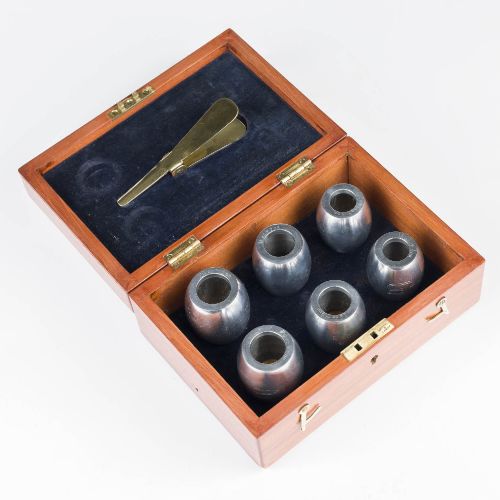
- A specialised weighing device used to determine the density or bushel weight of grain. These instruments allowed merchants to assess the quality and value of agricultural harvests.
- Loupe
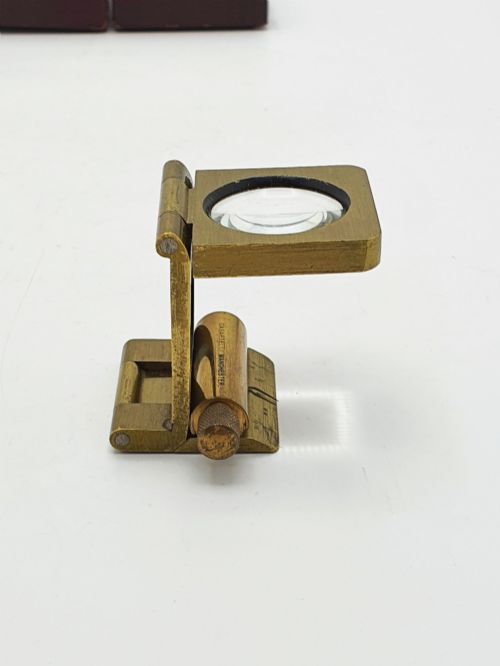
- A small magnifying glass used to inspect fine details, often fitted with a measuring scale for examining textiles or printing. Linen testers are a common variation of this tool.
Vintage Scaling Instrument: Frequently Asked Questions
How do I clean brass and mahogany?
Dust wooden cases gently with a dry cloth and apply a neutral wax if the surface is dry. Leave the aged patina on brass components untouched to preserve historical integrity.
Avoid chemical polishes and abrasive liquids entirely, as these substances strip original lacquer and damage delicate engraved measurement scales.
Are these scientific instruments still accurate?
Most antique balances, thermometers, and measuring tools serve primarily as decorative or historical display pieces rather than calibrated laboratory equipment. Wood movement, metal wear, and fluid separation over centuries affect their precise calibration.
Collectors appreciate them for their mechanical ingenuity and craftsmanship rather than for daily measurement tasks.
How do I identify the maker?
Examine the metal plates, dials, and wooden cases for engraved signatures, serial numbers, and workshop addresses. Makers often signed the main brass beam of a scale or the interior lid of a fitted instrument case.
Comparing these signatures against known nineteenth-century scientific directory records helps determine the exact period of production.
Why are some instruments cased?
Fitted wooden boxes made of mahogany or ebony protected delicate glass tubes, fine balance needles, and calibration weights during travel and storage. Velvet and leather linings cushioned the sensitive instruments against shock.
Complete cased sets with original fitted interiors command greater historical interest among collectors.