









Vintage Satsuma Vases
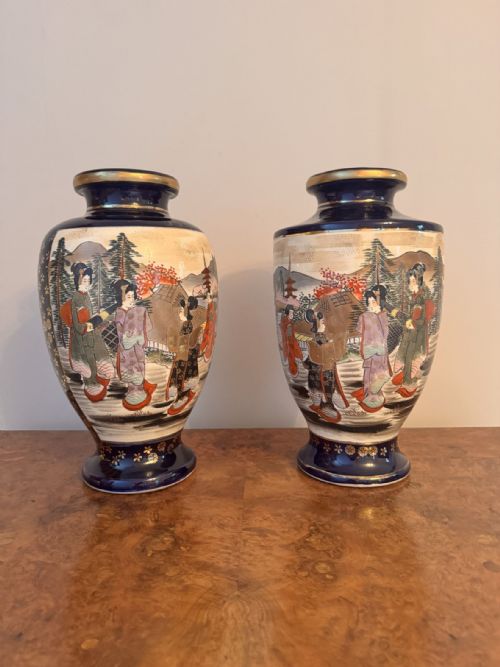
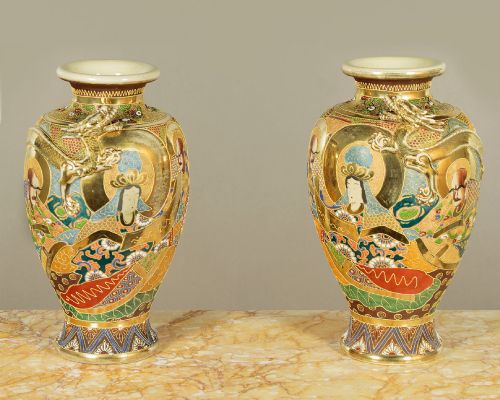
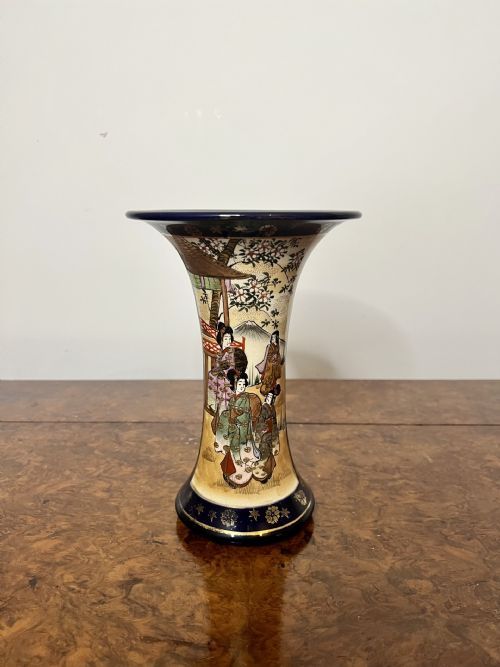
These vintage satsuma vases bring intricate earthenware and gilded detail into your room.
Vintage Satsuma Vases
When you search for vintage satsuma vases, you encounter hand-painted earthenware vessels originating primarily from Japan during the Meiji and Showa periods, alongside later export iterations. The pieces on this page span from the late nineteenth century through to the nineteen-thirties, reflecting both traditional Japanese aesthetics and Western export demands.
You will frequently find table lamp conversions alongside standard decorative urns and miniature vessels. The forms range from small cabinet pieces to large hexagonal and lidded vases, often appearing in balanced pairs.
The aesthetic bridges domestic Meiji period craftsmanship and Victorian or Edwardian taste, capturing a distinct period of cultural exchange. Collectors focus on these specific forms to anchor a room with traditional ceramic artistry.
What varies in quality
The distinction between ordinary export wares and finer pieces rests in the density and precision of the enamel work and gold leaf application. Finer examples display meticulous brushwork across complex figural scenes rather than repetitive stencilled motifs.
Structural presence also dictates value, with substantial pairs and well-preserved large forms commanding greater attention than heavily modified lamp conversions. The clarity of the underlying crackle glaze and the crispness of the artist signature further separate standard items from superior pieces.
Vintage Satsuma Vases Retail Price Guide 2026
Typical asking prices for vintage satsuma vases among the pieces listed under this phrase on Sellingantiques today, from the lower quarter to the upper quarter. They describe what is for sale here now, not the wider market.
Wisteria gardens painted in heavy gold leaf ensure these vases bloom indoors regardless of the British weather outside.
Chosei·Hakusan·Kinkozan·Hattori
The Vintage Satsuma Vases Glossary
- Satsuma
- Earthenware pottery originating from the Satsuma province in Japan, known for a distinctive ivory crackle-glaze finish. This ceramic type became heavily produced for export during the Meiji period.
- Meiji Period
- The era of Japanese history spanning from eighteen sixty-eight to nineteen twelve, marked by extensive international trade and artistic exchange. Pieces from this time often feature elaborate hand-painted gilding.
- Japonisme
- The influence of Japanese art on Western aesthetics during the late nineteenth century. This movement shaped how European and American homes integrated foreign decorative objects.
- Enamel
- Opaque or translucent glass-like material fused to the ceramic surface during decoration. Artisans used this technique to build up rich, colourful imagery across the vase body.
Vintage Satsuma Vases: Frequently Asked Questions
How do I spot a real Satsuma vase?
Examine the body for a fine network of crackles running beneath a creamy glaze, paired with hand-painted enamel and raised gold leaf work. True pieces often carry artist signatures or studio marks on the underside.
Export pieces made for Western markets during the late nineteenth and early twentieth centuries show specific decorative motifs, such as figural processions and wisteria gardens, executed on earthenware rather than hard porcelain.
Are these vases safe to use as lamps?
Many period examples arrive converted into table lamps, having been wired for electricity during the twentieth century. These conversions allow you to display fragile ceramics safely in modern living spaces.
When handling lamp conversions, check whether the original ceramic body was drilled or if the wiring mounts through the top fittings. Preserving the uncompromised ceramic structure remains important for collectors.
How should I clean my Satsuma vase?
Dust the surface gently with a soft, dry cloth to protect the delicate enamel and gold leaf details. Avoid liquid cleaners, chemical solvents, or immersion in water, which can penetrate the porous earthenware body.
Keeping the piece away from direct sunlight and fluctuating humidity helps preserve the fragile crackle glaze and prevents the polychrome pigments from fading over time.
What is the difference between Meiji and Showa pieces?
Meiji period items generally exhibit finer hand-painted detail, denser gilding, and tighter artistic control reflecting traditional Japanese craftsmanship. These pieces usually date from the late nineteenth or early twentieth century.
Showa period alternatives often display broader, more commercial export styles intended for international markets. Comparing the precision of the figural work helps establish the chronological distinction.