






Vintage Satinwood Tea Table
A vintage satinwood tea table brings pale timber and delicate craftsmanship into a room, offering a surface designed for formal hospitality.
Vintage Satinwood Tea Table
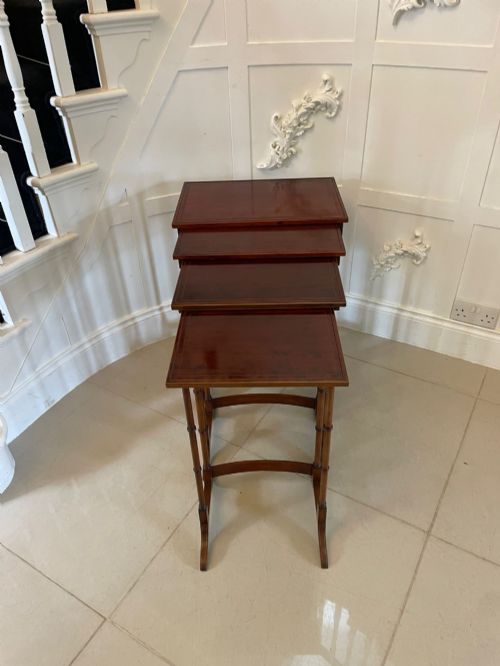
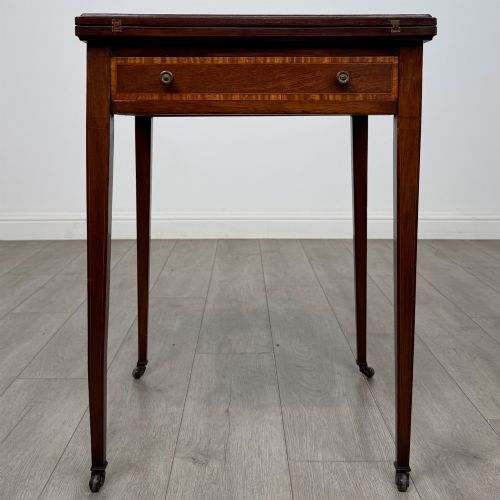
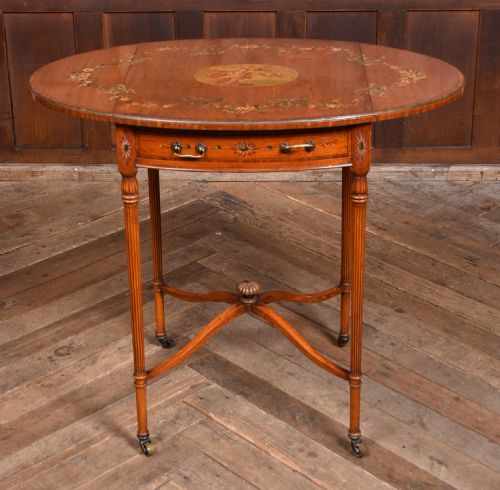
A vintage satinwood tea table is typically encountered in Edwardian revivals of older forms, drawing heavily on eighteenth-century aesthetics. These tables often appear with hinged leaves or folding tops, designed to expand when needed and sit compactly against a wall otherwise.
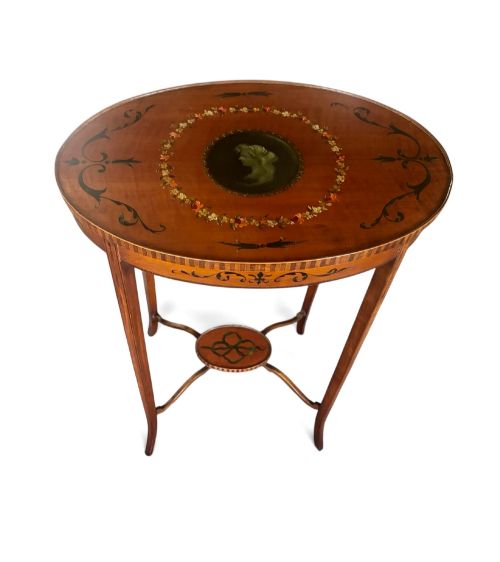
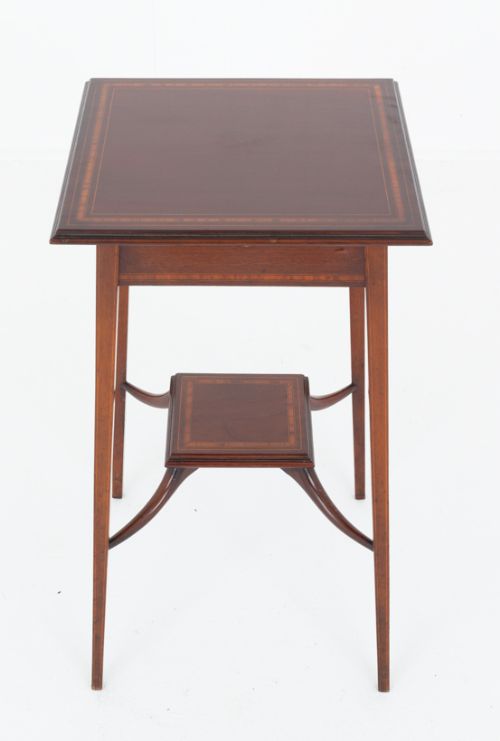
The materials span from solid satinwood to mahogany carcasses banded or veneered in satinwood. Detail work frequently includes contrasting boxwood stringing, marquetry motifs, and occasional hand-painted floral decoration across the top.
Makers and workshops of the Edwardian period produced these pieces alongside simpler occasional and card tables. The survival rate of these tables indicates a preference for lighter furniture forms towards the end of the nineteenth century and the start of the twentieth.
Materials and construction methods
Makers utilised dense timbers like mahogany and rosewood as foundational carcasses, applying fine satinwood veneers to create the primary visible surfaces. This technique prevented warping while delivering the desired pale, shimmering grain.
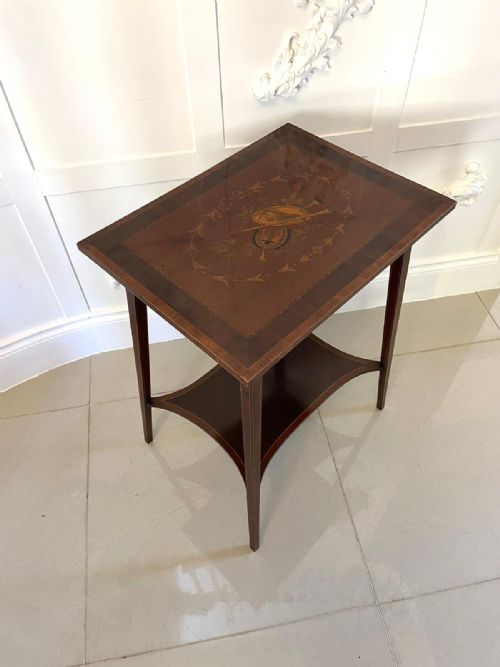
Inlay work relied on contrasting woods such as boxwood, cut precisely into channels carved into the main timber. Marquetry panels were assembled separately before being inlaid into the tabletop, often complemented by painted floral details.
Listings feature Edwardian satinwood alongside Victorian examples, dominated by occasional and card tables incorporating boxwood inlay and marquetry.
Assessing quality and execution
The distinction between ordinary and superior tables rests on the crispness of the inlay and the selection of the timber figures. Tighter grain patterns and precise mitres in the boxwood stringing signal attentive workshop practice.
Structural integrity in folding mechanisms and drop leaves demonstrates the joiner's skill. Tables that retain smooth movement in their leaves and tight joints in the frame reflect higher standards of original construction.
Maple and Co·Maples of London
The Vintage Satinwood Tea Table Glossary
- Satinwood
- A dense, hard timber with a natural golden sheen and smooth grain. It forms the primary visual signature of these tables.
- Marquetry
- The art of creating decorative patterns on furniture using thin veneers of various coloured woods. These designs often depict floral or classical motifs.
- Sutherland table
- A narrow drop-leaf table with exceptionally small flaps supported by swinging gate legs. This form allows the table to fold flat for storage.
- Stringing
- A narrow strip of contrasting wood inlaid into the surface of furniture to form borders or geometric outlines. Boxwood is frequently utilised for this purpose.
- Demi-lune
- A half-moon shape characteristic of certain card and side tables designed to stand flat against a wall. The top often folds open on a pivot.
Vintage Satinwood Tea Table: Frequently Asked Questions
How do I care for satinwood furniture?
Keep these tables out of direct sunlight to prevent the pale timber from darkening or yellowing unevenly over decades of use.
Dust regularly with a dry cloth and avoid modern silicone polishes that can damage the aged polish finish.
Were these tables meant for daily tea service?
Many examples were built to serve refreshments in a drawing room during the late Victorian and Edwardian eras. Their folding leaves provided flexibility for entertaining guests.
Later variations often functioned more as decorative display pieces than utilitarian dining surfaces.
How do I distinguish Edwardian pieces from older ones?
Edwardian interpretations of earlier styles often display lighter framing, machine-sawn internal timbers, and brighter brass hardware beneath the surface.
Earlier nineteenth-century pieces generally show heavier carcase construction and deeper patination in the surrounding mahogany.