


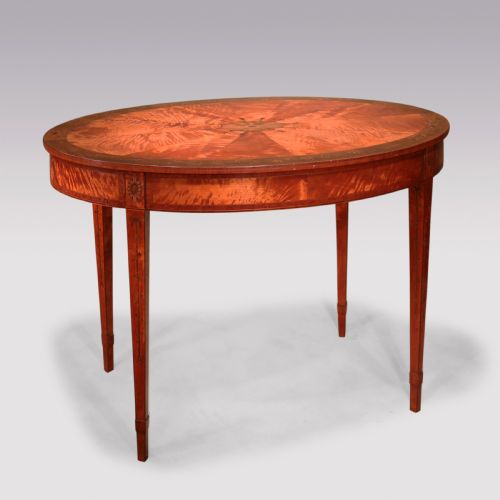


Vintage Satinwood Hall Table
These vintage satinwood hall table pieces bring warm timber grain and refined Edwardian or Victorian lines to a narrow corridor.
Vintage Satinwood Hall Table
When you search for a vintage satinwood hall table, you are looking at narrow furniture designed for entranceways and corridors, predominantly appearing in Edwardian and Victorian forms. These pieces include console tables, side tables, and occasional tables that fit snugly against a wall without blocking passage.
The versions you are most likely to meet on this page span the nineteenth and early twentieth centuries, featuring Sheraton Revival and neoclassical influences. Makers frequently combined satinwood with mahogany, boxwood inlay, and painted decoration to create lighter furniture for grand hallways.
Beyond standard console and side tables, the listings show related forms like washstands, oval occasional tables, and demi-lune shapes designed specifically for smaller spaces. Each piece offers a pale timber surface that brightened darker Victorian and Edwardian entryways.
How they were made
Cabinet makers utilised dense timbers like mahogany and walnut as foundational structures, applying pale satinwood veneers across the visible surfaces. Boxwood stringing and contrasting marquetry inlay were then worked into the timber to create crisp geometric or floral borders.
Hand painting directly onto the satinwood surface also appears on select console and side tables from the nineteenth and early twentieth centuries. Brass fittings and marble tops occasionally complete the construction of washstands and heavier occasional tables.
The furniture forms on this page range from console and side tables to washstands, elbow chairs, cheval mirrors, and occasional tables.
What varies in quality
The level of detail in the inlay work separates standard production from finer craftsmanship, particularly where boxwood and contrasting veneers meet. Crisp mitres and tightly fitted marquetry indicate a workshop that spent significantly more time on surface decoration.
The choice of timber grain also dictates the standing of a piece, with figured satinwood displaying greater depth and movement under the polish. Hand-painted details show varying degrees of artist skill, ranging from simple floral motifs to intricate neoclassical scenes.
The Vintage Satinwood Hall Table Glossary
- Satinwood
- A hard, dense timber with a lustrous, satin-like sheen that takes a high polish. It forms the primary visual surface on many Edwardian and Victorian console tables.
- Demi-lune
- A half-moon shape used for console and side tables designed to sit flat against a wall. This profile saves floor space in narrow hallways.
- Marquetry
- Decorative patterns formed by fitting small pieces of veneer into a backing material. Cabinet makers used contrasting woods like boxwood and mahogany to build intricate geometric scenes.
- Sheraton Revival
- A late nineteenth and early twentieth century design style that reinterpreted the lighter furniture forms of the eighteenth century. These pieces favour painted satinwood, tapering legs, and delicate inlay.
- Occasional table
- A small, movable table intended for versatile use around the home rather than a specific permanent task. They appear frequently in oval and rectangular formats across Edwardian listings.
Vintage Satinwood Hall Table: Frequently Asked Questions
What is a satinwood hall table?
A satinwood hall table is a narrow piece of furniture designed for entranceways, utilising pale, lustrous timber veneers. These tables provide a surface for post and keys while fitting flush against corridor walls.
They appear in various forms including demi-lune consoles, side tables, and oval occasional pieces dating from the Victorian and Edwardian eras.
How do I style a hall table?
Styling a hall table in a narrow corridor requires balancing utility and proportion so the piece remains functional. Placing a small lamp or a shallow dish for everyday items keeps the surface uncluttered.
Pairing the timber tones with a nearby mirror or chair helps anchor the piece within the entranceway without blocking the walkway.
How do I tell Edwardian tables apart?
Edwardian satinwood tables often display lighter construction, Sheraton Revival influences, and delicate boxwood stringing. They frequently incorporate painted floral motifs and tapered legs that reflect the taste of the early twentieth century.
Victorian pieces from earlier decades tend to show heavier proportions, denser mahogany structures, and more robust marquetry work.
Were these tables meant for hallways?
Many tables listed as hall tables were originally built as side tables, console tables, or washstands adapted for modern corridor use. Their shallow depth makes them suitable for narrow spaces where full-sized furniture would obstruct movement.
Cabinet makers of the nineteenth century designed demi-lune and console formats specifically to sit against entrance walls.
How do I care for satinwood?
Satinwood furniture requires protection from direct sunlight and excessive moisture to preserve the polished veneer surface. Regular dusting with a dry, soft cloth maintains the natural sheen of the timber.
Avoiding silicone-based polishes ensures the antique finish remains undamaged over time.