


Vintage Sapphire Pendant
A vintage sapphire pendant brings together deep blue corundum and precious metals across Edwardian, Victorian, and mid-century designs.
Vintage Sapphire Pendant
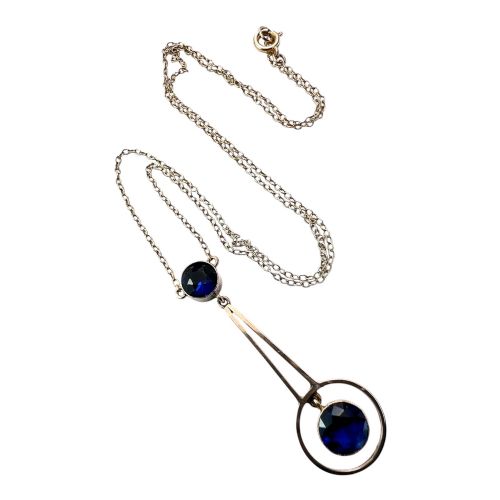
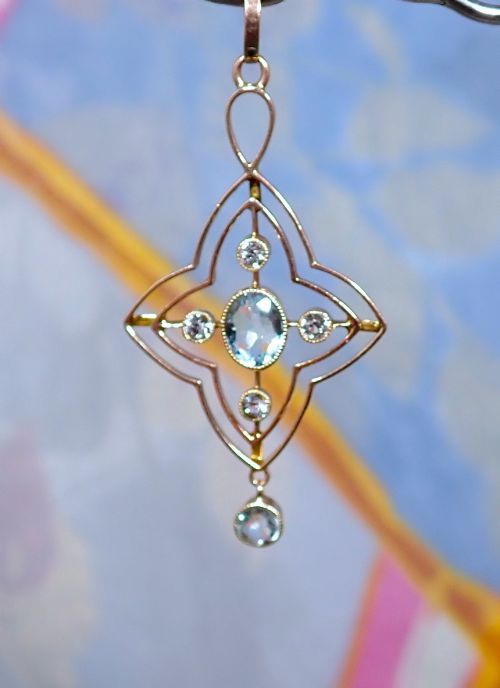
A vintage sapphire pendant spans styles from delicate Edwardian drop necklaces and Victorian crescent designs to bold mid-century cluster pendants and crosses.
Most examples encountered here combine sapphires with diamonds, pearls, or seed pearls, set into mounts of yellow gold, white gold, or platinum.
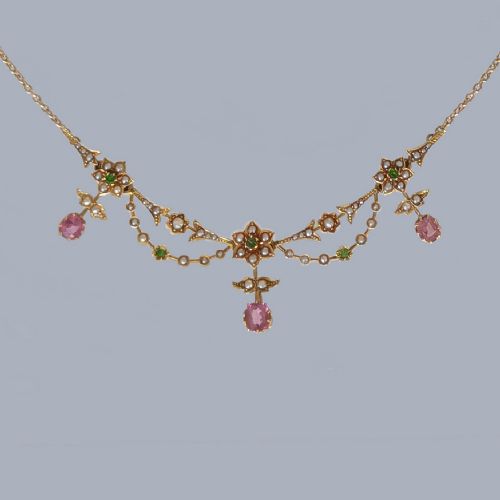
Forms range from traditional single-stone solitaires and floral clusters to elaborate negligee necklaces, lockets, and figurative pieces.
How they were made
Goldsmiths utilised high-carat yellow gold, white gold, 14ct and 9ct gold, alongside platinum and palladium, to construct secure settings for precious stones.
Gemstones including blue, pink, yellow, and padparadscha sapphires are paired with old cut, rose cut, or brilliant cut diamonds and delicate seed pearls.
Handcrafted construction methods of the period involve intricate wirework, cluster mounting, and detailed gallery settings designed to maximise light passing through the stones.
Among the gemstone menagerie, tiny gold elephants and double-sided flower vases make an unexpected appearance.
What varies in quality
The standard of a vintage sapphire pendant rests upon the natural origin and saturation of the sapphire, alongside the cut and clarity of any accompanying diamonds.
Fine construction is evident in the weight and purity of the gold or platinum mount, with superior pieces showing precise stone setting and balanced proportions in design elements like bows, drops, or clusters.
The Vintage Sapphire Pendant Glossary
- Negligee pendant
- A necklace style featuring two unequal drops suspended from a central link, popular during the Edwardian era.
- Seed pearl
- Very small, naturally occurring pearls often used in clusters and floral motifs alongside gemstones in antique jewellery.
- Cluster pendant
- A setting arrangement where a central gemstone is surrounded by a ring of smaller stones, typically diamonds.
- Old cut diamond
- A hand-cut diamond shape common in antique pieces, characterised by a smaller table, higher crown, and open culet.
Vintage Sapphire Pendant: Frequently Asked Questions
How do I date a vintage sapphire pendant?
Dating relies on stylistic clues, metal types, and gemstone cuts characteristic of periods like the Edwardian era, Art Deco, or mid-century.
Examining the construction methods and any remaining hallmarks provides further confirmation of the manufacturing date.
What metals were commonly used?
Jewellery from these periods frequently employs 9ct, 15ct, and 18ct yellow gold, alongside platinum, palladium, and white gold settings.
Platinum and white gold gained particular favour during the Edwardian and Art Deco periods to enhance the brilliance of diamonds.
Are the sapphires natural?
Many listings feature natural sapphires originating from specific regions like Ceylon or Montana, showing characteristic inclusions and depth of colour.
Descriptions specify whether stones are natural or untreated based on available historical context and gemological assessment.
How should I care for my pendant?
Clean antique jewellery gently using warm soapy water and a soft brush, avoiding harsh chemical dips that can damage seed pearls or vulnerable settings.
Store pieces separately in lined boxes to prevent scratching between the sapphire and softer materials like pearls.