


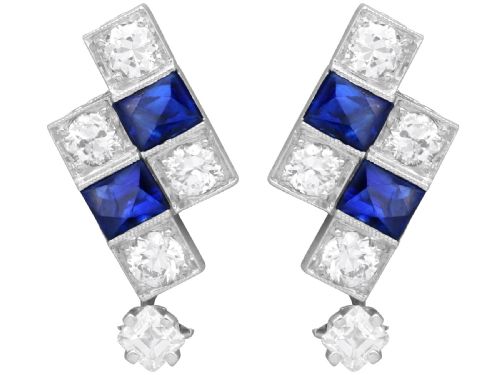


Vintage Sapphire Earrings
Vintage sapphire earrings bring together deep blue stones and fine metalwork from eras ranging from Edwardian delicate styles to mid-century modern clusters.
Vintage Sapphire Earrings
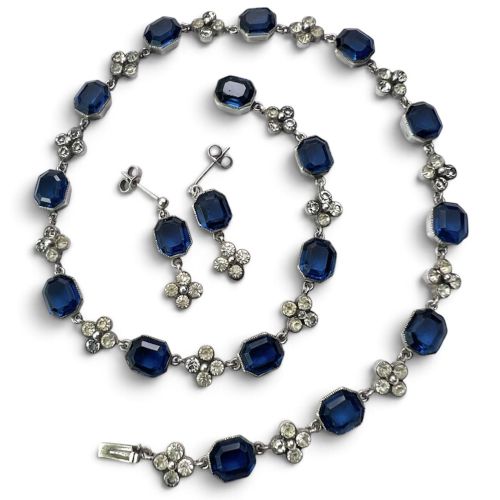
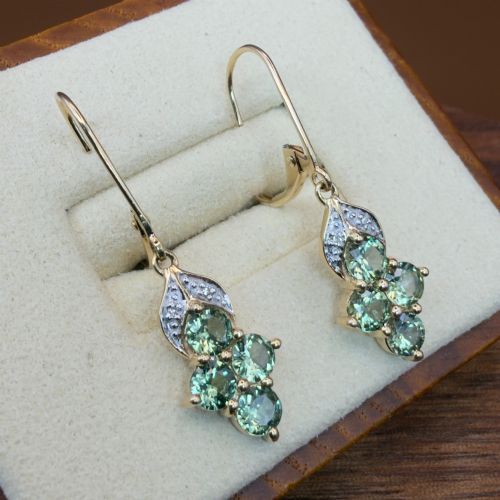
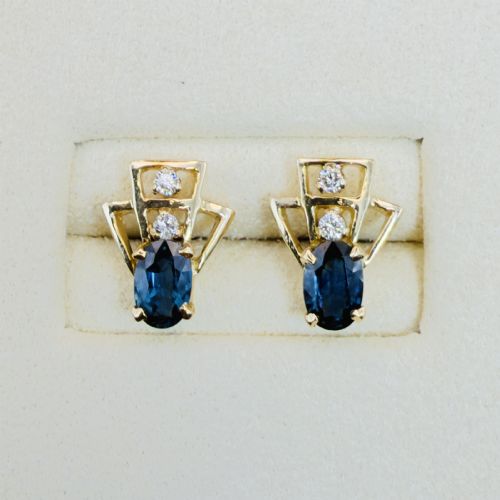
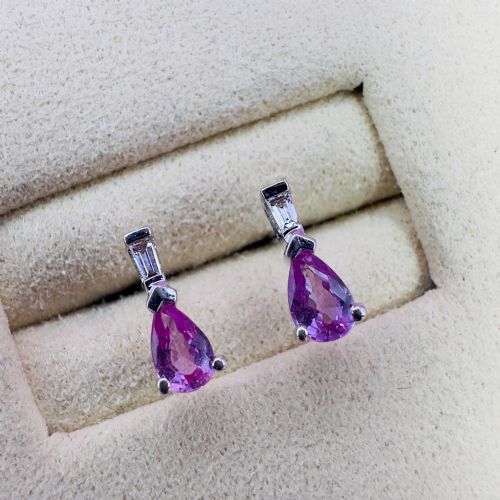
Vintage sapphire earrings encompass a variety of styles, including Art Deco geometric layouts, Edwardian cluster configurations, and mid-century floral designs. Buyers searching for vintage sapphire earrings will find pairs featuring blue sapphires alongside pink sapphires, padparadscha sapphires, and teal green stones.
The pieces on this page appear primarily as stud earrings, drop earrings, and hanging clusters, often accompanied by matching diamond accents. Common configurations span straightforward four-stone arrangements up to elaborate platinum and gold mountings.
Origins stretch across multiple decades, capturing the distinct aesthetic shifts of the 1910s, 1920s, 1930s, 1950s, and 1960s. These items range from delicate screw-back fasteners to modern post-back and hinge-back mountings.
Materials and Construction
Metals used in these pieces include 9ct yellow gold, 18ct white gold, 18ct yellow gold, platinum, silver, and palladium. These precious metals provide the structural support and secure settings for complex stone arrangements.
Gemstone selection pairs central sapphires with surrounding diamonds, pearls, opals, moonstones, or paste stones. Cut styles vary widely, utilising oval, pear, marquis, princess, trapezoid, and rose-cut facets to catch the light.
Listings feature yellow gold, white gold, platinum, and silver alongside sapphire, diamond, pearl, and opal materials spanning six distinct decades.
Factors of Distinction
Quality in these earrings rests upon the depth of colour in the sapphire, the clarity and integration of surrounding diamond accents, and the precision of the metalwork. Hand-finished platinum settings from the Art Deco period differ substantially in weight and detail from later cast 9ct gold productions.
The harmony between the central sapphire and subsidiary stones dictates the visual cohesion of each pair. Superior examples maintain secure prong or bezel settings that complement the overall geometric or floral design without overwhelming the primary gems.
The Vintage Sapphire Earrings Glossary
- Cluster earrings
- A design style featuring a central gemstone encircled by a ring of smaller stones, typically diamonds. This arrangement maximises the visual impact of the primary gem.
- Drop earrings
- Earrings that hang below the earlobe rather than sitting directly against it. They often incorporate hinge backs or swaying components for movement.
- Paste
- Hand-cut glass used as a gemstone substitute in historic jewellery. It appears in period pieces to achieve vibrant colour without natural stones.
- Dormeuse earrings
- A traditional style of sleeper earring designed for comfortable overnight wear, often featuring secure front-closing mechanisms.
Vintage Sapphire Earrings: Frequently Asked Questions
How do I wear drop earrings?
Drop earrings work well for evening wear and formal occasions where their movement and length can remain unobstructed by collars.
They pair effectively with simpler necklines to ensure the focus stays on the metalwork and stones near the face.
What is a cluster setting?
A cluster setting groups smaller diamonds or secondary stones tightly around a larger central sapphire.
This technique enhances the apparent size and brightness of the principal stone through concentrated reflected light.
How do screw-back earrings function?
Screw-back fasteners utilise a threaded post and a small threaded nut that winds up to the back of the earlobe.
This mechanism allows the wearer to adjust the tightness precisely, making them common in vintage pieces designed before modern butterfly backs became standard.
How do I identify an Art Deco pair?
Art Deco earrings typically feature symmetrical geometric shapes, platinum or white gold settings, and sharp lines. They often combine calibré-cut stones with contrasting diamond work.
This aesthetic reflects the design sensibilities of the 1920s and 1930s.