



1920s Sapphire Jewellery
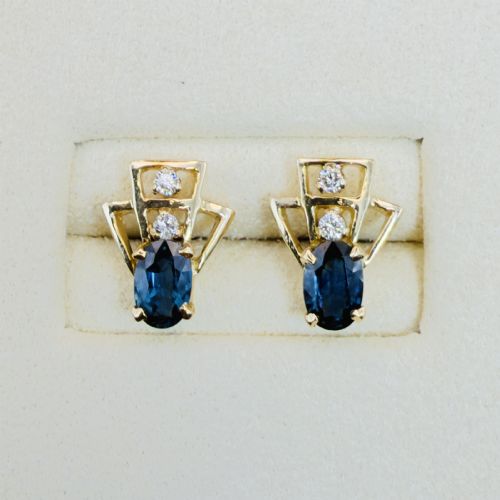
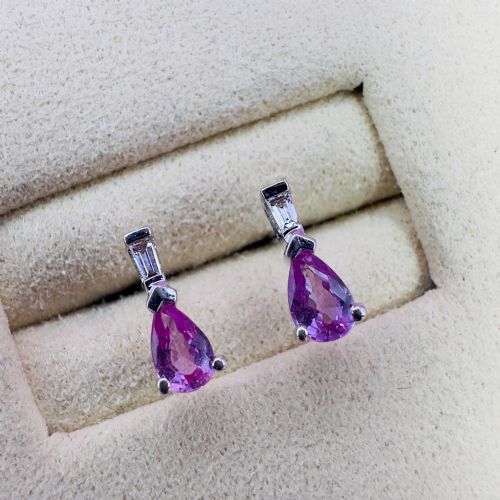
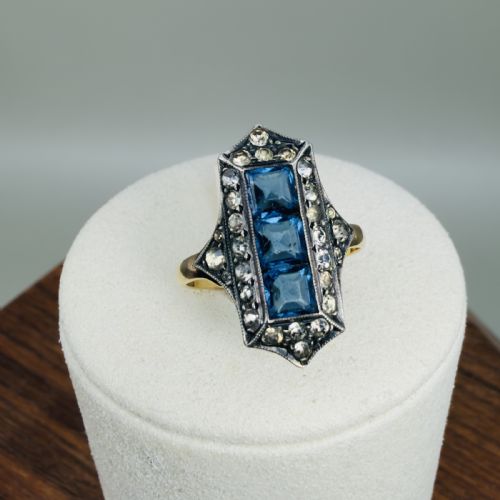
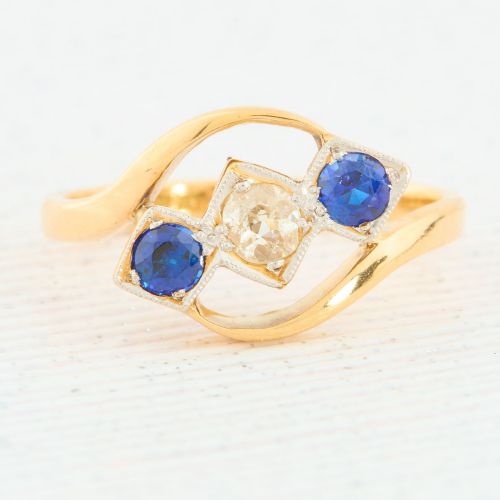
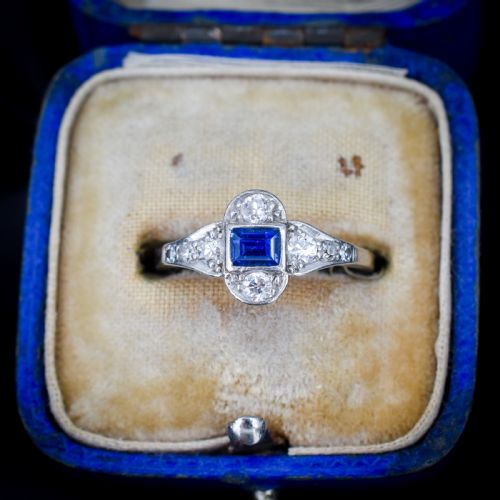
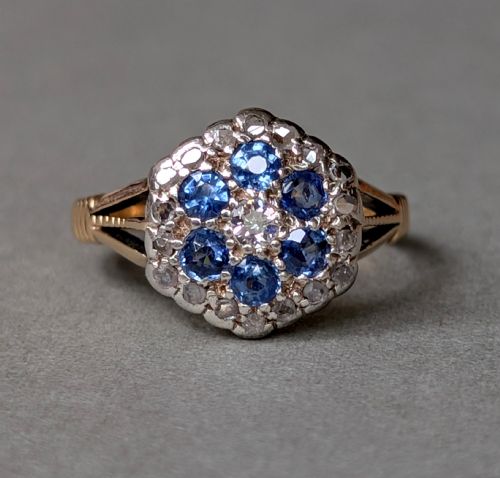
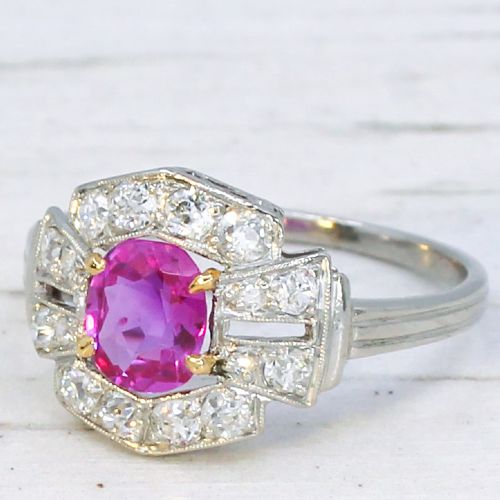
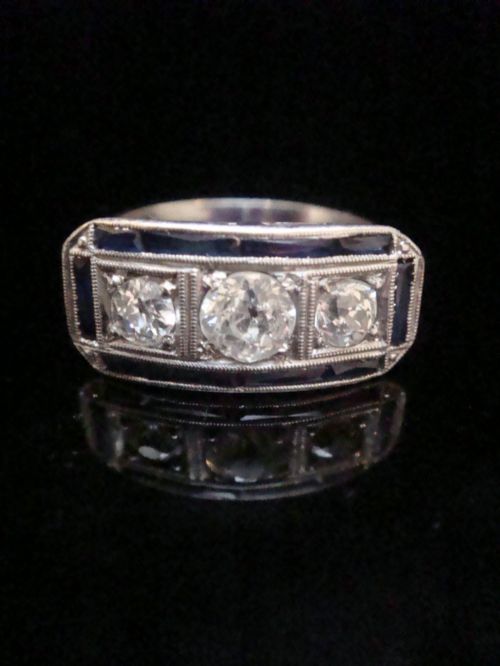
These pieces of 1920s sapphire jewellery combine striking geometric design with vibrant blue and pink gemstones, offering a tangible connection to the Jazz Age.
1920s Sapphire Jewellery
When you search for 1920s sapphire jewellery, you encounter the sharp angles and symmetrical layouts of the Art Deco period. These adornments span rings, bracelets, necklaces, earrings, and brooches created across the 1920s, 1930s, and 1940s.
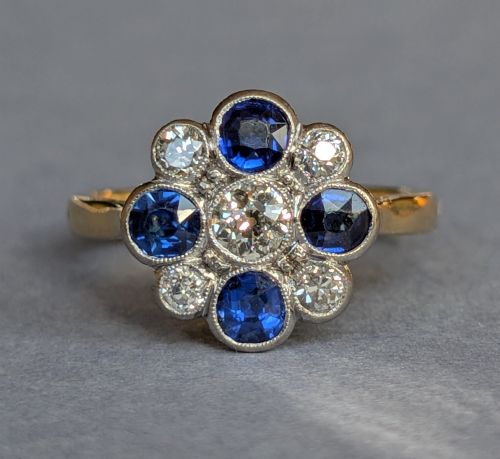
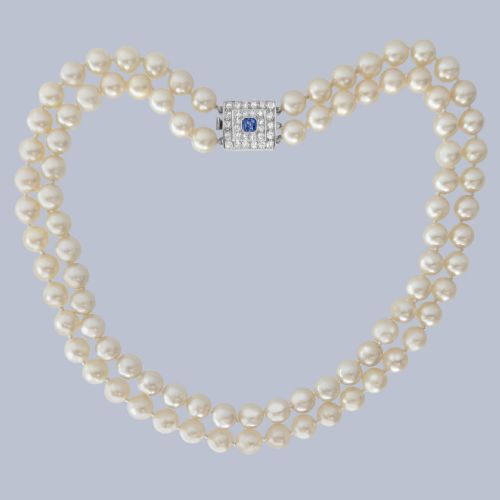
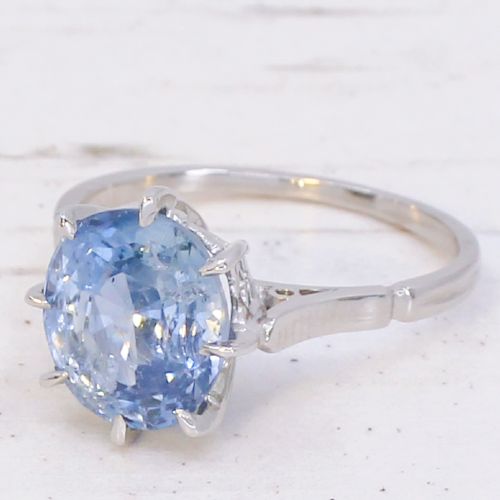
The most frequent items on this page are rings, particularly diamond and sapphire clusters, target rings, and solitaires. Surviving pieces also include line bracelets and pearl necklaces finished with diamond and sapphire clasps.
Originating largely from British and French workshops, these items use stones sourced from regions such as Ceylon and Burma. They reflect the era's shift towards bold, streamlined personal ornament.
Materials and Techniques
Goldsmiths and platinumsmiths of the period utilised platinum and 18ct gold, often pairing white metals with diamonds to enhance the deep saturation of the sapphires. Calibré-cut sapphires were meticulously shaped to fit tightly into geometric channels alongside pavé or baguette-cut diamonds.
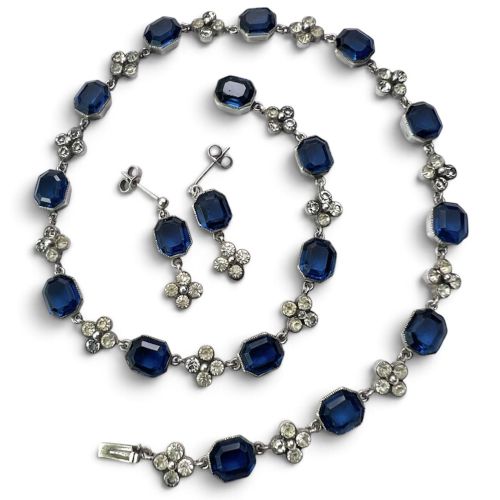
Construction techniques relied on precise bezel and prong settings, allowing maximum light to pass through oval, pear, and navette cut stones. Pearls were strung with custom clasps, while silver appeared in specific paste and stone cluster sets.
Some pearls from this era required certified documentation just to prove they had a proper social life.
Evaluating Quality
The standard of these items rests on the origin and treatment of the central gemstones, where unheated stones hold greater distinction than heated equivalents. The precision of the metalwork, especially in calibré cutting and millgrained edges, separates standard production from finer output.
Proportion and stone matching also dictate merit. A well-balanced target ring or a line bracelet with uniform diamond and sapphire saturation demonstrates superior design discipline.
The 1920s Sapphire Jewellery Glossary
- Calibré cut
- Small, precisely shaped gemstones cut to fit closely together in geometric channels. This technique defines much of the linear patterning seen in Art Deco mounts.
- Target ring
- A circular cluster design featuring a central stone surrounded by concentric rings of contrasting gems. The layout resembles an archery target.
- Navette
- A boat-shaped gemstone or ring setting that tapers to a point at both ends. It creates an elongated silhouette on the finger.
- Trilogy ring
- A ring set with three prominent stones representing the past, present, and future. They typically combine a central sapphire flanked by diamonds.
- Paste
- Faceted lead glass used to imitate gemstones. In period pieces, it provides bright colour without natural stone inclusions.
1920s Sapphire Jewellery: Frequently Asked Questions
How do I care for my 1920s ring?
Clean your jewellery gently using warm water, mild soap, and a soft brush to remove everyday debris from the stone settings. Avoid harsh ultrasonic cleaners, particularly for pieces containing pearls or unheated gems.
Store each item in a separate fabric-lined compartment to prevent softer platinum and gold mounts from scratching against harder diamonds and sapphires.
Were these items worn every day?
During the 1920s, robust platinum and 18ct gold settings allowed women to wear intricate cocktail rings and line bracelets regularly. The introduction of durable platinum made secure, low-profile daily wear practical.
Over the decades, these ornaments transitioned from everyday accessories to treasured pieces reserved for special occasions and formal evening events.
How can I tell a 1920s piece apart?
Examine the mounting style for the characteristic geometry, symmetry, and architectural motifs of the Art Deco period. Look closely at the metalwork for hand-applied milgraining and precise channel settings.
Cut styles of the diamonds and sapphires, such as old European cuts and calibré stones, further distinguish genuine items from later reproductions.
Can these necklaces be worn safely?
Many surviving necklaces feature delicate pearl strands that benefit from professional restringing to ensure the silk cord remains secure. Inspect the sapphire and diamond clasps regularly to verify the locking mechanism functions properly.
With careful handling and updated stringing, these antique necklaces can be worn comfortably for celebrations and gatherings.