



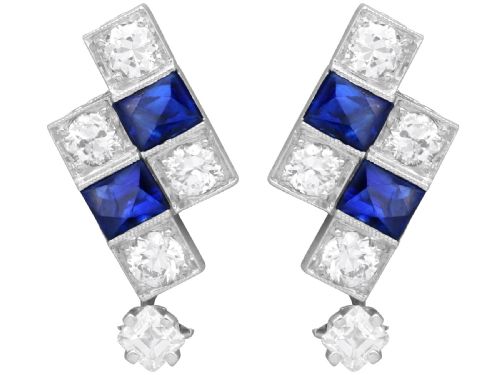


1920s Diamond Earrings
These 1920s diamond earrings combine geometric geometry and brilliant stones, offering the unmistakable elegance of the Art Deco period.
1920s Diamond Earrings
When you search for 1920s diamond earrings, you encounter jewels defined by the strict geometry and clean lines of the Art Deco style. These pieces span studs, clips, and elaborate drop configurations designed to catch the light during evening wear.
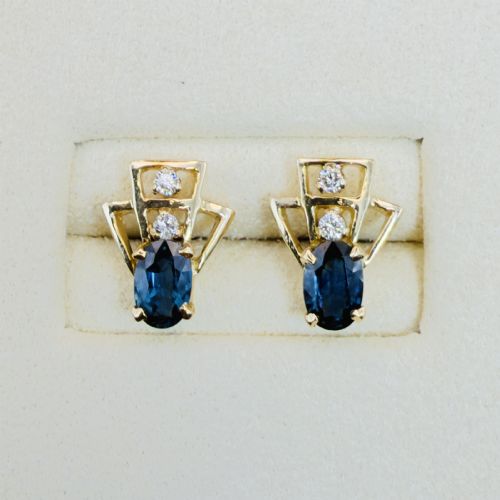
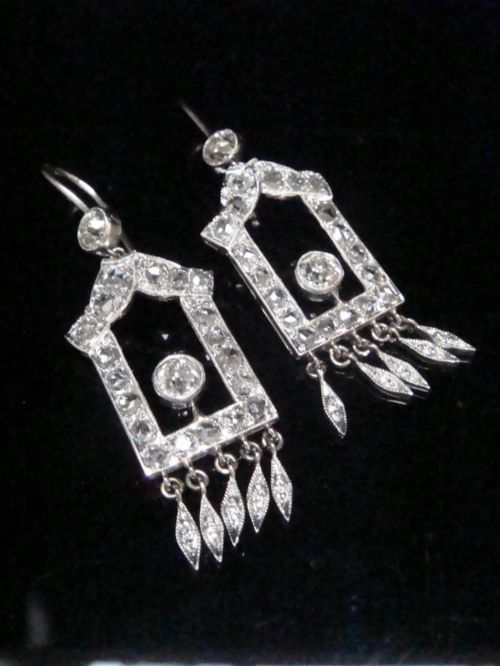
The selections on this page are predominantly Art Deco works originating from the 1920s and 1930s, alongside a few pieces carrying Edwardian influences. You will frequently find platinum and 18ct white gold settings paired with old cut diamonds and coloured gemstones.
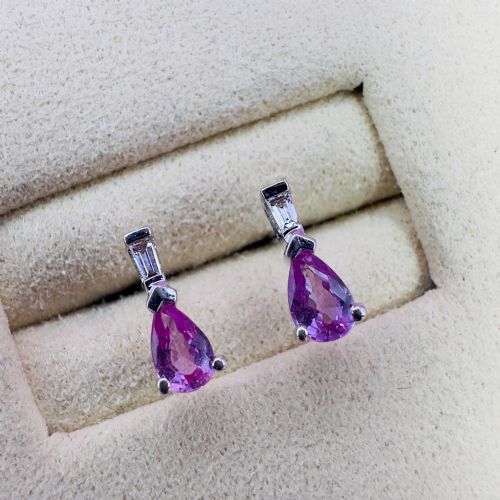
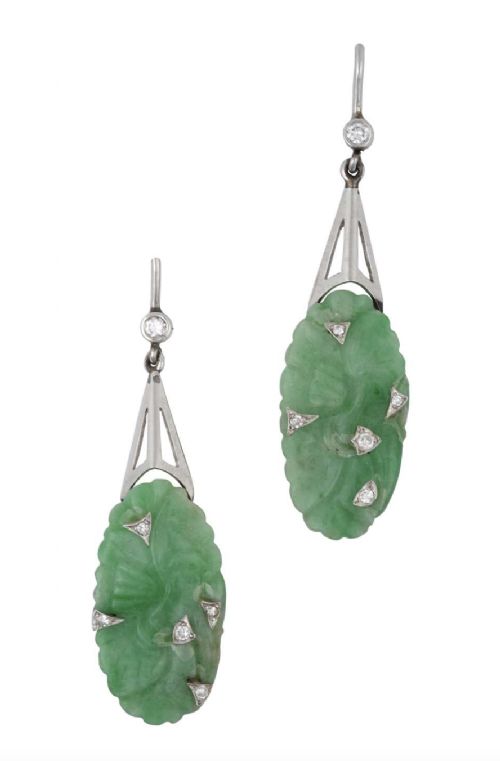
Formats range from compact cluster studs to articulated drop earrings and convertible night and day designs. Coloured stones such as sapphires, emeralds, rubies, jade, and pearls frequently accompany the primary diamonds.
How they were made
Juwelers of this era predominantly utilised platinum and 18ct white gold to construct lightweight, durable metal frameworks. These metals allowed workshops to create intricate, piercing-work galleries and secure settings for numerous small stones.
Stones were cut by hand, resulting in old cuts, trapezoid cuts, and pear cuts that possess softer facets than modern brilliant cuts. Artisans combined these diamonds with calibrated coloured gemstones and natural pearls using meticulous bezel and grain settings.
1920s Diamond Earrings Retail Price Guide 2026
Typical asking prices for 1920s diamond earrings among the pieces listed under this phrase on Sellingantiques today, from the lower quarter to the upper quarter. They describe what is for sale here now, not the wider market.
The inventory spans the Edwardian era, 1920, 1925, and 1930, uniting early century fluidity with definitive Art Deco geometric formats.
What varies in quality
The distinction between ordinary and exceptional examples rests upon the precision of the metalwork and the integration of the design. Superior pairs display seamless articulation in drop and night and day elements, ensuring the components move fluidly without rigidity.
Stone matching dictates the overall harmony of a pair, where uniform colour saturation in sapphires or pink tourmalines elevates the piece. The quality also depends on the preservation of the delicate millegrain edges and original geometric configurations.
The 1920s Diamond Earrings Glossary
- Art Deco
- A design style dominant in the 1920s and 1930s characterised by symmetry, geometric motifs, and stylised patterns. It marked a sharp departure from the flowing curves of the preceding Edwardian era.
- Old Cut
- A diamond cutting style prevalent before the standardisation of the modern brilliant cut in the mid-twentieth century. These stones typically feature smaller tables, higher crowns, and open culets.
- Night and Day
- Convertible earrings designed with removable lower drops for day wear that can be reattached for evening occasions. This versatile mechanism allowed a single pair to transition between formal and informal settings.
- Millegrain
- A decorative jewellery technique involving a line of tiny raised metal beads along the edges of a setting. This detail softens the transition between metal and stone while adding texture.
- Clip Earrings
- Fastenings engineered to secure onto non-pierced lobes, appearing frequently in fan clip configurations during this period. They provided a comfortable alternative to traditional posts during the 1920s.
1920s Diamond Earrings: Frequently Asked Questions
How do I identify 1920s diamond earrings?
Look for characteristic Art Deco geometry, platinum or white gold settings, and hand-cut old cut diamonds. The presence of millegrain decoration and calibrated coloured stones like sapphires or jade often points to this era.
Examine the back of the settings and the fastening types, such as early screw backs or clip mechanisms. Articulation in drop sections also helps distinguish authentic period pieces from later reproductions.
What are night and day earrings?
Night and day earrings are convertible pieces featuring detachable lower sections. The wearer could wear the top stud or cluster during the daytime, then attach the long drops for evening events.
This clever engineering maximised the utility of fine jewellery during the 1920s. Today, surviving pairs with their original conversion mechanisms intact remain particularly sought after by collectors.
Are these earrings suitable for daily wear?
While platinum and white gold provide durable structures, these antique jewels require thoughtful handling. The delicate millegrain edges and old cut stones benefit from gentle care and storage away from harder metals.
Reserve them for special occasions to protect the fragile articulation and historic settings. Regular inspection by a specialist ensures the safety of the stones in their original claws.
How do Edwardian and 1920s styles differ?
Edwardian jewellery relies on flowing garlands, lace-like platinum motifs, and softer, romantic curves. The subsequent 1920s Art Deco aesthetic introduces rigid symmetry, bold block colours, and sharp angles.
Despite the overlap in transition years, the structural layout provides the clearest distinction. 1920s pieces favour stark geometric contrasts over organic floral sprays.