




Sapphire Diamond Studs
Sapphire diamond studs bring together deep blues and fiery white stones in classic lobe-hugging earrings designed to catch the light from every angle.
Sapphire Diamond Studs
Sapphire diamond studs combine central corundum stones with surrounding or flanking diamonds set closely against the earlobe. Buyers searching this phrase look for compact earrings that offer daily wearability alongside the presence of traditional fine jewellery.
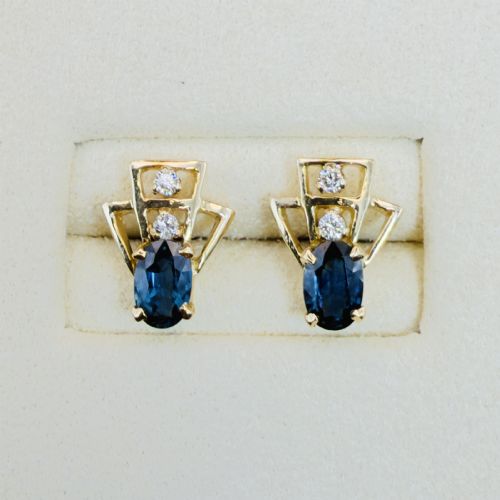
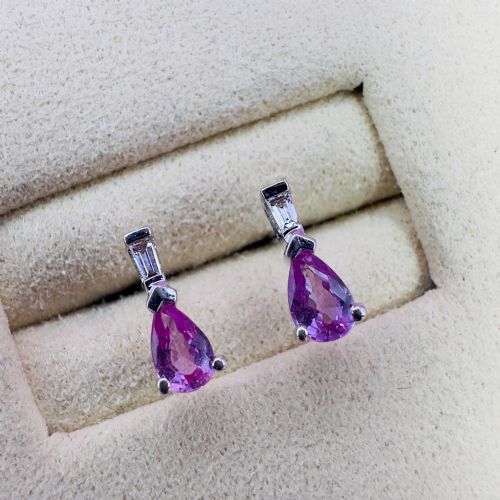
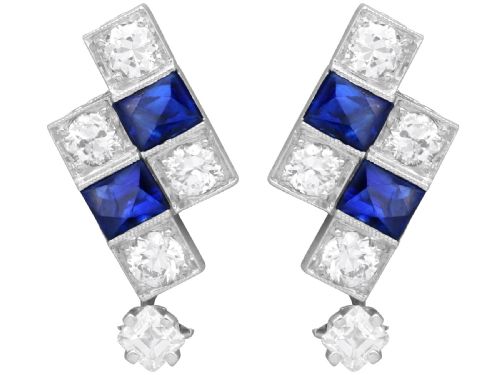
The pieces on this page span several distinct decades, led by Art Deco designs from the 1920s and 1930s featuring geometric arrangements. Mid-century clusters and Edwardian works also appear, showing oval, pear, marquis, and trapezoid cuts.
Most examples rely on a cluster format where a central sapphire is bordered by smaller diamonds, though solitary stone configurations set in white or yellow gold also surface. Origins stretch from the Edwardian era through to the late twentieth century.
Materials and Construction
Makers set these stones in 18ct white gold, 18ct yellow gold, and platinum, matching the precious metal to the aesthetic demands of the period. White gold and platinum provide a bright, neutral backdrop for diamonds and cool blue sapphires, while yellow gold warms the appearance of pink and padparadscha variations.
Listings feature pieces spanning from the 1910s Edwardian period through to the late 20th century, incorporating both white gold and platinum.
Assessing Quality and Merit
Quality in these earrings rests upon the depth of colour in the sapphire and the matching symmetry of the surrounding diamonds. Strong saturation in the central stone combined with clean, well-proportioned diamond work elevates a piece above standard production.
The integrity of the setting work and the preservation of period hallmarks further distinguish superior examples. Pieces that retain their original geometric arrangement or cluster balance without replacement stones command greater interest from collectors of antique jewellery.
The Sapphire Diamond Studs Glossary
- Cluster earrings
- Earrings featuring a central stone encircled by a border of smaller gems. This layout maximises visual impact and was favoured across multiple twentieth-century decades.
- Basaltic sapphire
- A sapphire originating from alkaline basaltic rock sources. These stones often display deep, saturated colour profiles.
- Trapezoid cut
- A four-sided step cut with sloping sides, frequently utilised in Art Deco jewellery to frame central stones. It introduces sharp geometric angles to the design.
- Platinum
- A dense, durable white metal used for secure prong and bezel settings. Its strength allows for delicate wirework that holds small diamonds firmly in place.
Sapphire Diamond Studs: Frequently Asked Questions
How do I wear sapphire diamond studs daily?
These earrings sit close to the lobe, making them practical for everyday wear without catching on clothing or hair. Their secure fastenings keep them firmly in place through regular daily routines.
Pair them with casual attire to add a subtle touch of colour or let them complement evening wear. Their compact footprint ensures they remain comfortable from morning to night.
What periods do these earrings come from?
The pieces span the Edwardian era, the 1920s and 1930s Art Deco period, and mid-century modern design phases. Each era brings distinct metal choices and stone arrangements.
Art Deco examples lean towards geometric platinum or white gold settings, while Edwardian and mid-century pieces often utilise cluster formats in yellow or white gold.
How do I tell Art Deco studs apart?
Art Deco pieces display symmetrical, linear motifs with trapezoid or step-cut stones. The metalwork is typically platinum or white gold, emphasising sharp angles and architectural precision.
Later mid-century designs often soften these lines with rounded cluster silhouettes and warmer yellow gold tones, reflecting changing aesthetic preferences.
Are all sapphires blue in these earrings?
Not all sapphires used in these studs are blue. The selection includes pink sapphires, padparadscha varieties, and basaltic stones with deep colouration.
Each colour variation changes the overall tone of the earrings, allowing buyers to choose between traditional deep blue and softer pastel or warm tones.