


Fine Sapphire Jewellery
Fine sapphire jewellery brings together rich blue gemstones, pearls and diamonds set across platinum, yellow gold and white gold.
Fine Sapphire Jewellery
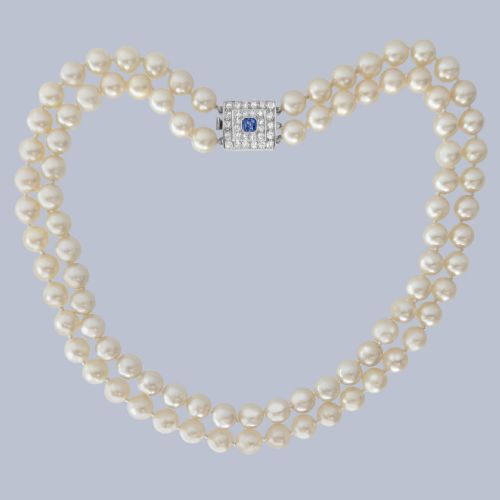
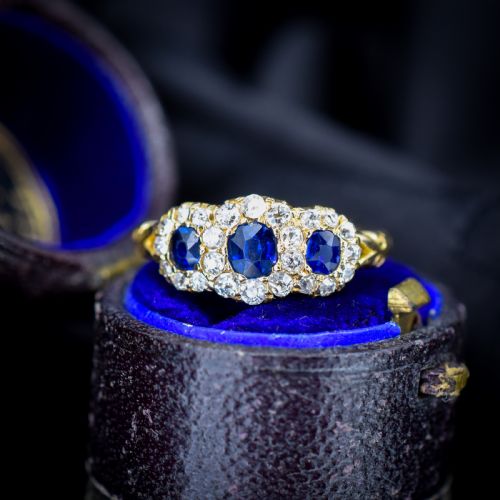
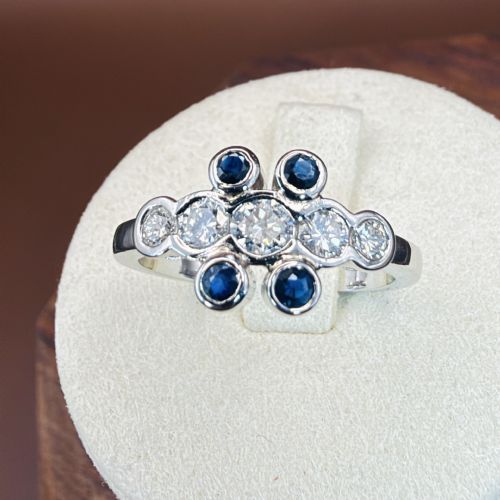
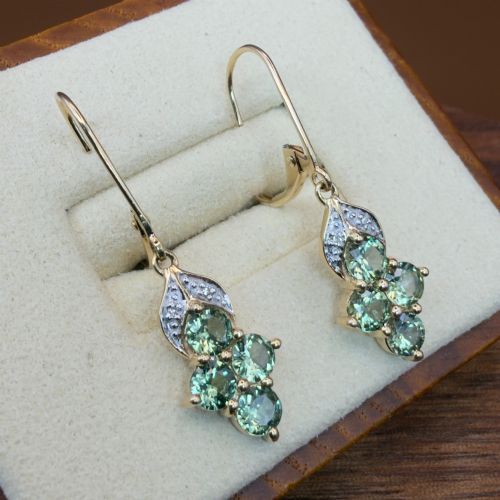
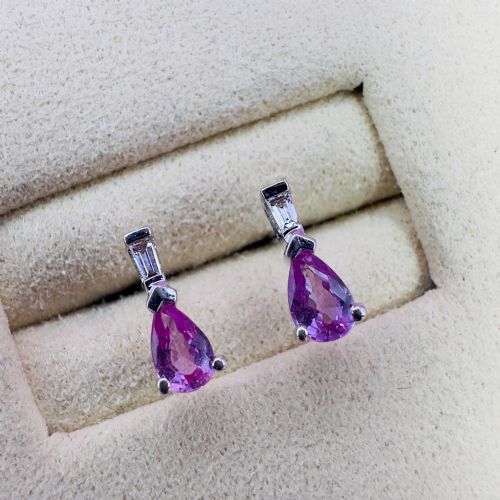
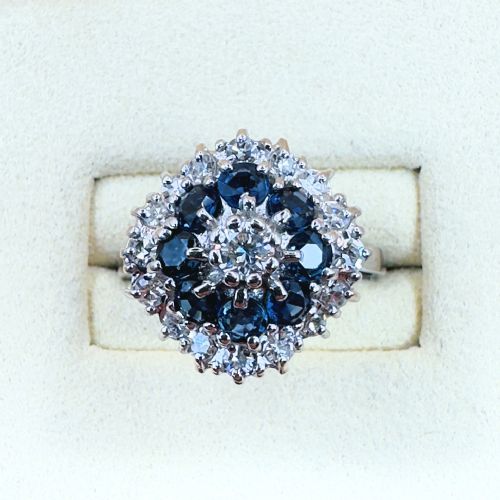
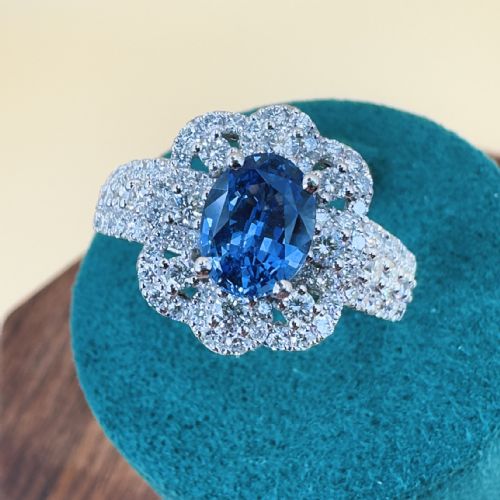
Fine sapphire jewellery encompasses rings, necklaces, earrings, brooches, bracelets and pendants spanning the Victorian, Edwardian, Art Deco and mid-century periods. Buyers searching for fine sapphire jewellery encounter cluster rings, pearl necklaces with gem-set clasps, diamond-accented drop earrings and elaborate platinum bracelets.
The selection ranges from early twentieth-century Edwardian pieces and 1920s Art Deco designs to 1950s and 1960s creations. Common configurations pair the central stones with diamonds in yellow gold, white gold or platinum settings.
Materials and construction
These pieces utilise precious metals including platinum alongside 18ct white gold, 18ct yellow gold, 15ct gold and 9ct gold. Gemstones are secured in cluster formations, prong settings or geometric layouts alongside diamonds, pearls, rubies and emeralds.
Craftsmanship spans traditional cluster arrangements, articulated bracelets, hinge back earrings and strung pearl necklaces with fitted gold or white gold clasps.
Suffragette pendants make a colourful statement by uniting peridot, white sapphire, pink tourmaline and pearls in a single drop.
Distinctions in quality
Quality rests upon the stone selection, such as natural sapphires, Ceylon stones, padparadscha varieties or basaltic sapphires, paired with the weight and cut of accompanying diamonds. The integration of platinum versus gold settings and the complexity of period-specific mountings dictate the refinement of each item.
Le Vian·Gubelin
The Fine Sapphire Jewellery Glossary
- Cluster ring
- A ring featuring a central gemstone surrounded by a border of smaller stones, often diamonds.
- Basaltic sapphire
- A sapphire originating from alkali basalt terrains, known for deep saturation.
- Negligee pendant
- A pendant style featuring two asymmetrical drops suspended from a main chain or motif, popular in the Edwardian era.
Fine Sapphire Jewellery: Frequently Asked Questions
What periods do these pieces date from?
The selection spans from the Victorian and Edwardian eras through the 1920s Art Deco period and into the 1950s and 1960s. Each era brings distinct metal choices and mounting styles.
Art Deco items typically feature platinum and geometric diamond arrangements, while Victorian and Edwardian pieces often utilise yellow gold and intricate cluster work.
How do I care for sapphire jewellery?
Sapphires are durable gemstones, but the surrounding metals, pearls and diamonds require gentle handling. Regular cleaning with warm soapy water and a soft brush maintains the sparkle of the stones.
Store pieces individually to prevent softer metals and pearls from scratching against harder diamond and sapphire surfaces.
What metals were commonly used?
Makers utilised platinum, 18ct white gold, 18ct yellow gold, 15ct gold and 9ct gold depending on the period. Platinum and white gold gained favour during the Art Deco years for their bright finish.
Yellow gold dominates earlier Victorian and Edwardian designs, returning alongside white gold in mid-century pieces.
Are the pearls original to the necklaces?
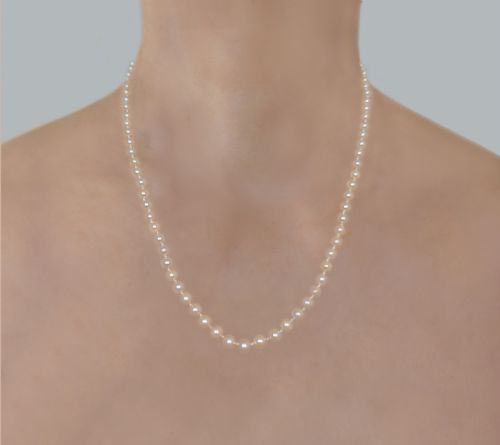
Many pearl strands from the 1920s and 1950s have been recently restrung to ensure security during wear. The clasps remain original, incorporating diamonds, sapphires and precious metals.
This maintenance preserves the historical integrity of the piece while offering practical durability for modern collectors.