

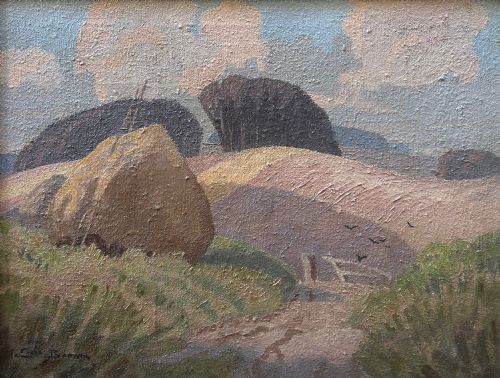
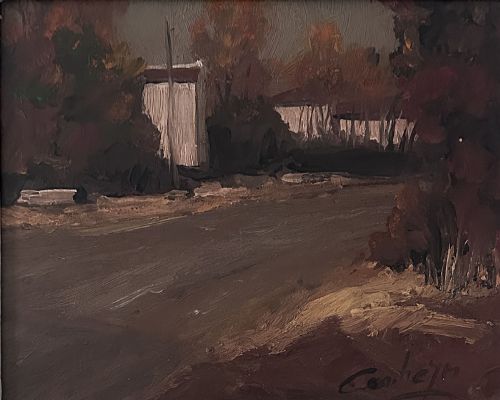
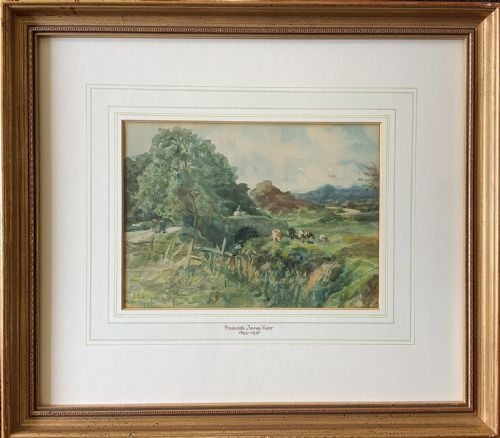
Vintage Rural Scene
These vintage rural scene artworks capture working country life, farming and village landscapes through the brush of painters from past centuries.
Vintage Rural Scene
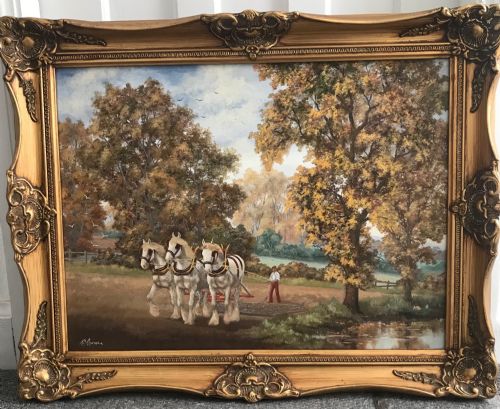
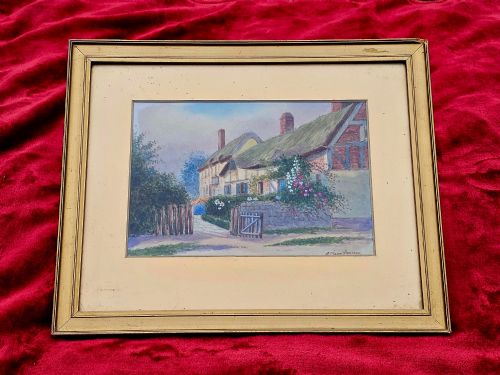
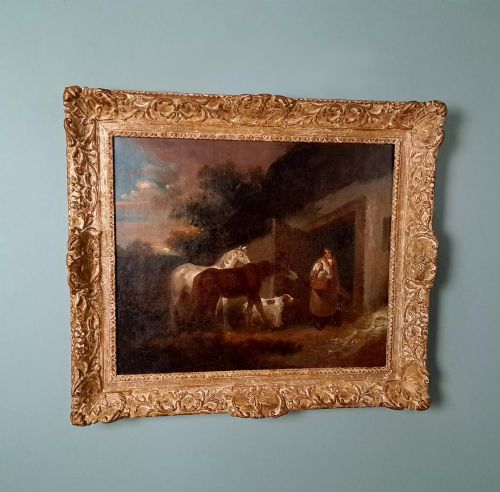
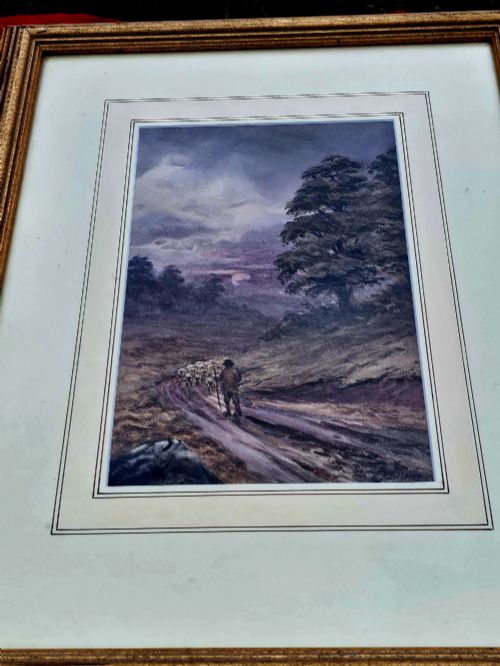
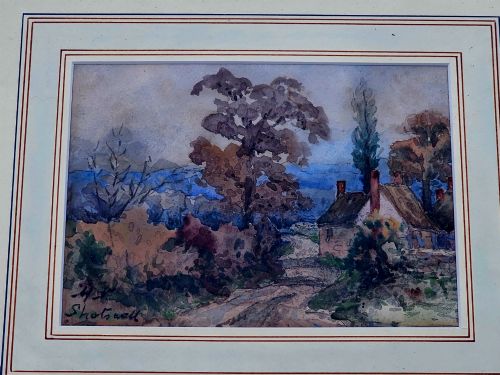
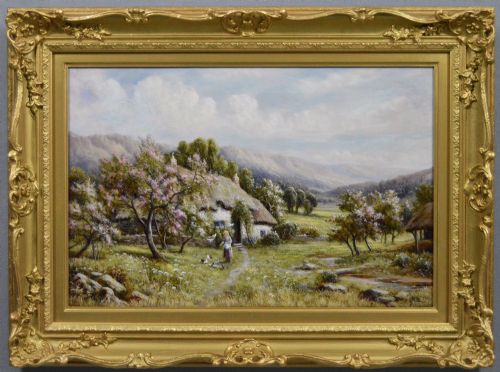
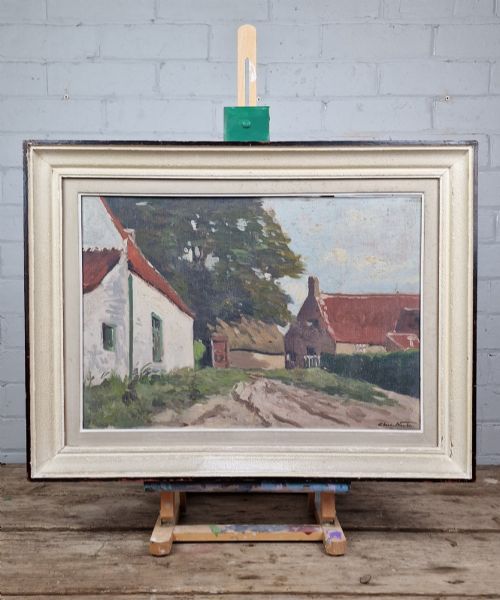
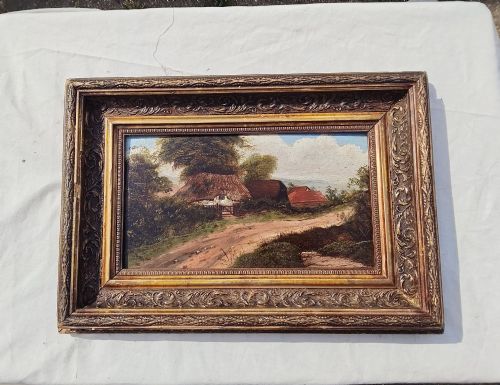
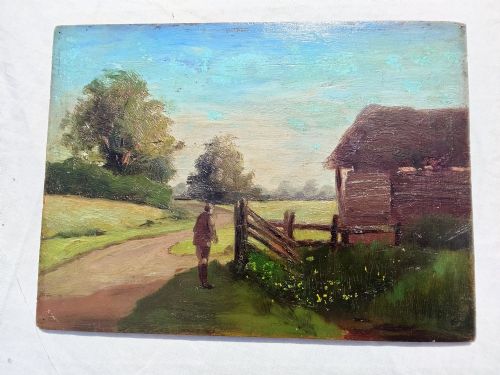
A vintage rural scene depicts pastoral life, including cottages, farmyards, ploughing horses, livestock and figures working the land. These works appear primarily as oil paintings on canvas, board or card, alongside watercolours and lithographs.
The material on this page spans from the nineteenth century through the mid-twentieth century, capturing Victorian, Edwardian and Impressionist interpretations of the countryside. Buyers encounter depictions ranging from Scottish crofts and Devonshire streams to quiet farmyards and haymaking.
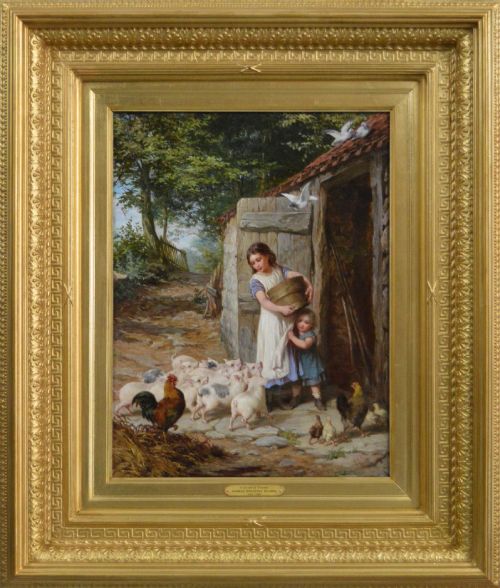
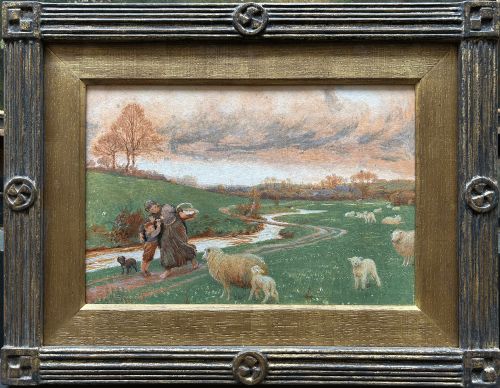
Many of these pieces focus on daily agricultural labour, such as herding sheep, gathering the harvest, feeding poultry and logging. Such subjects offer a direct window into historical rural routines preserved by British and European artists.
Materials and construction
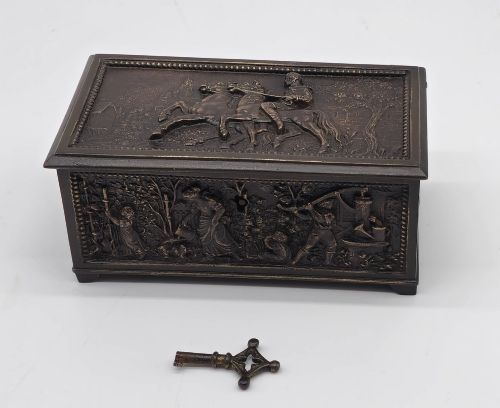
Artists painted these rural views using oil paint or watercolour applied to canvas, wooden board, card and paper. Many pieces retain their original framed formats, occasionally featuring detailed ornamentation such as gold leaf on jewellery caskets.
Techniques range from traditional academic realism to looser Impressionist and Post-Impressionist brushwork. Pigments were worked onto prepared supports to capture natural light across fields, rivers and thatched rooftops.
Listings feature works created using oil paint, watercolour, and canvas spanning from the Victorian era to the mid-twentieth century.
Distinguishing quality in pastoral works
Quality rests in the handling of light, atmospheric depth and the naturalism of figures and animals within the landscape. Masterly control of pigment brings texture to haystacks, water and foliage, separating accomplished compositions from simpler decorative sketches.
The preservation of the original surface, pigment stability and the harmony of the framing contribute significantly to the standing of each artwork.
George Graham·A. Marie Parsons·William Joseph Shayer Senior·EJ Letheren·Robert John Hammond·Charles Houben·George Augustus Holmes·Frederick Walker·Eric Brown·Frederick James Kerr·Edgar Hunt·Umberto Volpato·Herman S Melville·Charles Edward Wilson·Sydney Yates Johnson·Herbert Royle·Ernest Higgins Rigg·James William Booth·Owen Bowen·Henry John Yeend King·Ernest Pile Bucknall·Henry John Boddington·M. C. Hider·James Hardy Junior·Frederick James Knowles
The Vintage Rural Scene Glossary
- Genre oil painting
- A painting depicting scenes from everyday life, typically featuring ordinary people engaged in common activities. These works focus on domestic or labour-oriented moments rather than grand historical narratives.
- British Impressionism
- A style adopted by British artists in the late nineteenth and early twentieth centuries influenced by French Impressionist techniques. It emphasises spontaneous brushstrokes and the play of natural light on outdoor subjects.
- Oil on board
- A painting executed on a rigid wooden or composite panel rather than stretched canvas. This medium provides a firm surface favoured by artists working outdoors for stability.
- Lithograph
- A print made from a design drawn on limestone or a metal plate with a greasy crayon. This technique allows for the faithful reproduction of original painted works.
Vintage Rural Scene: Frequently Asked Questions
What periods do these rural scenes date from?
The works span from the nineteenth century through the Victorian and Edwardian eras into the mid-twentieth century. Creators worked across various decades including the 1900s, 1910s and 1920s.
Styles shift from traditional realism toward early twentieth-century Impressionism while maintaining a consistent focus on agrarian life.
How should I care for an oil painting on canvas?
Keep the artwork away from direct sunlight and fluctuating humidity to protect both the canvas and the oil pigments. Dust the surface gently with a soft, dry brush without applying pressure.
Avoid using water or liquid cleaners on the painted surface to prevent damage to the historic materials.
What subjects are most common in these paintings?
Common subjects include farmyard animals, haymaking, cottages, streams and figures engaged in rural labour. Scenes often feature horses, cattle, sheep and agricultural workers.
These depictions reflect the enduring appeal of pastoral life across British and European landscapes.
Are these artworks framed?
Many pieces retain their period frames, which complement the age and style of the artwork. Some items include decorative elements such as gold leaf.
Framing helps protect the edges of canvases, boards and watercolours from environmental wear.