



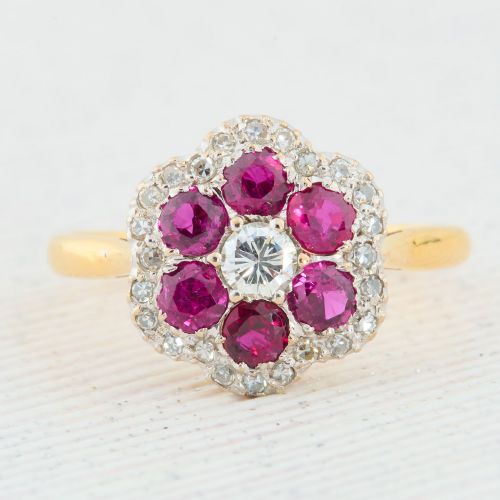
Vintage Ruby Ring 18ct
A vintage ruby ring 18ct combines rich red corundum with high-purity gold, offering enduring character and timeless appeal for daily wear.
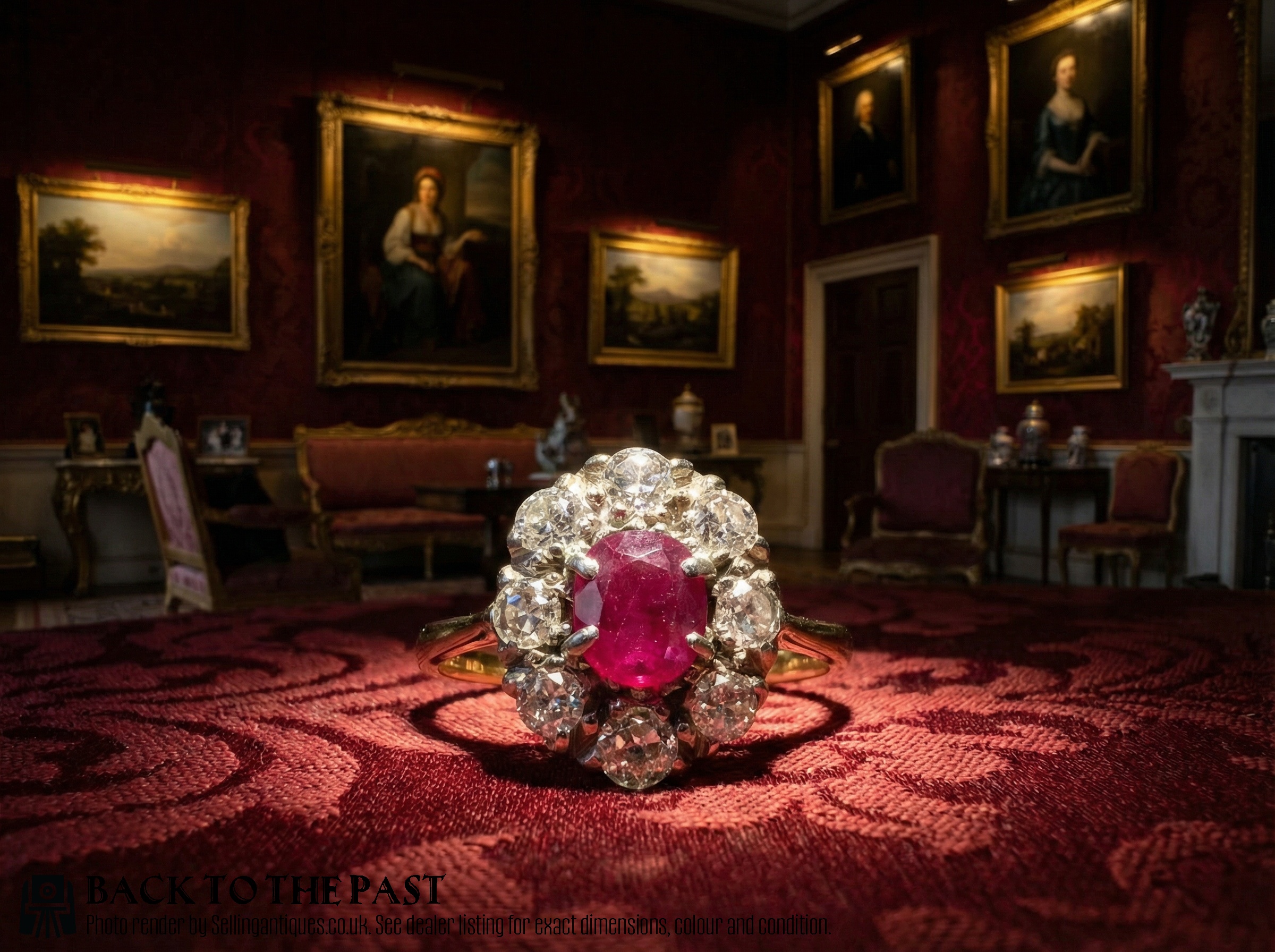
Vintage Ruby Ring 18ct
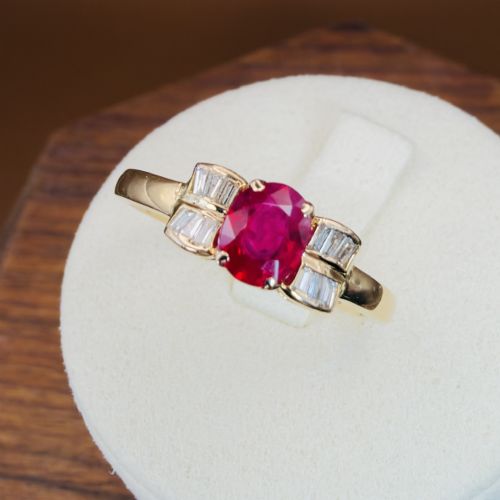
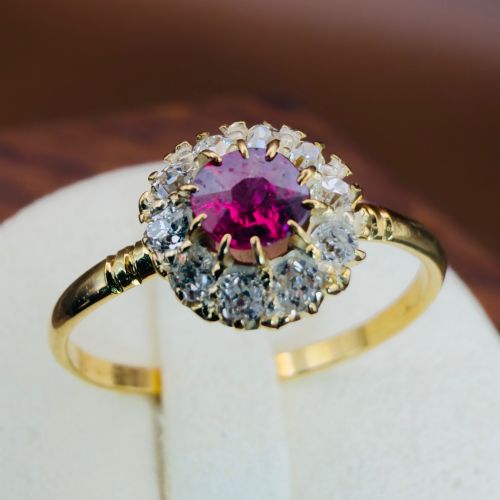
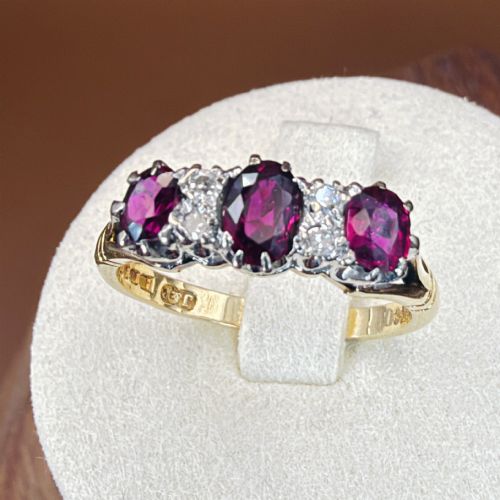
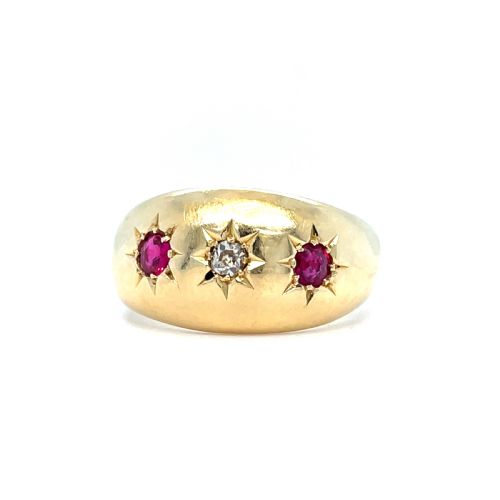
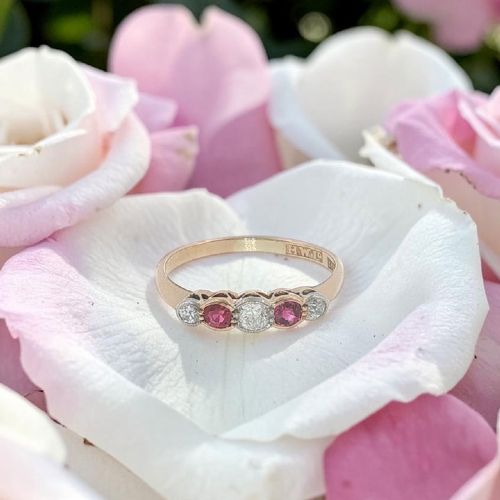
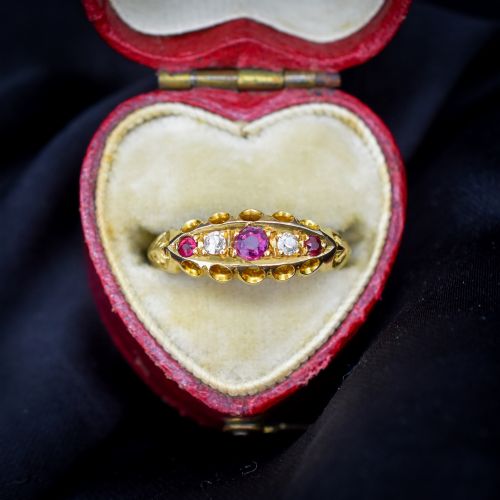
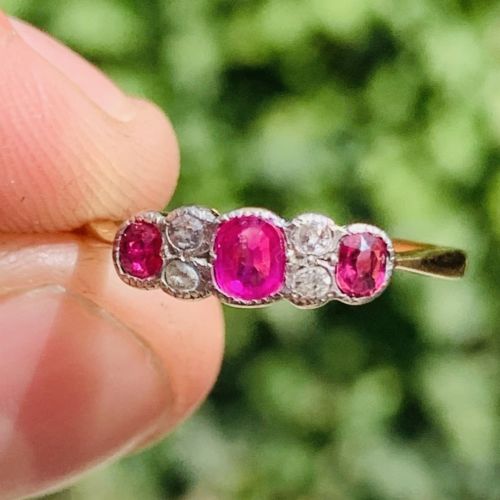
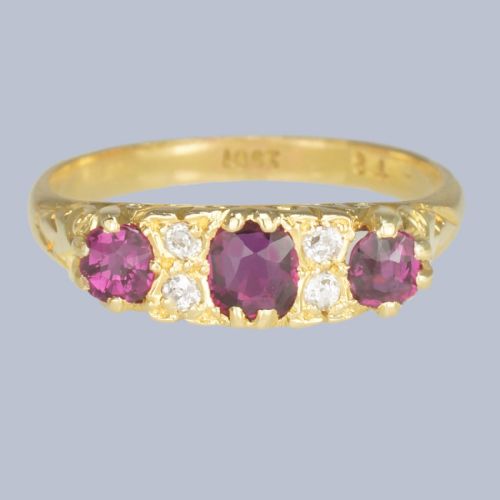
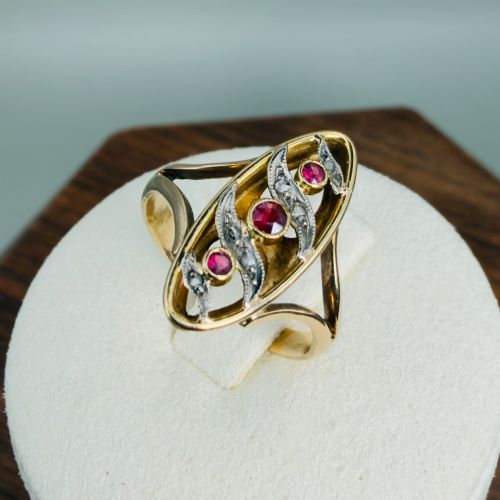
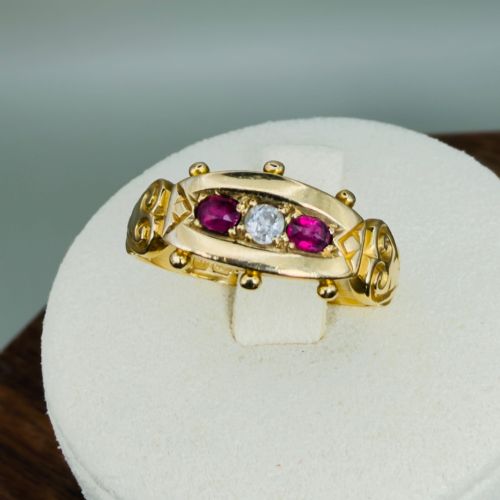
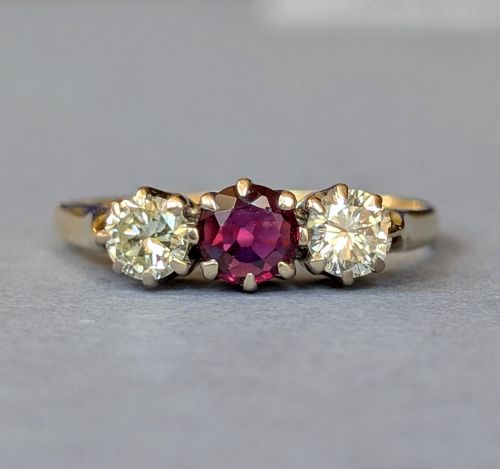
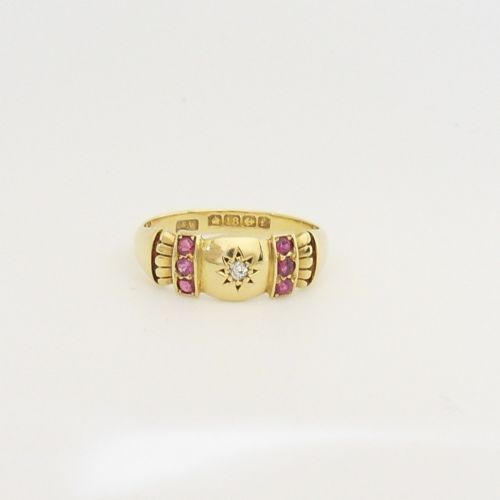
A vintage ruby ring 18ct spans varied historical periods from the late Victorian and Edwardian eras through Art Deco to the mid-century. Buyers encounter clusters, starbursts, five-stone settings, and trilogy configurations featuring natural rubies alongside diamonds.
Cluster and daisy arrangements dominate the selection, framing central red stones with old-cut or brilliant-cut diamonds in yellow gold, white gold, or platinum. Simpler band and gypsy styles also appear frequently from late nineteenth and early twentieth-century workshops.
Originating across British assay offices in towns like Chester and Birmingham, these pieces reflect distinct stylistic shifts from floral motifs to geometric lines. The persistence of 18ct gold ensures a substantial weight and rich warm or silvery tone across every era.
How they were made
Craftsmen utilised 18ct yellow and white gold alloys, frequently pairing them with platinum claws or settings during the Edwardian and Art Deco periods to heighten contrast. Stones were hand-set into bezels, channels, or delicate prong configurations designed to maximise light passage.
Goldsmiths employed casting, hand-fabrication, and detailed gallery work, occasionally incorporating engraved shoulders, millegrain edges, or flexible chain mail structures. Hallmarks stamped inside the band record the metal purity and assay office origin.
Listings feature 18ct yellow gold, 18ct white gold, and platinum across Victorian, Edwardian, Art Deco, and mid-century periods.
What varies in quality
The intensity of the ruby hue and its natural clarity define the visual impact, ranging from deep crimson to vibrant pinkish-red tones. Superior examples feature well-matched diamond accents and robust settings that secure each stone without excess metal wear.
Artisanal execution separates standard production from finer workshop output, evident in the precision of cluster symmetry, hand-cut facets, and crisp hallmark stamps. Preservation of original prong work and minimal shank thinning maintain structural integrity over decades.
Kutchinsky
The Vintage Ruby Ring 18ct Glossary
- Cluster ring
- A design featuring a prominent central stone surrounded by smaller accent gems, usually diamonds. This layout creates maximum visual presence on the hand.
- Old-cut diamond
- A hand-faceted diamond cut popular before the modern brilliant standard, characterised by a smaller table and high crown. These stones produce a softer candlelight sparkle.
- Navette style
- A boat-shaped ring setting pointed at both ends, popular in Georgian, Victorian, and Edwardian jewellery. It elongates the appearance of the finger.
- Trilogy ring
- A three-stone ring symbolising past, present, and future, frequently configured with a central ruby flanked by diamonds. The graduated stones follow the curve of the finger.
- Millegrain
- A decorative technique featuring a border of tiny raised metal beads along the edge of a setting. It adds a refined texture typical of Edwardian design.
- Gypsy ring
- A style where stones are flush-set directly into a heavy tapered band, smooth to the touch. This sturdy construction suited both men and women in the Victorian era.
Vintage Ruby Ring 18ct: Frequently Asked Questions
How do I style a vintage ruby ring?
These rings pair easily with modern minimalist bands or stack comfortably alongside plain gold rings. Their distinctive red stones work well as a standalone daily signature piece.
Mixing yellow gold and white gold eras creates a textured look that highlights the varied craftsmanship of past decades.
Can I wear an antique ruby ring daily?
Rubies rank high on the hardness scale, making them durable enough for regular wear when set in sturdy 18ct gold bands. Prongs and settings should be checked periodically to ensure stones remain secure.
Removing the jewellery during heavy manual tasks protects delicate details like millegrain edges and fine engraving.
What does 18ct gold mean?
This hallmark indicates that the alloy contains eighteen parts pure gold by weight out of twenty-four, blended with other metals for strength. It provides a rich colour and durability suitable for fine gemstone jewellery.
Yellow and white variations achieve their distinct shades through specific alloy mixtures such as silver, copper, or palladium.
How do I tell Edwardian rings apart from Art Deco?
Edwardian pieces often feature lacy platinum-topped yellow gold, floral motifs, and soft curves. They emphasise delicate filigree and millegrain textures.
Art Deco designs shift towards geometric symmetry, sharp angles, baguette cuts, and bold white gold or platinum contrasts.