



Vintage Ruby Brooch
A vintage ruby brooch brings together deep red stones and precious metals in designs spanning from the Victorian era to the mid-twentieth century.
Vintage Ruby Brooch
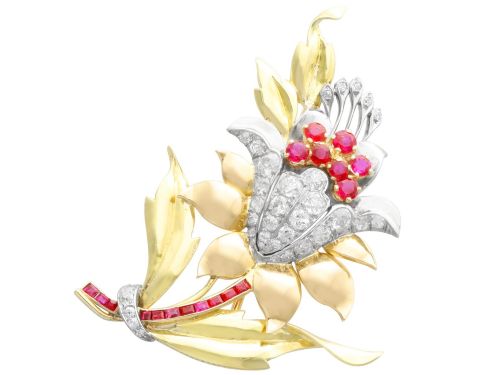
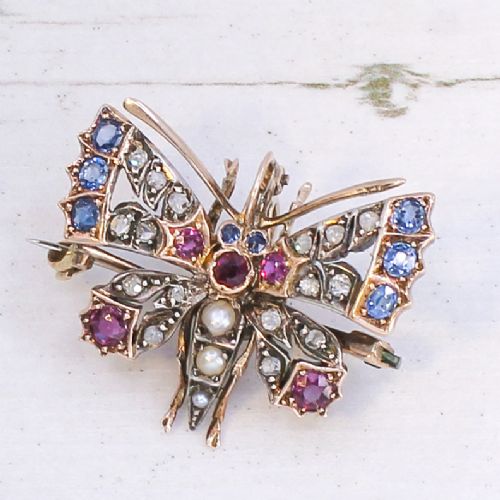
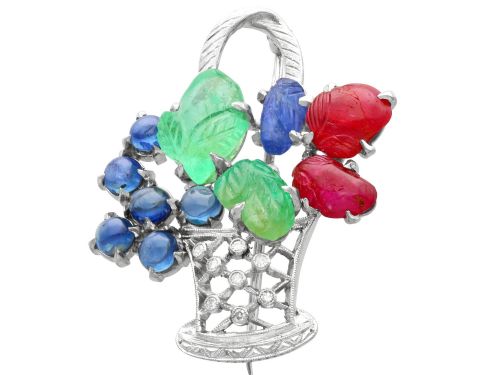
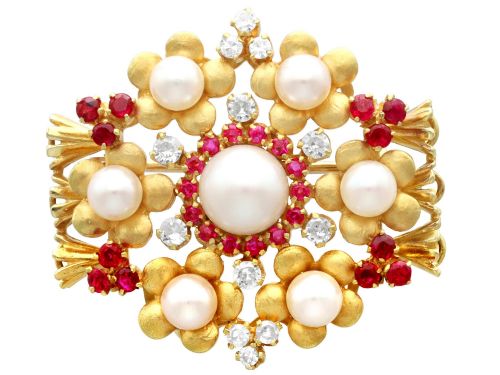
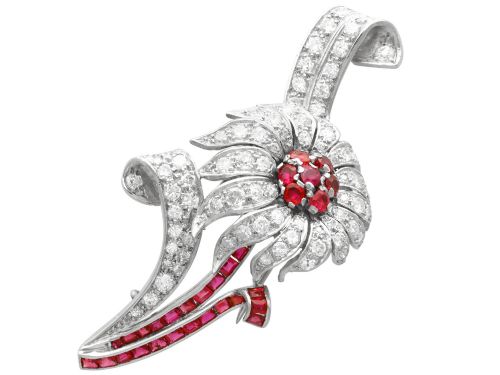
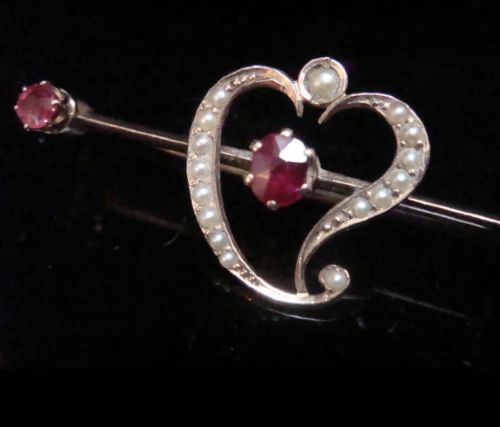
The most common formats on this page include delicate crescent moons, flower clusters, and bar brooches set with combinations of rubies, diamonds, and pearls. These pieces function both as decorative dress fasteners and as miniature works of goldsmithing art.
Origins range from British workshops to French ateliers, incorporating materials from standard 9ct gold up to platinum and 18ct yellow or white gold. Each piece reflects the aesthetic priorities of its decade of origin, shifting from organic nineteenth-century motifs to geometric twentieth-century lines.
Materials and construction
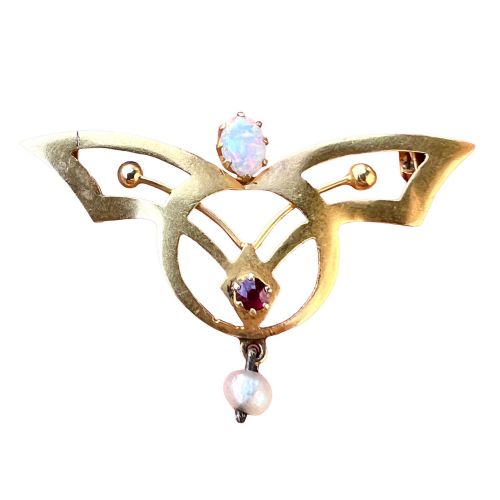
Goldsmiths constructed these brooches using a foundation of precious metals, frequently pairing yellow gold, rose gold, or silver with white platinum settings to enhance the brilliance of mounted stones. Rubies are commonly set alongside diamonds, pearls, sapphires, and opals using claw, flush, or pave techniques.
Earlier pieces from the nineteenth century often utilise silver-topped gold to hold stones securely while maintaining a warm gold reverse. Later twentieth-century examples employ cast white and yellow 18ct gold or platinum to achieve precise geometric or figurative shapes.
Vintage Ruby Brooch Retail Price Guide 2026
Typical asking prices for vintage ruby brooch among the pieces listed under this phrase on Sellingantiques today, from the lower quarter to the upper quarter. They describe what is for sale here now, not the wider market.
Menagerie visitors can find tiny metal rabbits, owls, chicks, and insects holding court alongside traditional floral clusters.
Distinguishing quality in craftsmanship
Quality in a brooch is measured by the integration of design and the selection of materials, where well-matched natural rubies and well-proportioned diamond accents elevate a piece. The precision of stone setting and the crispness of chased or engraved metalwork mark the distinction between standard production and fine maker output.
Signed pieces and items featuring identifiable maker marks or specific provenance represent the upper tier of the range. The complexity of the mounting, such as multi-layered floral petals or articulated animal limbs, further separates exceptional craftsmanship from simpler bar pins.
Kutchinsky·Ben Rosenfeld·Gubelin
The Vintage Ruby Brooch Glossary
- Bar brooch
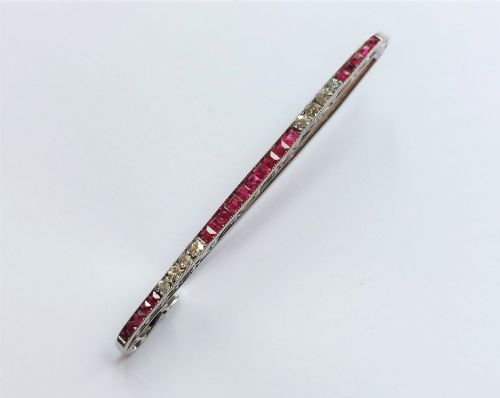
- A horizontal pin featuring a central decorative element or cluster of stones. This linear format was particularly popular during the Edwardian and Art Deco periods.
- Crescent brooch
- A curved, horn-shaped pin tapering at the ends, often set in a graduated row with rubies, pearls, or diamonds. It remains one of the most recognisable configurations from the late nineteenth and early twentieth centuries.
- Paste
- Hand-cut glass or lead crystal used as a gemstone substitute in historical jewellery. Pastes are valued for their own period charm and technical skill rather than as diamond or ruby imitations.
- Silver-topped gold
- A composite technique where a thin layer of silver is soldered to a gold backing. This method allowed Victorian jewellers to set stones against a white metal surface while retaining the structural strength of gold underneath.
Vintage Ruby Brooch: Frequently Asked Questions
How do I date a vintage ruby brooch?
Dating relies on stylistic clues, metal types, and manufacturing techniques characteristic of periods like the Victorian, Edwardian, or Art Deco eras. Hallmarks and maker stamps stamped on the pin or reverse also provide specific chronological markers.
Examining the cut of the stones and the construction of the clasp helps confirm whether a piece originates from the nineteenth or twentieth century.
Can these brooches double as pendants?
Several pieces in this category feature integrated loops or hinged bails alongside the pin mechanism. This dual functionality allowed owners to wear the ornament pinned to a garment or suspended from a chain.
Checking the reverse of the piece reveals whether a hidden loop is present for pendant conversion.
What is a bar brooch?
A bar brooch consists of a slender metal shaft with a pin stem on the reverse and a decorative motif centred along the front. They were widely produced during the late nineteenth and early twentieth centuries.
Designers used this format to showcase linear arrangements of rubies, diamonds, and pearls.
How were figurative brooches worn?
Figurative pieces representing animals, insects, flowers, or crowns were traditionally pinned to lapels, hats, or heavy fabrics to serve as focal points of an outfit. Victorian and mid-century examples often depicted birds, rabbits, and floral sprays with realistic detail.
The weight of the metal and the security of the pin determined the appropriate garment for placement.