




Vintage Royal Worcester Cover
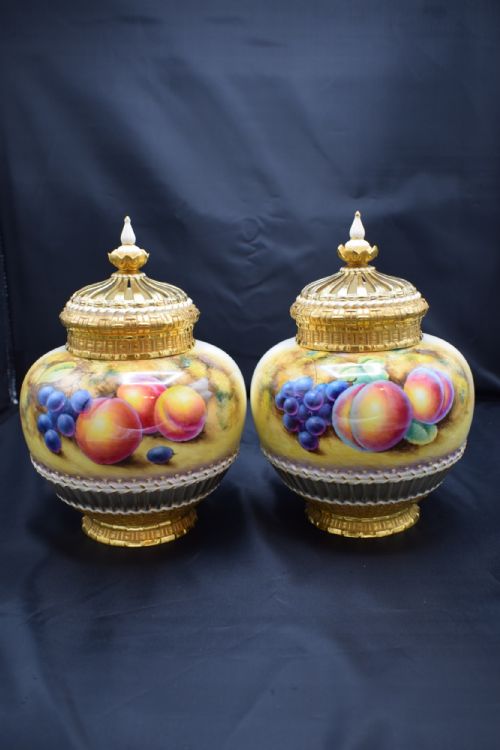
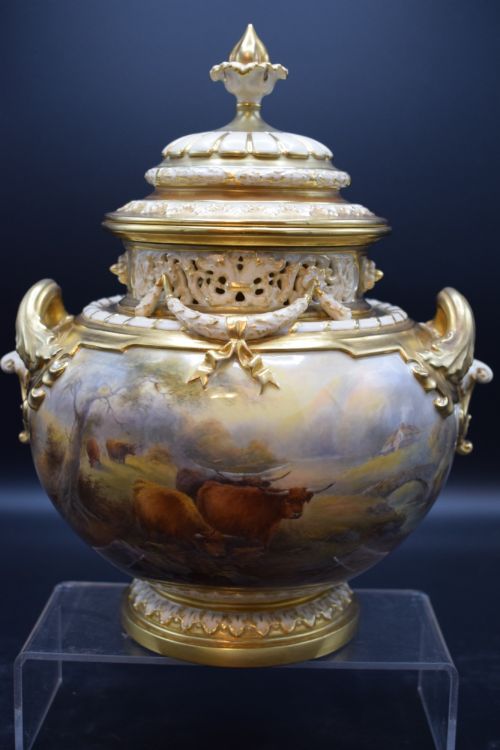
These vintage royal worcester cover pieces are fine porcelain vessels and jars defined by intricate hand-painted fruit and floral scenes.
Vintage Royal Worcester Cover
A buyer searching for vintage royal worcester cover pieces encounters a distinct selection of porcelain ginger jars, decorative urns, and pot pourri vessels. These items date from the early twentieth century through to the mid twentieth century, representing Edwardian and subsequent traditional English porcelain styles. The forms primarily function as lidded jars or vases designed to hold dried flowers and herbs.
The most common examples on this page are lidded pot pourri vases and ginger jars featuring painted fruit or floral motifs. Pieces from the nineteen sixties appear alongside older Edwardian and Victorian styles, spanning the nineteen hundreds up to nineteen sixty. Each item incorporates a matched cover, which remains an essential component of the complete vessel.
How they were made
The manufacture of these objects relies upon fine ceramic porcelain, shaped into traditional vessel forms such as ginger jars and urns. Artisans apply detailed enamel colours by hand to create elaborate depictions of fruit, roses, and natural scenes. The surfaces frequently incorporate gold leaf, gilt, and gilding to accentuate the rims, shoulders, and finials.
Many of these works involve specific painting techniques executed by notable factory artists, whose signatures appear alongside the porcelain body. Firing processes fix the enamel pigments and metallic leaf onto the ceramic base to produce a durable and polished finish. The resulting pieces reflect established English porcelain traditions spanning multiple decades of production.
Vintage Royal Worcester Cover Retail Price Guide 2026
Typical asking prices for vintage royal worcester cover among the pieces listed under this phrase on Sellingantiques today, from the lower quarter to the upper quarter. They describe what is for sale here now, not the wider market.
Listings feature porcelain materials combined with gold leaf and enamel across Edwardian and twentieth century English styles.
What varies in quality
The standard of a piece depends heavily upon the complexity and execution of the hand-painted decoration. Works bearing the signatures of established artists display superior brushwork and finer detail in fruit and floral compositions. The presence and preservation of intricate gilding and gold leaf further distinguish the finer examples from simpler production items.
The integrity of the matching cover forms another major factor in determining the overall character of the vessel. Pot pourri jars and vases that retain their original corresponding lids maintain the intended aesthetic balance of the maker's design. The depth of the porcelain body and the richness of the enamel colours complete the distinction between standard and exceptional pieces.
Royal Worcester
The Vintage Royal Worcester Cover Glossary
- Pot Pourri
- A lidded vessel designed with pierced openings in the cover to release the scent of dried flower petals and spices contained within. These jars often feature elaborate painted decoration.
- Gilding
- The application of gold leaf or gilt onto the ceramic surface to highlight specific architectural details, rims, and handles. This technique adds metallic brilliance to the porcelain.
- Ginger Jar
- A decorative ceramic container with a high shoulder and a rounded body, traditionally fitted with a matching cover. They serve as ornamental display pieces in traditional English interiors.
- Blush Ivory
- A specialised ceramic finish developed by the factory, presenting a soft, creamy background tone that imitates ivory. This technique provides a subtle base for delicate floral painting.
- Enamel
- Vitreous coloured glass fused to the porcelain surface through firing to create vibrant, permanent pictorial designs. It forms the primary medium for the fruit and rose motifs.
Vintage Royal Worcester Cover: Frequently Asked Questions
What are vintage royal worcester cover pieces used for?
These lidded porcelain vessels were historically employed as ornamental jars and pot pourri containers to hold fragrant dried plant materials. Today, they function primarily as decorative display items within traditional interiors.
Collectors appreciate them for their intricate hand-painted fruit and floral surfaces, which showcase mid-nineteenth and twentieth-century English ceramic artistry.
How do I identify the period of a piece?
Dating relies upon the stylistic characteristics, decorative motifs, and recorded production eras associated with the specific vessel forms. Edwardian and mid-century examples exhibit distinct shifts in colour palettes and painting techniques.
Signatures from known painters also help place the creation within a specific decade from the nineteen hundreds to the nineteen sixties.
Are the covers original to the vases?
The matching covers are integral components designed alongside the base vessels to form a complete pot pourri jar or ginger jar. Preserving the correct paired lid maintains the intended proportion and visual balance of the piece.
Collectors look closely at the fit and decorative continuity between the cover and the main body.
How should I care for painted porcelain?
Maintenance requires gentle dusting with a soft, dry cloth to protect the delicate enamel colours and gold leaf accents from abrasion. Harsh cleaning agents or immersion in water can damage the gilt and painted surfaces.
Keeping the pieces away from direct sunlight preserves the vibrancy of the hand-painted fruit and floral scenes.