



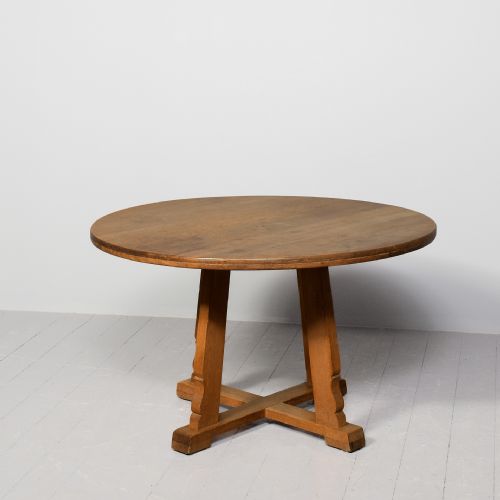
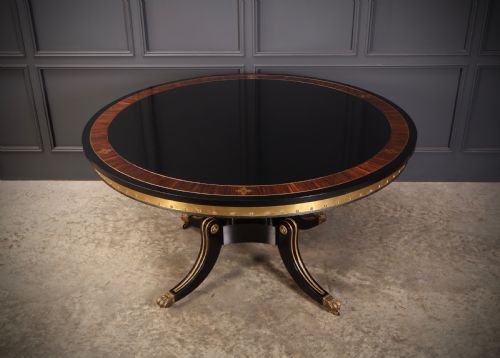


Vintage Round Dining Table
A vintage round dining table gathers people closely together for meals, offering a sociable circular shape found across periods from the eighteenth century to the twentieth.
Vintage Round Dining Table
A vintage round dining table appears in various guises across this selection, including breakfast tables, centre tables, bistro sets, and gateleg designs. These pieces span centuries of cabinet making, reaching from eighteenth-century examples through nineteenth-century Victorian and William IV periods into early twentieth-century Art Deco and 1930s creations.
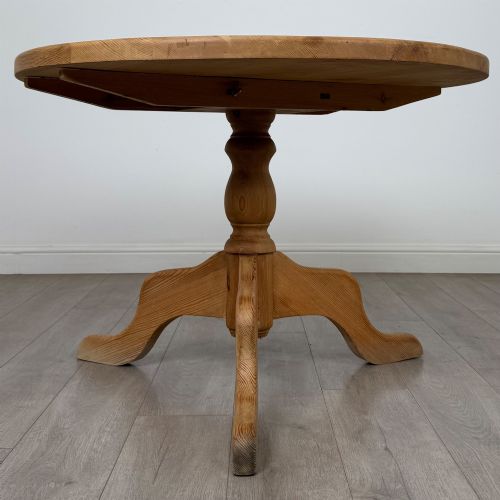
The most frequent iterations involve circular tops supported by central pillars, octagonal shafts, or gateleg framing. Buyers encounter both pedestal formats suited for compact rooms and larger extending versions designed to accommodate groups of diners.
Origins stretch across Britain, France, Scandinavia, Austria, and America, bringing diverse regional woods and painted finishes to the circular dining format.
Materials and Construction
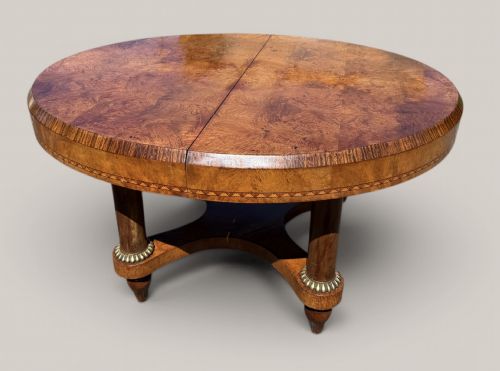
Cabinet makers utilised a rich palette of timbers, shaping tops from solid or veneered oak, mahogany, rosewood, walnut, satin birch, and pine. Figures grain patterns and burr woods appear prominently on top surfaces, while bases often employ robust structural hardwoods or metal components.
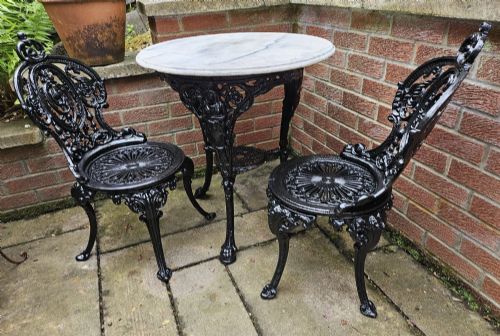
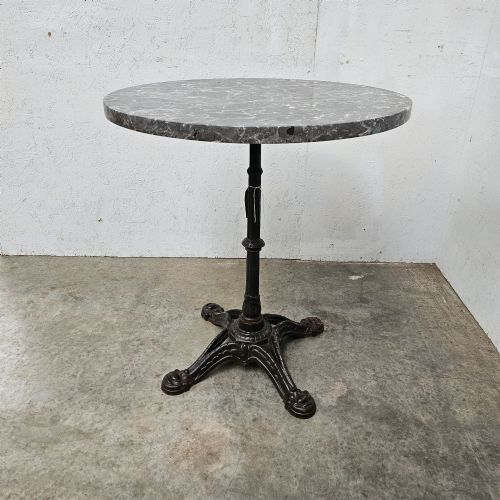
Many examples incorporate clever mechanical solutions for daily use, such as tilt-top mechanisms, drop-leaves, brass inlay, ebonised elements, or extending frameworks with leaves. Iron, brass, copper, and cast iron frequently form the structural frames and pedestals of bistro and café formats, paired with marble or painted wood tops.
The selection encompasses styles ranging from Georgian and Regency to William IV, Victorian, Art Deco, and French industrial designs.
Judging Quality and Craftsmanship
The distinction between ordinary and exceptional pieces rests upon the choice of timber figure, the crispness of carved details like octagonal pillars or barley twist legs, and the integrity of the joinery. Tables featuring highly figured satin birch, burr wood veneers, or intricate brass inlay demonstrate superior workshop execution.
Stability and balance define a well-made pedestal or gateleg design. Superior examples maintain smooth operation in their tilt-top mechanisms and extension systems, showing seamless alignment of leaves and sturdy triform or pillar supports.
The Vintage Round Dining Table Glossary
- Tilt-top
- A table top hinged to tip vertically when not in use, allowing the piece to stand flat against a wall. This clever mechanism saved valuable floor space in nineteenth-century drawing rooms.
- Gateleg
- A table with hinged drop leaves supported by swing-out legs that resemble a gate. This traditional construction provides sturdy support for extending surfaces.
- Breakfast table
- A small circular table originating in the Georgian and Victorian eras, traditionally used for morning meals before large dining rooms were set for the day.
- Triform base
- A three-sided pedestal base commonly found beneath nineteenth-century breakfast and centre tables. It provides balanced weight distribution for heavy rosewood or mahogany pillars.
- Centre table
- A freestanding table designed to be viewed from all sides rather than pushed against a wall. These pieces often occupy the middle of a grand hall or parlour.
Vintage Round Dining Table: Frequently Asked Questions
How do I choose the right size round table?
Consider both the floor space in your dining room and the daily seating requirements. Pedestal tables offer more legroom for guests seated around the perimeter.
Measure the diameter carefully and allow adequate clearance for chairs to pull out comfortably on all sides.
Were these tables used only for dining?
Historical uses varied widely depending on the specific form. Breakfast tables served morning meals, while centre tables held lamps, books, and decorative objects in reception rooms.
Bistro sets and café tables furnished commercial spaces and smaller domestic kitchens for casual dining.
How do I care for antique wood surfaces?
Protect timber finishes from direct sunlight and excessive heat sources to prevent warping and fading of figured veneers. Use coasters and placemats to guard against moisture rings.
Apply quality beeswax periodically to nourish the grain and maintain a soft, natural lustre.
How can I tell different historical periods apart?
Stylistic clues point directly to the era of manufacture. William IV and Victorian pieces often feature heavy rosewood or mahogany with bold pedestals, while Art Deco examples showcase sleek walnut or inlaid birch.
Earlier eighteenth-century formats rely heavily on oak with simple gateleg construction.