
Vintage Rotating Library Stand
A vintage rotating library stand brings books within reach while adding character to a study or sitting room.
Vintage Rotating Library Stand
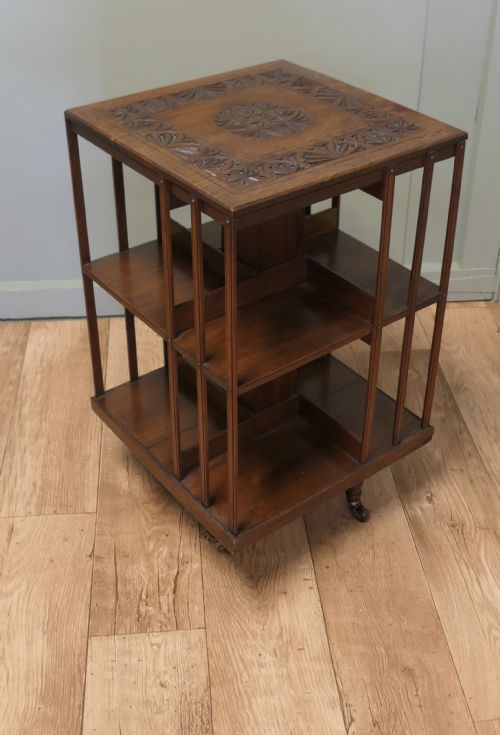
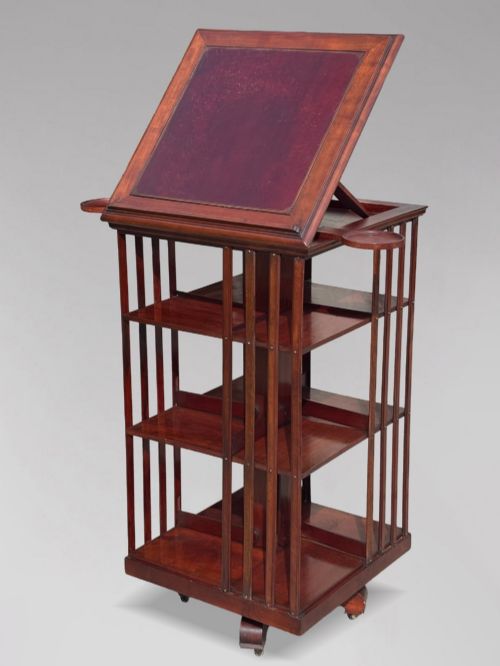
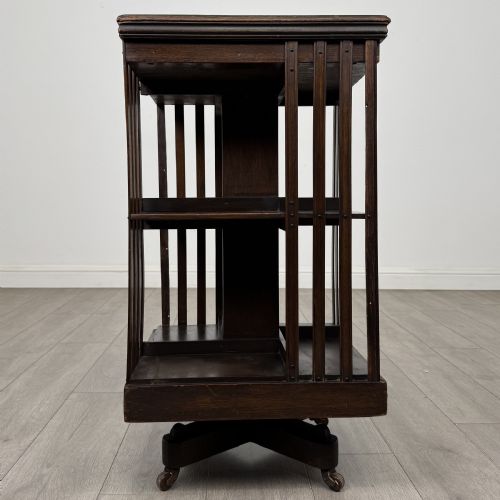
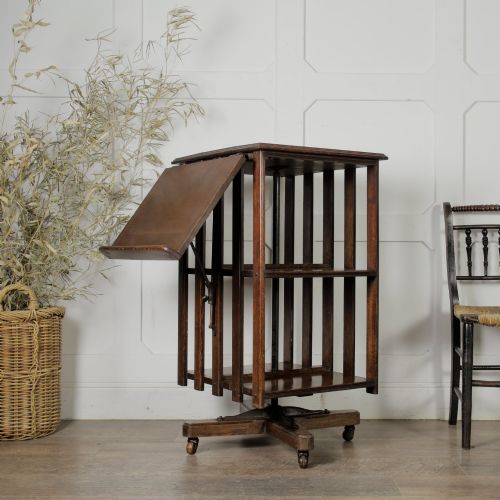
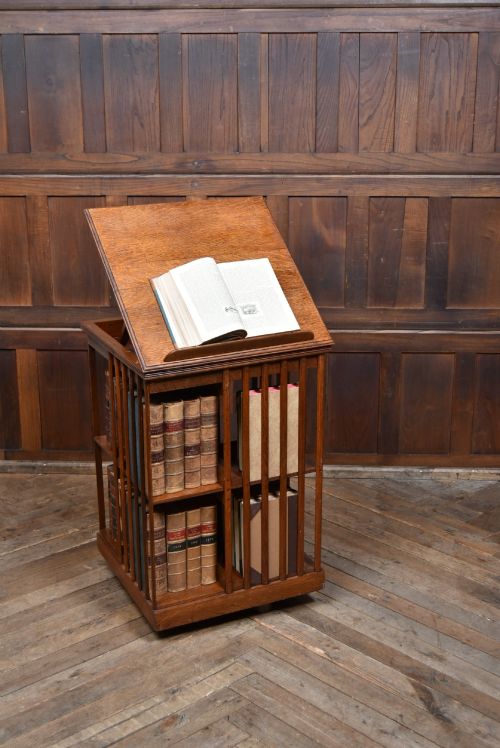
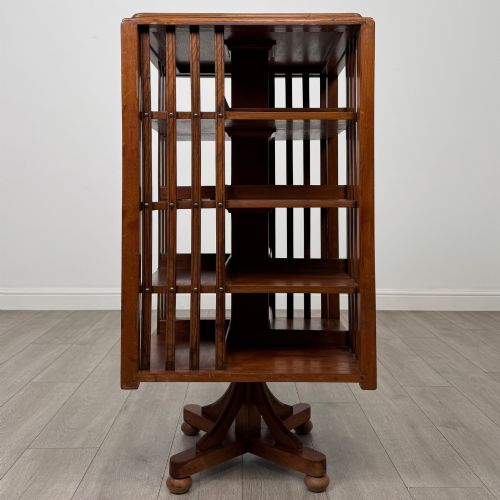
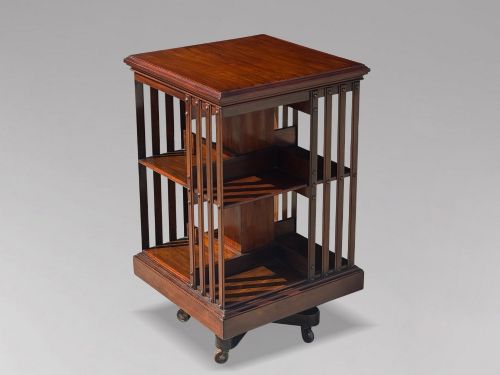
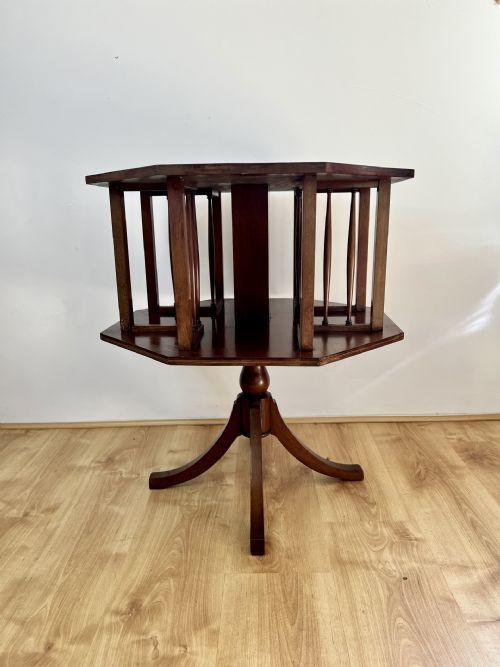
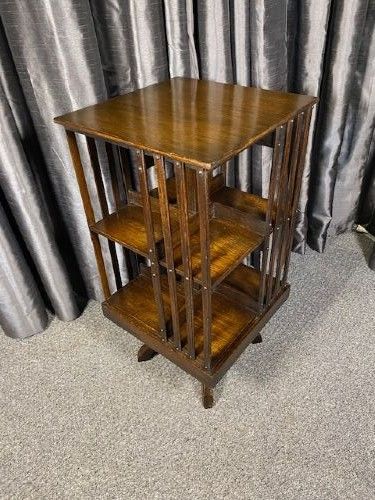
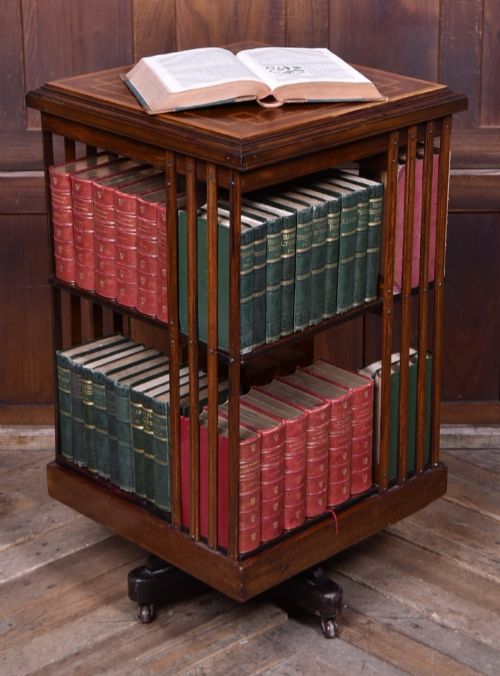
A vintage rotating library stand functions primarily as a revolving bookcase or bookstand designed to hold volumes upright on multiple tiers or shelves. These pieces date predominantly from the Victorian and Edwardian eras, spanning the late nineteenth century into the early decades of the twentieth century.
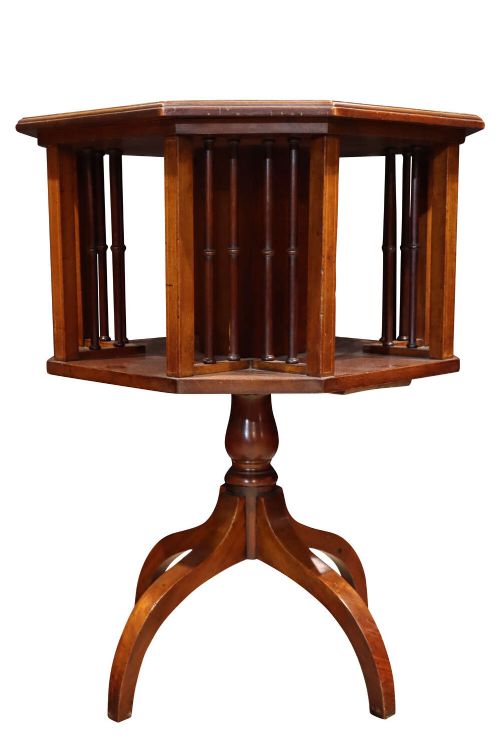
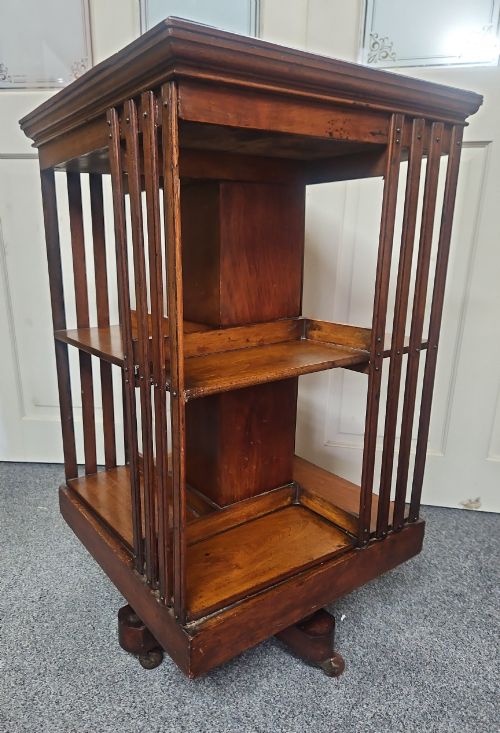
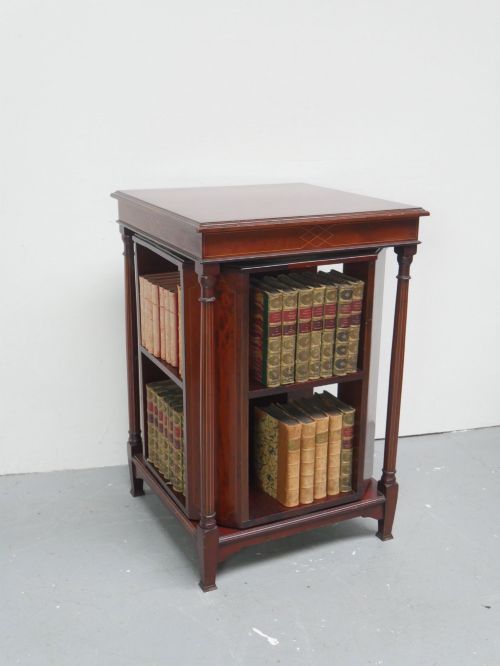
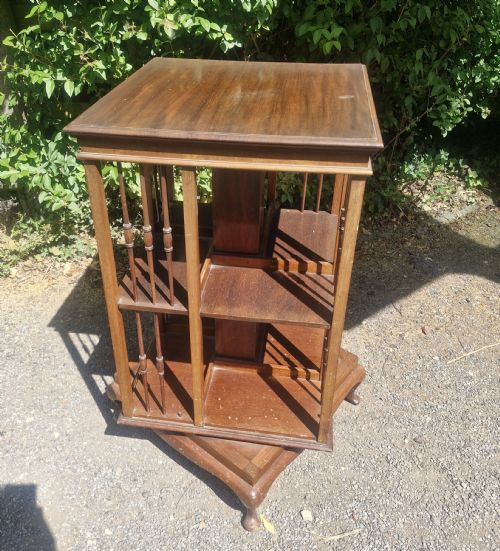
Most examples encountered take the form of compact floor-standing units or table-top book tables that spin smoothly on a central pivot mechanism. The assortment includes tall oak stands, low mahogany tiers, and petite French formats tailored for smaller collections.
Makers and cabinetmakers of the period constructed these rotating stands to sit beside an armchair or desk, allowing readers to access a rotating selection of reference volumes or novels without leaving their seat.
Materials and construction methods
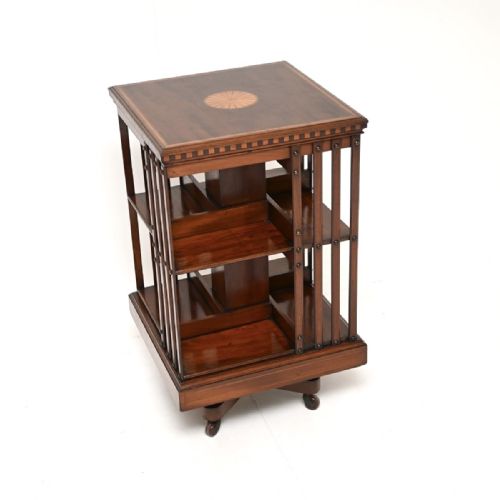
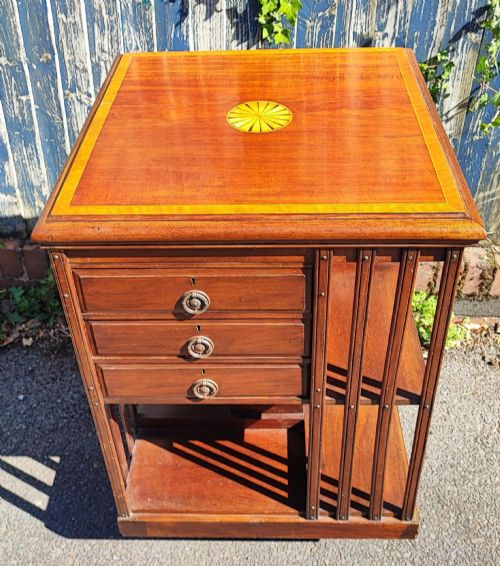
Cabinetmakers relied heavily on solid hardwoods like oak and mahogany, frequently selecting figured timber such as flame mahogany or incorporating decorative satinwood inlay. Brass components appear regularly on internal pivot hardware and decorative corner mounts.
The rotating action depends on a concealed mechanism beneath the shelving tiers, often utilising cast iron or metal spindle bearings to support the weight of heavy bound volumes while permitting smooth rotation.
Joinery techniques typical of late Victorian and Edwardian workshop practice ensure structural stability across multi-tiered shelving units subjected to the constant motion of spinning.
Listings feature solid oak, mahogany, walnut, and satinwood inlay across Victorian and Edwardian periods.
Distinctions in quality and finish
Quality rests upon the choice of timber and the crispness of decorative detailing, such as fine satinwood inlay or carved fretwork panels along the shelf dividers. Superior pieces exhibit carefully matched grain patterns across the revolving tiers.
The smoothness and stability of the underlying rotating mechanism dictate everyday utility, distinguishing robust workshop construction from lighter or looser assemblies.
Heals
The Vintage Rotating Library Stand Glossary
- Revolving bookcase
- A freestanding or table-top shelving unit designed to spin on a central pivot base. This form allows users to browse titles stored on multiple sides from a stationary position.
- Flame mahogany
- A distinct timber veneer exhibiting a wavy, flame-like grain pattern. Cabinetmakers utilised this material on prominent exterior surfaces to create visual depth.
- Satinwood inlay
- Contrasting light-coloured wood inserted into the primary timber surface in geometric or floral motifs. This decorative technique defines many Edwardian pieces.
- Edwardian Sheraton Revival
- A furniture style popular around nineteen hundred that reinterpreted eighteenth-century neoclassical designs with lighter proportions and delicate inlay.
Vintage Rotating Library Stand: Frequently Asked Questions
Where should I place a rotating library stand?
These stands suit placement beside an armchair, beside a desk, or near a reading corner where books need to remain close at hand.
Because the tiers rotate freely, ensure adequate clearance around all sides so the piece turns without obstruction.
How do I care for the wood finish?
Dust the timber regularly with a soft, dry cloth to prevent grit accumulation on the polished surfaces.
Apply a traditional beeswax polish occasionally to nourish the mahogany or oak and maintain a soft sheen.
Can these stands hold heavy hardback books?
Most antique revolving bookcases feature sturdy hardwood construction designed to support substantial volumes of reference material.
Distribute heavier books evenly across the lower tiers to keep the centre of gravity low during rotation.
How do I identify an Edwardian example?
Edwardian pieces often feature lighter timbers, satinwood stringing, and understated classical inlay rather than heavy Victorian carving.
Construction details and timber choices usually point towards the period around nineteen hundred.