

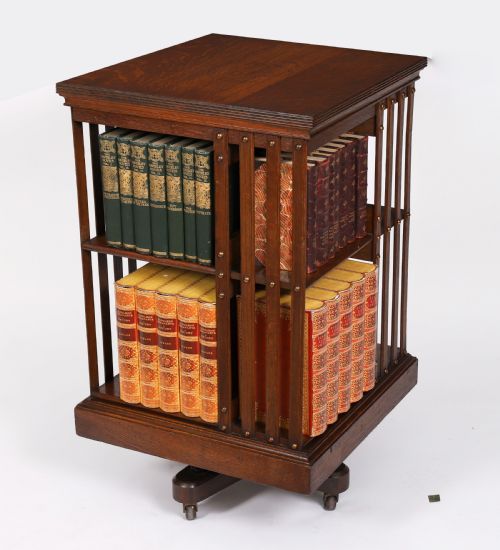


Brown Rotating Bookcase
A brown rotating bookcase turns smoothly to keep volumes at hand, offering practical display within a compact footprint.
Brown Rotating Bookcase
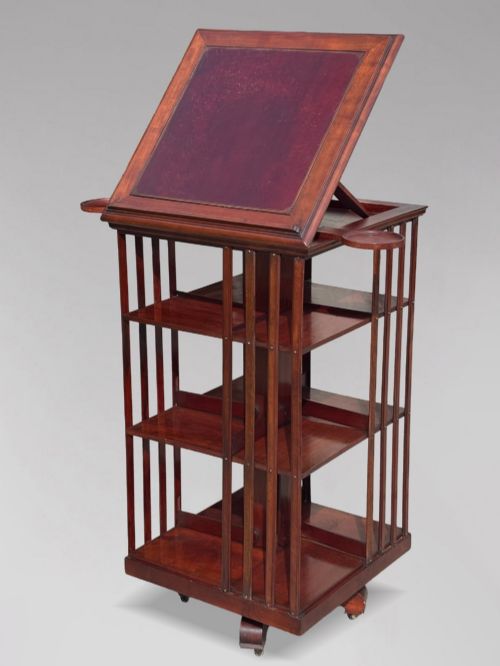
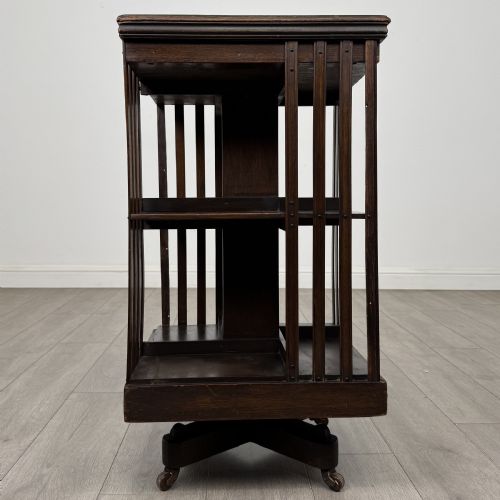
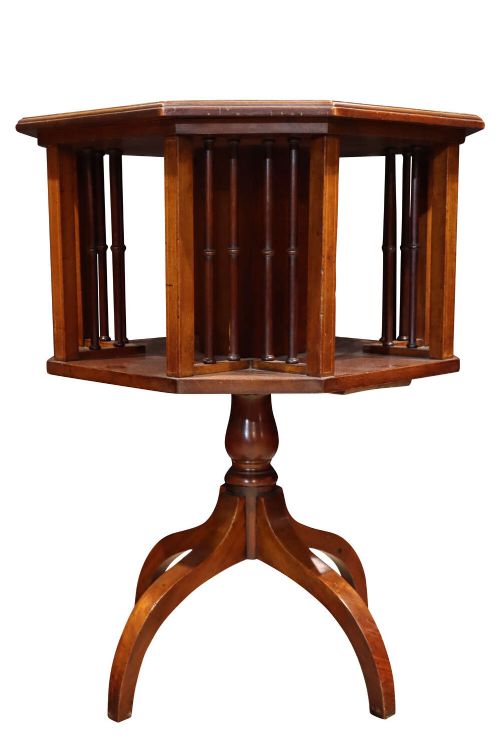
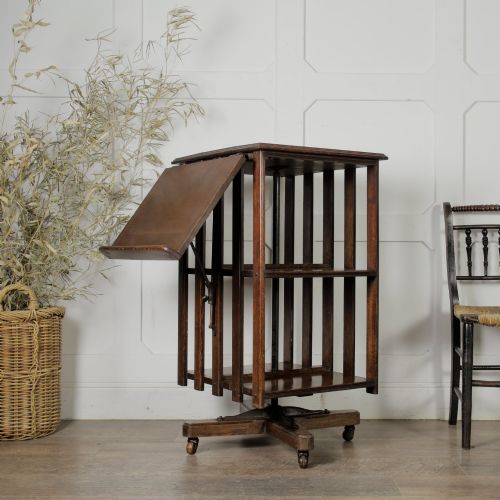
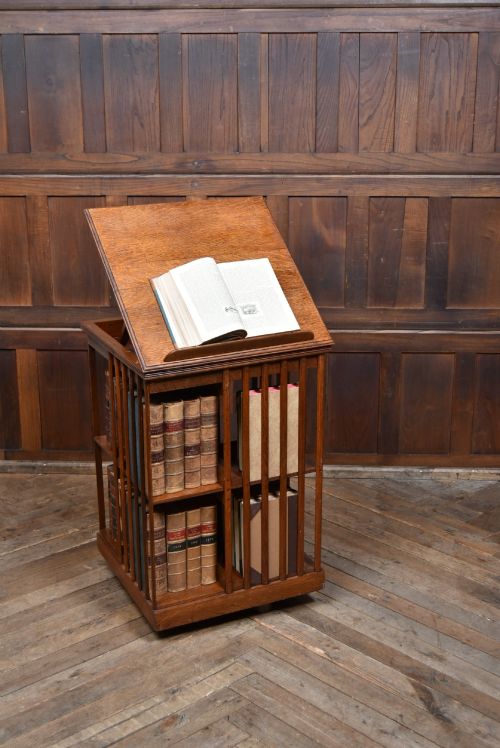
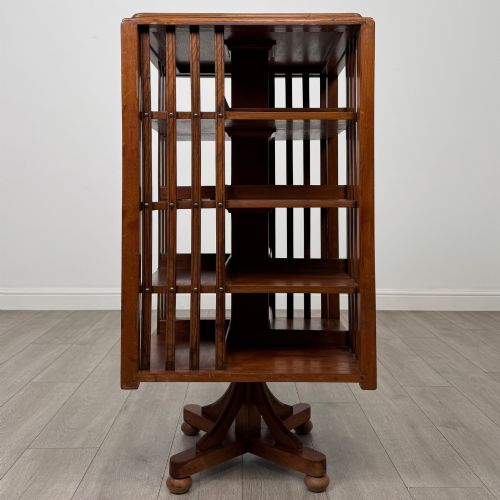
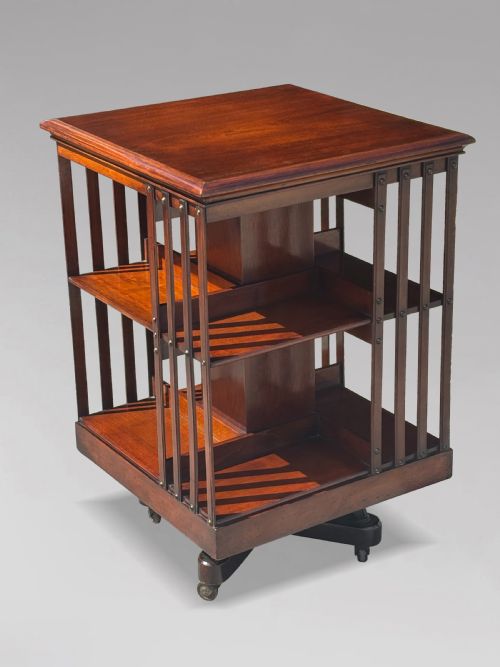
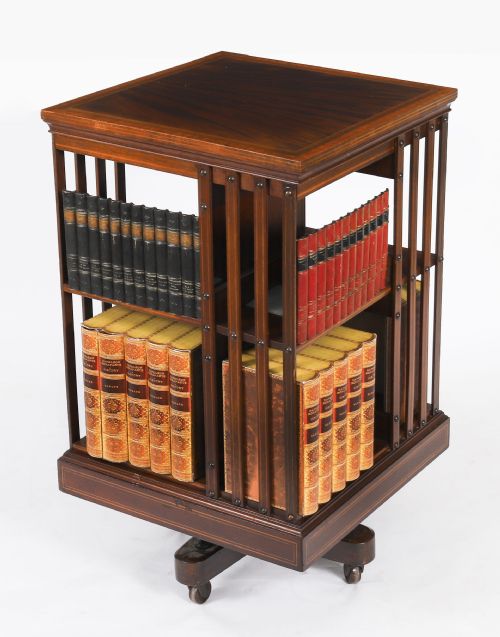
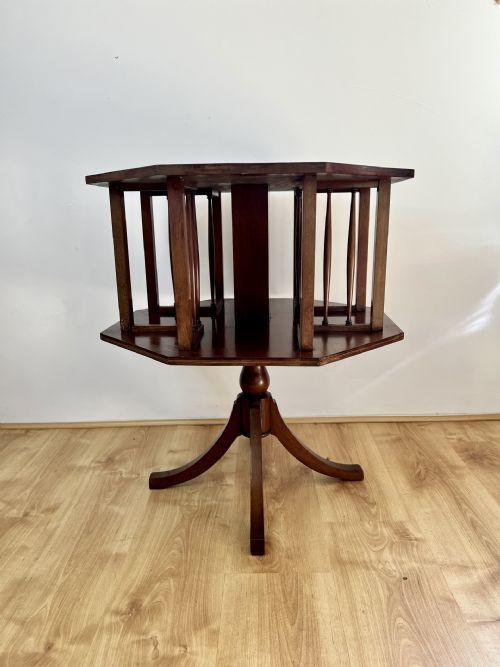
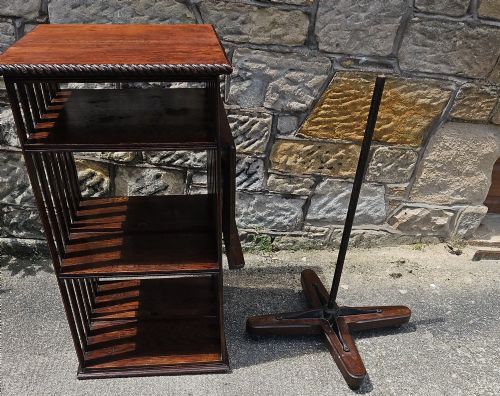
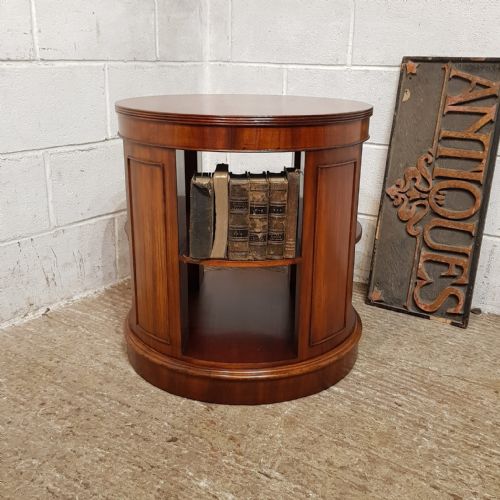
A brown rotating bookcase serves as a functional piece of furniture designed to hold volumes within easy reach by turning on a central axis. These rotating designs appear frequently in Edwardian and Victorian forms, spanning floor-standing models and small table-top versions.
Most examples found here date from the late nineteenth century through the early twentieth century, constructed primarily in mahogany or oak. Makers offered various heights, ranging from small desktop book stands to tall multi-tiered revolving bookcases intended for studies and libraries.
Materials and Construction
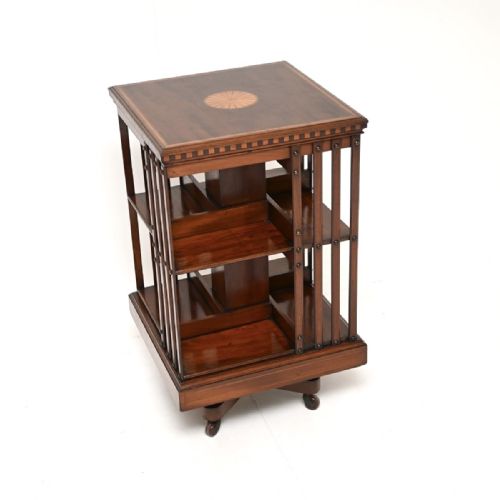
Cabinet makers built these revolving structures predominantly using solid oak and rich mahogany timbers, sometimes incorporating flame mahogany veneers and delicate satinwood inlay. The internal mechanism often relies on a cast iron or metal spindle and ball bearing system that allows smooth rotation.
Joinery techniques from the Victorian and Edwardian periods ensured durability under the weight of heavy books. Wood inlay and brass details frequently accented the primary woods, adding decorative contrast to the revolving frames.
Materials span solid oak, mahogany, walnut, satinwood, cast iron, and brass.
Distinctions in Quality
Superior quality rests in the smoothness of the turning action and the stability of the underlying spindle mechanism. Well-made versions employ dense timber and precise joinery that prevents wobble when loaded with volumes.
Finishing details such as crisp wood inlay, flame mahogany figuring, and intact brass fittings elevate certain pieces above standard utility furniture. The depth of the timber polish and the integrity of the rotating base determine the standing of each piece.
The Brown Rotating Bookcase Glossary
- Revolving bookcase
- A freestanding or desktop bookcase fitted with a pivot mechanism that allows the entire structure to turn. This design lets a reader access multiple sides of shelving without moving position.
- Flame mahogany
- A distinct wood grain pattern showing a flamelike figure, achieved by cutting across the branch junction of the mahogany tree. Cabinet makers utilised this timber for decorative panel fronts on Edwardian furniture.
- Wood inlay
- A decorative technique where thin pieces of contrasting timber, such as satinwood, are inserted into the primary wood surface. It creates geometric patterns or floral motifs.
- Book mill
- An alternative term for a revolving book stand or small bookcase designed to hold reference volumes. These compact pieces sat easily on tables or desks.
Brown Rotating Bookcase: Frequently Asked Questions
How do I maintain the rotating mechanism?
Keep the central spindle clean and lightly lubricated if motion stiffens over time.
Regular dusting prevents debris from entering the internal metal pivot.
Can these hold heavy hardback books?
Most sturdy oak and mahogany versions easily support standard library volumes.
Floor-standing models handle substantial weight better than smaller desktop variations.
Where should I place a revolving bookcase?
Position the piece near a desk or armchair to utilise the 360-degree turning feature.
Ensure sufficient clearance around all sides for the shelves to rotate freely.
How do I identify an Edwardian model?
Look for lighter wood tones, Sheraton-style satinwood inlay, and refined proportions.
Edwardian pieces often feature simpler lines compared to heavier Victorian designs.