





Vintage Room Partition
When you need a vintage room partition, these folding screens and room dividers create privacy and structure with period craftsmanship.
Vintage Room Partition
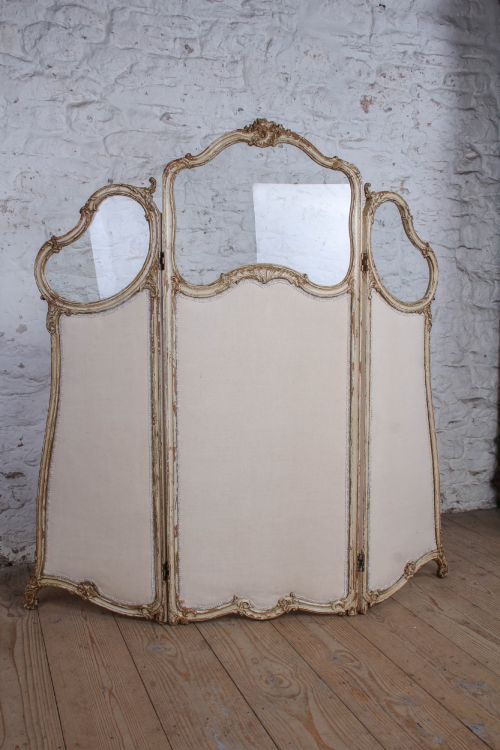
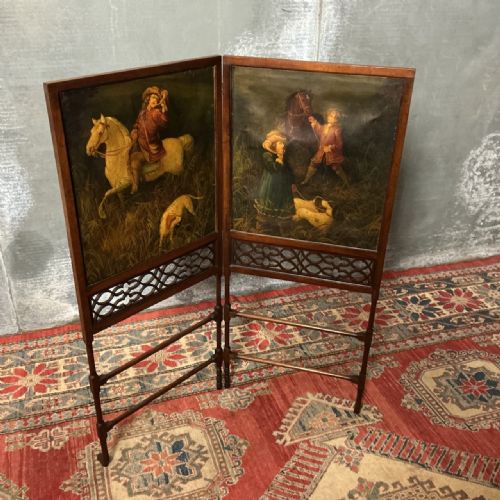
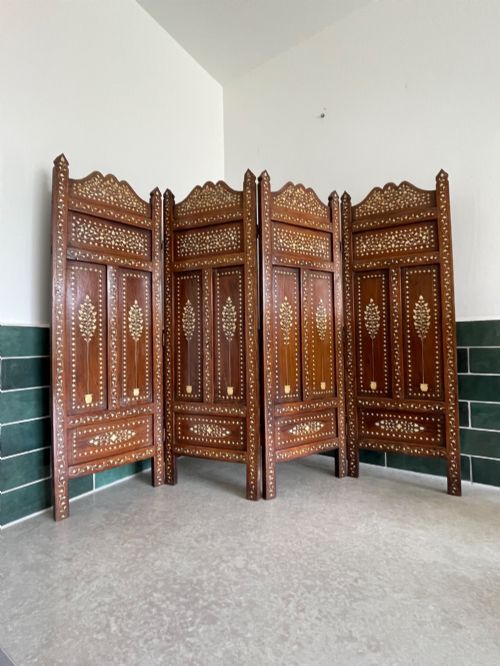
A vintage room partition serves to divide domestic spaces using hinged multi-panel constructions. The pieces appearing here span centuries from the eighteenth through the mid twentieth, encompassing forms such as folding screens, room dividers, privacy screens, and smaller variants like table and fire screens.
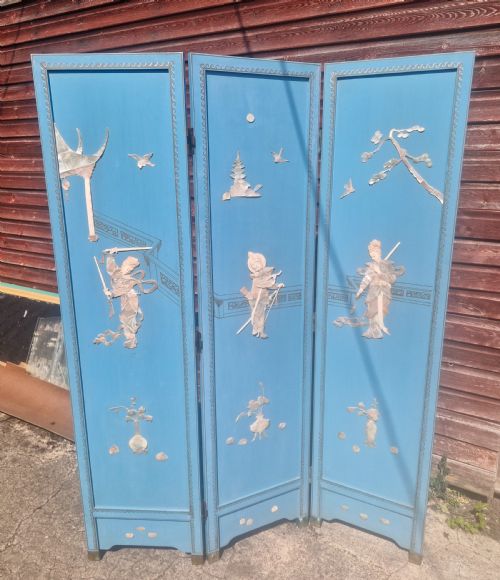
Buyers most frequently encounter three and four fold wooden or lacquered examples originating from various global traditions. These range from Edwardian mahogany dressing room dividers to Chinese lacquered screens and Anglo-Indian carved hardwood panels.
The materials utilised in these structures reflect diverse aesthetic movements including Art Nouveau, Chinoiserie, Arts and Crafts, and Victorian revivals. Panels are constructed using hardwoods, brass frames, glass inserts, and decorated fabrics.
How they were made
Carpenters built the foundational frames of these partitions using solid timbers such as mahogany, oak, walnut, padauk, and ebonised wood. Frames incorporate hinges allowing multiple folds, with some designs offering fully reversible panels.
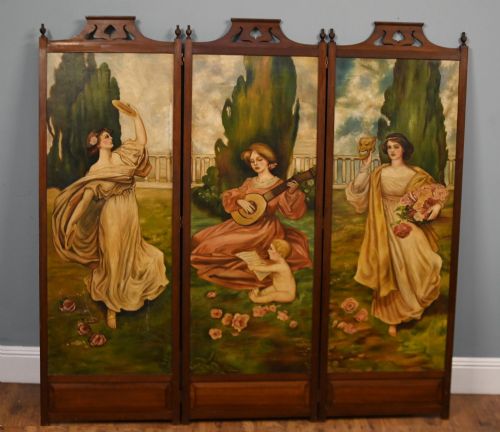
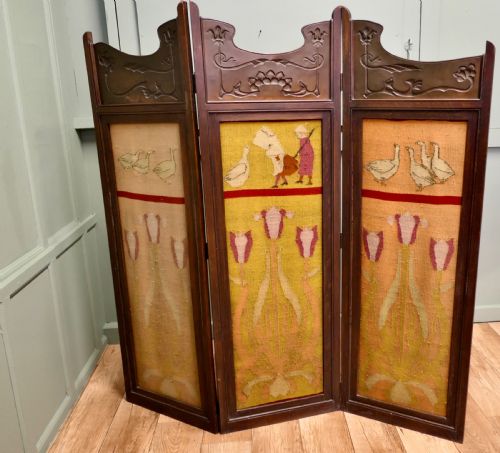
Surface decoration involved skilled hand-painting, lacquering, gilding, and leather tooling. Textile elements feature needlepoint, naive wool panels, oil paintings, and patterned velvets such as William Morris designs.
Glazing and fretwork appear across specific periods, utilising leaded glass, brass accents, and intricately carved wooden lattice. Joinery methods varied from traditional framing to detailed panel inlays.
Vintage Room Partition Retail Price Guide 2026
Typical asking prices for vintage room partition among the pieces listed under this phrase on Sellingantiques today, from the lower quarter to the upper quarter. They describe what is for sale here now, not the wider market.
Original debating society screens from Eton College share space here with naive wool panels stitched by anonymous hands.
What varies in quality
The distinction between standard and superior partitions lies in the execution of surface art and structural joinery. Hand-painted leather, detailed lacquer work, and fine needlepoint distinguish higher-grade examples from simpler constructions.
Material selection significantly impacts the grade of the piece, with dense hardwoods like padauk and mahogany contrasting against simpler oak or stained softwood frames. The complexity of carved fretwork and the integrity of original hinges further delineate quality grades.
The Vintage Room Partition Glossary
- Folding screen
- A piece of furniture consisting of multiple frames or panels joined by hinges. These items stand upright and fold together for storage or positioning.
- Chinoiserie
- European interpretations of Chinese and East Asian artistic traditions, frequently applied to lacquered screens and painted leather panels. This style gained particular popularity during earlier decorative periods.
- Padauk
- A heavy tropical hardwood valued for its durability and rich red-brown hue, utilised in fine nineteenth-century Indian screens. It provides robust structural framing for carved panels.
- Needlepoint
- A type of canvas work embroidery used to create decorative panels within wooden screen frames. This textile technique appears on Victorian and Regency privacy screens.
- Fretwork
- Ornamental perforated wood or metal design created through sawing or carving. This technique adds visual lightness to heavy wooden room partitions.
Vintage Room Partition: Frequently Asked Questions
How were folding screens used historically?
Historical interiors utilised folding screens to block drafts from doors and windows, creating sheltered seating areas near fireplaces. They also served in bedrooms and dressing rooms to establish private spaces for changing clothing.
Larger multi-panel screens divided expansive reception rooms into intimate conversation zones. Smaller table screens decorated desks and mantelpieces without partitioning floor space.
What materials make up these partitions?
Wooden frames form the structural core of most examples, utilising mahogany, oak, walnut, hardwood, and ebonised timber. Surfaces feature decorative additions including lacquer, hand-painted leather, gilt, oil paintings, and brass.
Infill panels incorporate textiles such as silk, needlepoint, and velvet, alongside glazed sections and leaded glass. Anglo-Indian and Asian items frequently showcase intricate carved wood and fretwork.
How do I identify the period of a screen?
Period identification relies on stylistic indicators combined with construction methods and materials. Victorian and Edwardian examples often feature mahogany frames with inlaid details, needlepoint, or oil paintings.
Arts and Crafts pieces utilise ebonised oak and distinctive fabrics like William Morris velvet, while nineteenth-century Chinese and Japanese variants display traditional lacquer and carved dragon motifs.
Can these partitions support room division in modern homes?
Multi-panel folding screens function effectively to zone open-plan living areas, create privacy, or conceal storage corners. Their hinged design allows them to be angled or flattened against walls depending on spatial requirements.
Stability depends on the number of panels and the weight of the frame, with heavier hardwood and glass configurations offering substantial physical separation.