


Vintage Revolving Office Seat
A vintage revolving office seat brings heavy timber and mechanical swivel action to a working desk.
Vintage Revolving Office Seat
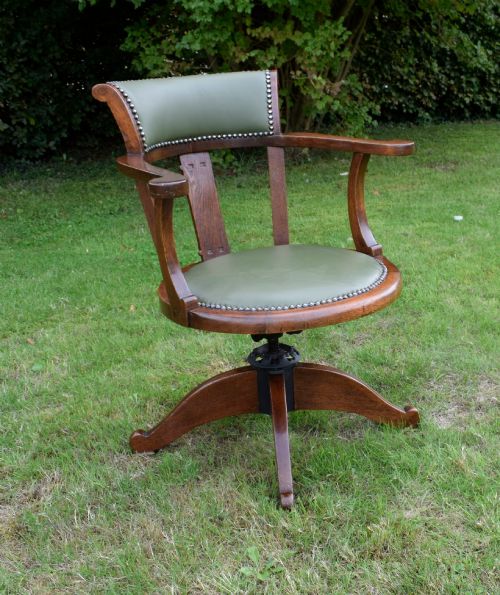
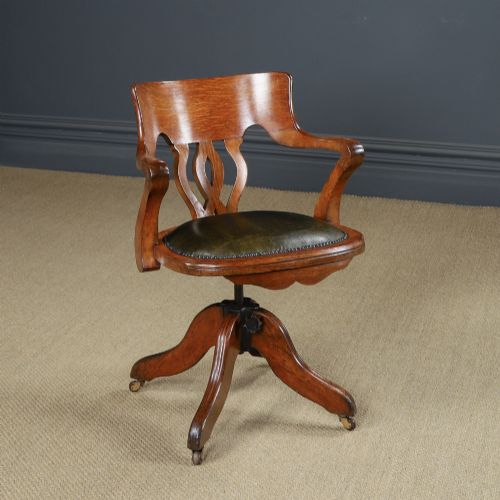
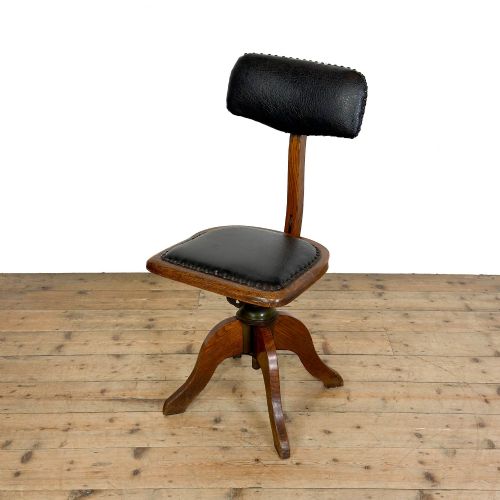
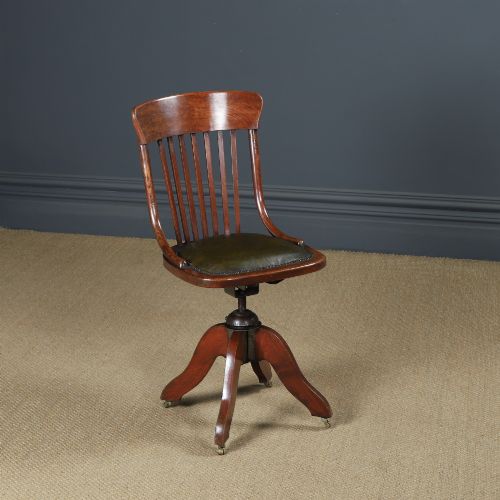
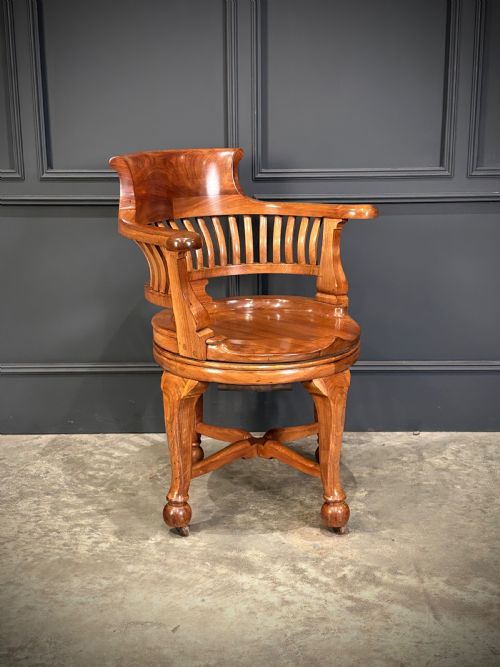
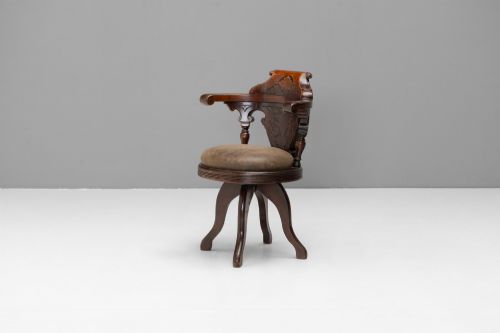
A vintage revolving office seat provides a mechanical swivel function combined with robust desk seating design. Buyers searching for a vintage revolving office seat typically encounter sturdy timber frames mounted on height-adjustable or swivelling bases. These pieces span from the late nineteenth century through the Edwardian period and into the nineteen-twenties, originating as functional workspace furniture.
The selection includes desk chairs, armchairs, and maritime seating designed for stability and movement. Oak and mahogany predominate, often paired with leather upholstery, cast iron, or brass fittings. Styles range from plain utilitarian office furniture to Gothic Revival, Arts and Crafts, and ships chairs.
Most examples rely on wooden seats or leather pads designed for daily administrative work. The mechanisms allow rotation and sometimes tilt or rise-and-fall adjustment. Buyers select these items to anchor a study or library with genuine period character and robust construction.
How they were made
Makers built these seats using solid hardwoods such as oak, mahogany, walnut, and beech. Frames featured sturdy joinery designed to withstand the constant twisting and weight shifts of office work. Carved wooden seats or frames upholstered in green leather provided the primary seating surfaces.
Iron, cast iron, and brass formed the swivel mechanisms, pedestals, and adjustable spindles. Metal components permitted rotation and height alteration, securing the seat to a heavy base. Satinwood inlay, carving, and bergere panels added decorative detail to higher-status models.
Some chairs spent their early mornings bracing against ocean swells before settling down to quiet desk duty in wood-panelled offices.
What varies in quality
Construction methods determine the structural integrity of each swivel mechanism and timber frame. Simpler beech or plain oak variants offer basic utility, while heavily carved oak, inlaid mahogany, and specialised ships chairs demonstrate superior craftsmanship. The presence of original swivel and tilt hardware affects the authenticity and performance of the piece.
Materials elevate certain models, particularly where satinwood inlay, quality leather, or bergere panels are employed. Maker attribution through stamps or labels distinguishes standard commercial production from fine cabinetmaker output.
George Bartholomew and Co
The Vintage Revolving Office Seat Glossary
- Swivel desk chair
- A seat mounted on a rotating spindle or central pivot allowing the sitter to turn without moving the base. This mechanism forms the core of any vintage revolving office seat.
- Rise and fall
- An adjustable height mechanism operated by a threaded screw column or mechanical screw thread beneath the seat. It allows the user to raise or lower the sitting position.
- Bergere
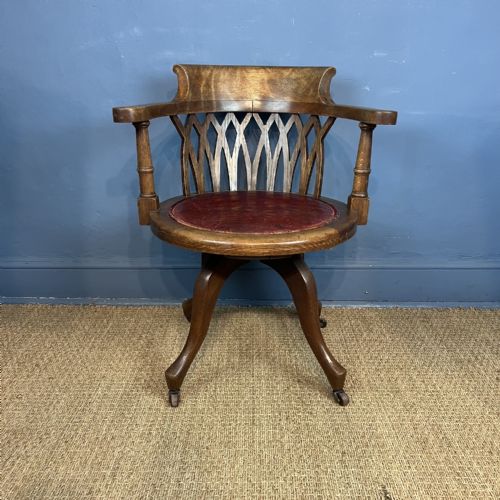
- A panel of woven cane or wicker fitted into the backrest or sides of a wooden frame. This technique lightens the visual weight of heavy timber seating.
- Gothic Revival
- A nineteenth-century decorative style employing pointed arches, trefoils, and heavy carved tracery. It appears on select Victorian office chairs to mimic medieval architecture.
- Ships chair
- A specialised revolving seat designed for maritime use, featuring weighted bases or secure mountings to withstand rolling vessels. Examples often use heavily carved oak or mahogany.
Vintage Revolving Office Seat: Frequently Asked Questions
Are these chairs comfortable for daily use?
These chairs were built for administrative work, offering upright support and firm padding. Models with curved wooden seats or padded leather armrests provide solid ergonomics for modern desks.
Users accustomed to modern ergonomic task chairs will find these seats firmer and more upright. They encourage an upright posture suited to writing and reading.
How do I date a revolving office seat?
Dating relies on timber choices, hardware design, and stylistic markers such as Gothic Revival or Arts and Crafts details. Late Victorian and Edwardian examples often feature exposed cast iron spindles and quarter-sawn oak.
Earlier nineteenth-century pieces tend to use solid mahogany with simpler turned wood components. Patent stamps or maker marks underneath the seat also help narrow the period.
What is the difference between a desk chair and a ships chair?
Standard desk chairs are designed for office or library floors with four-legged or pedestal swivel bases. Ships chairs originate from maritime environments like passenger liners.
Ships chairs often feature heavier timber construction, specialised mounting brackets, or weighted bases to remain stable at sea. They share the revolving function but carry distinct maritime provenance.