


Edwardian Style Office Chair
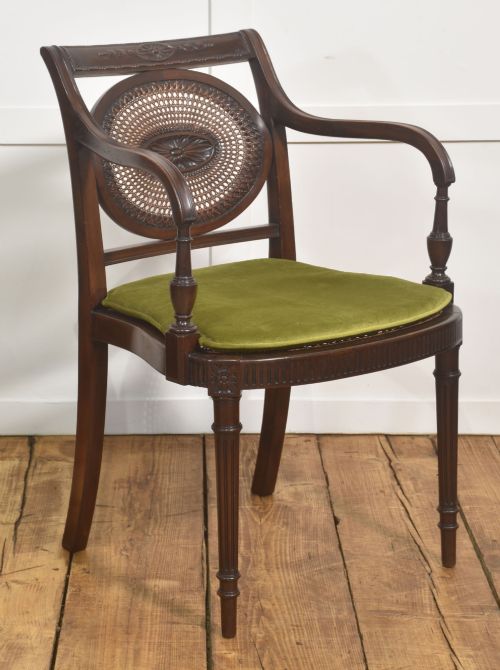
These edwardian style office chair examples offer a blend of period character and workspace utility, mostly appearing in mahogany and leather.
Edwardian Style Office Chair
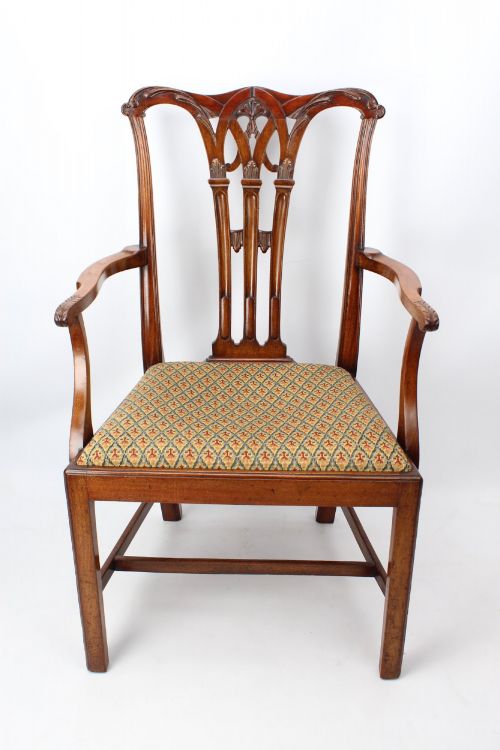
When you search for an edwardian style office chair, you enter a category of seating designed for writing tables and desks, drawing on revival styles from Sheraton, Chippendale, and Queen Anne. The pieces listed here span the Edwardian period, the early twentieth century, and the Victorian era, offering various iterations of the desk chair and library armchair.
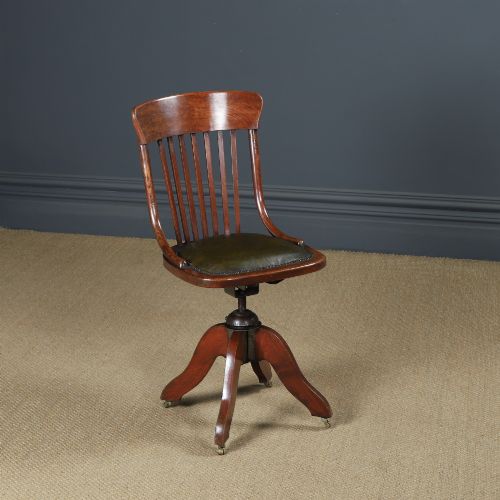
The most common form you will meet is the mahogany elbow chair or revolving swivel chair, often fitted with a leather seat pad. Alongside these, versions in oak, beech, and ash appear, reflecting both formal revival designs and simpler arts and crafts forms.
How They Were Made
Cabinetmakers constructed these frames principally in solid mahogany, oak, beech, and ash, employing traditional joinery to withstand the rigours of daily office use. Turned wooden spindles, carved splats, and steam-bent components form the structural framework of the seats.
Upholstery techniques combined coil springs, webbing, and horsehair stuffing beneath leather, fabric, or velvet coverings. Brass fittings and iron mechanisms enabled height adjustment and swivelling functions on the revolving examples.
Listings feature mahogany, oak, beech, ash, leather, velvet, brass, and iron across pieces dated from the 1870s to the 1920s.
What Varies in Quality
Quality rests on the selection of timber and the crispness of the carving, distinguishing standard production pieces from fine cabinet-made revival examples. Figured mahogany and carefully figured oak command greater attention than utilitarian beech or mixed woods.
The sophistication of the mechanical components also divides the range, from fixed four-leg side chairs to complex rise and fall swivel mechanisms with integrated iron and brass hardware.
Thonet·Edward William Godwin
The Edwardian Style Office Chair Glossary
- Revolving
- A chair featuring a central pivot mechanism that allows the seat to turn through a full circle. These often incorporate a rise and fall screw action.
- Elbow chair
- An armchair designed with low arms that fit beneath the underside of a standard desk. These provide side support without obstructing movement.
- Sheraton Revival
- A late nineteenth and early twentieth century design movement that reinterprets the late eighteenth century neoclassical furniture of Thomas Sheraton. It relies on refined mahogany frames and subtle inlay.
- Arts and Crafts
- A movement prioritising visible construction, honest materials, and hand craftsmanship over machine-made ornamentation. Pieces in this style usually showcase plain oak.
Edwardian Style Office Chair: Frequently Asked Questions
Are these chairs suitable for daily computer work?
Many period examples are sturdy enough for regular desk work, provided the internal joints remain solid and secure. Their lower seat heights compared to modern equivalents may require careful measurement against your desk.
Revolving versions offer mobility, while fixed side chairs suit spaces where movement is secondary to traditional aesthetics.
How do I identify an Edwardian desk chair?
Edwardian examples typically exhibit lighter mahogany frames, often incorporating Sheraton or Chippendale revival motifs. They sit alongside late Victorian and George V pieces that share similar turnings and proportions.
Inspect the timber grain and underframe construction to distinguish genuine early twentieth century production from later reproductions.
What is the difference between an elbow chair and a library armchair?
Elbow chairs generally feature shorter, more restrained arms intended to clear the edge of a writing table. Library armchairs frequently offer more substantial upholstered padding designed for prolonged reading.
Both forms appear across the Edwardian and late Victorian periods, serving similar functional roles in studies.
Can I replace the leather on the seat pad?
Replacement of worn leather is a standard conservation step that preserves the usability of a desk chair. Traditional tooling and hand-colouring methods match the character of the original surface.
Original leather with patination is often retained where the material remains stable and intact.