


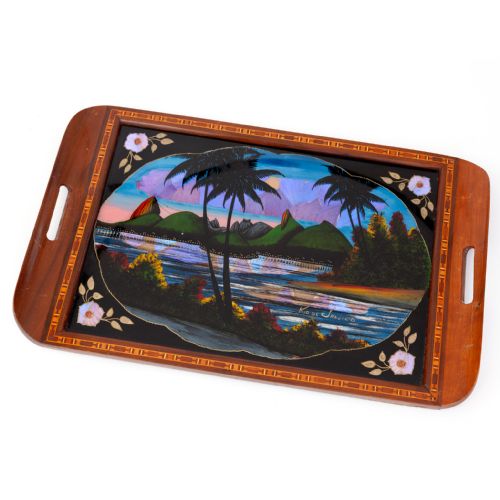


Vintage Reverse Glass Artwork
Vintage reverse glass artwork comprises paintings, prints, and mirrors where the image is applied directly to the rear of the glass sheet.
Vintage Reverse Glass Artwork
Vintage reverse glass artwork encompasses a fascinating range of decorative items, including framed prints, painted panels, mirrors, and trays. When you search for vintage reverse glass artwork, you encounter pieces spanning from the Georgian and Regency eras through the nineteenth century and into the 1920s, 1930s, and 1940s.
The decorative styles shift notably across these periods, moving from Georgian and Victorian formality to Chinoiserie, Art Deco, and Taisho Roman aesthetics. Many pieces incorporate specialised wooden frames such as maple or gilt wood to house the delicate glass panels securely.
How they were made
Makers utilised glass as the primary support medium, applying oil paint, pigment, and print layers directly onto the rear surface. This technique requires the artist to paint details in reverse, laying down foreground elements before background scenery so the image reads correctly from the front.
Framing materials such as maple and gilt wood were constructed to house the glass securely, often incorporating divided sections for mirrors or accompanying prints. Some works employ paper elements combined with paint and oil to build up complex pictorial depth behind the transparent pane.
Materials recorded across the inventory include glass, oil paint, pigment, paper, maple, and gilt wood.
What varies in quality
The standard of execution in the painted or printed imagery dictates the overall calibre of the piece. Finer works display meticulous brushwork and precise pigment application, whereas simpler examples rely on more uniform commercial printing techniques behind the glass.
The quality of the surrounding wooden frame, particularly with figured maple or gilt wood surrounds, influences the aesthetic impact. Original framing contributes significantly to the integrity of the object, distinguishing standard decorative items from superior examples.
Takabatake Kasho·W Bishop·Schweninger
The Vintage Reverse Glass Artwork Glossary
- Reverse glass print
- A print applied to the back of a glass sheet, often hand-coloured with pigments or oils. This technique protects the pictorial surface from dust and environmental wear while creating a distinct glossy finish.
- Chrystoleum
- A coloured photograph mounted to glass, hand-painted from behind, and then made transparent with oil before backing paper is applied. Popular in the nineteenth century, this method produced richly coloured domestic scenes.
- Mezzotint on glass
- A print produced via the mezzotint engraving method and subsequently transferred to a glass support. These works achieve subtle tonal gradations visible through the transparent panel.
- Chinoiserie
- A decorative style reflecting European interpretations of Chinese and East Asian artistic traditions. This aesthetic appears across various furniture and wall art panels from earlier decorative periods.
- Taisho Roman
- An artistic and cultural movement in Japan during the Taisho period that blended traditional elements with Western modernism. Works from this era often feature distinctive graphic subjects like beauties and cats.
Vintage Reverse Glass Artwork: Frequently Asked Questions
Were these pieces meant for wall display?
Many items were designed specifically for wall display as framed paintings, mirrors, or decorative prints intended to ornament domestic interiors. Others, such as decorated trays, served functional roles while incorporating scenic views or butterfly specimens beneath glass.
Display locations should avoid direct sunlight to protect the pigments and oil paints from fading. Stable indoor humidity levels will also help preserve both the glass panels and the wooden frames.
What is a chrystoleum?
A chrystoleum is a specific type of nineteenth-century artwork created by taking a photographic print, sticking it face down to glass, rubbing away the paper backing, and then painting the remaining transparent image by hand from behind.
This process produced vibrant, three-dimensional colour effects before standard colour photography existed. They are typically found mounted in decorative frames and depict romantic or domestic scenes.
How do I date a reverse glass painting?
Dating relies on examining the framing materials, the style of the imagery, and the construction methods visible at the back of the piece. Georgian and Regency examples often feature different framing profiles compared to nineteenth-century or 1920s pieces.
Subject matter and signatures, where present, also provide clues to the period of origin. Comparing the artistic style to established eras like Art Deco or Taisho Roman helps narrow down the decade of production.