



Vintage Religious Necklace
A vintage religious necklace brings together devotion and fine metalwork, offering wearable history through gold crosses, sacred medallions, and devotional pendants.
Vintage Religious Necklace
A vintage religious necklace encompasses a variety of devotional forms, primarily taking shape as crosses, crucifixes, and sacred medals. Buyers searching this phrase encounter pieces that span from the late nineteenth century through the mid-twentieth century, with French devotional work forming a significant part of the selection.
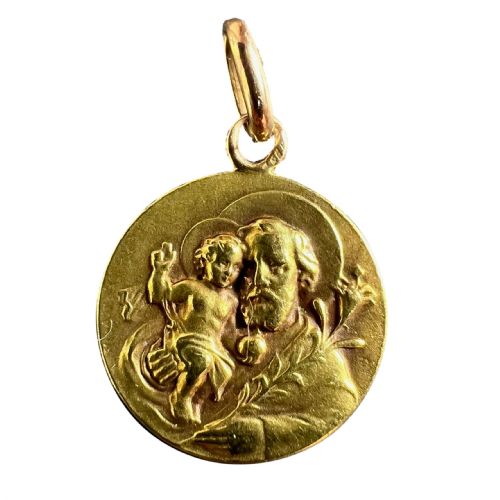
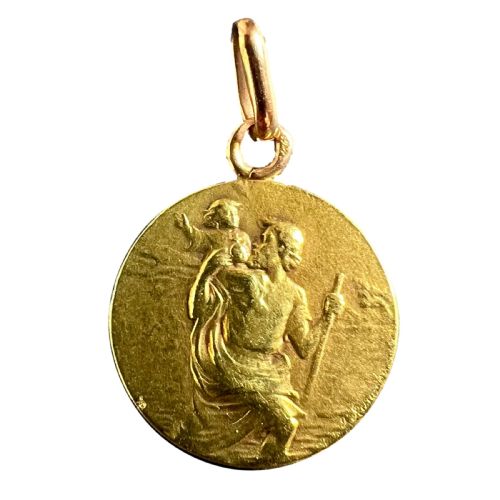
The most common formats on this page are gold pendants depicting the Virgin Mary, Jesus Christ, and various saints, often suspended from delicate chains or worn as charms. These pieces range from simple engraved crosses to intricate medallions marked by regional craftsmanship and specific maker signatures.
Materials and construction
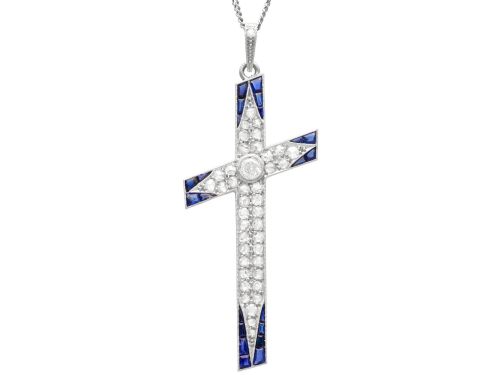
Gold forms the primary medium for these pieces, appearing in various karats including 9ct, 15ct, 18ct, and occasionally 24K yellow, white, and rose gold, alongside platinum and silver. Makers combine these precious metals with gemstones such as diamonds, sapphires, rubies, amethyst, moonstone, and marcasite to highlight the central religious motifs.
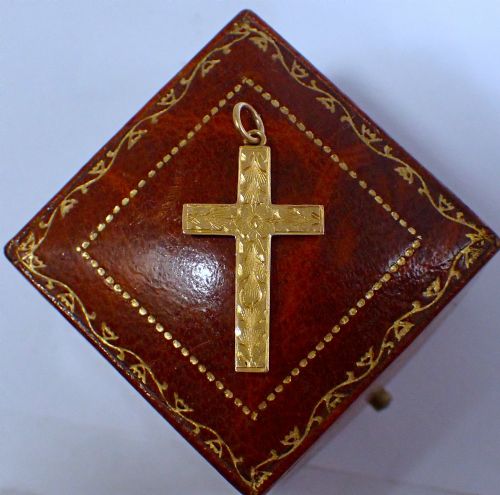
Techniques span traditional hand engraving, piercing, and metal casting, supplemented by decorative elements like enamel work, including plique-à-jour, mother-of-pearl, and seed pearls. Many medals and crosses integrate multiple colours of gold or incorporate surface textures such as radiating sunburst designs.
Vintage Religious Necklace Retail Price Guide 2026
Typical asking prices for vintage religious necklace among the pieces listed under this phrase on Sellingantiques today, from the lower quarter to the upper quarter. They describe what is for sale here now, not the wider market.
Evaluating the pieces
Quality in these devotional items rests upon the crispness of the casting and the precision of the hand engraving on figures like the Madonna and Child or the corpus on a crucifix. Superior examples display clean lines in pierced work and secure, deliberate settings for any accompanying diamonds or coloured stones.
The integration of enamel and the legibility of maker stamps or hallmarks further distinguish finer specimens from standard production. Artisanal input from recognised workshops elevates the execution of small details, such as the rays of a sunburst or the folds of robes.
Paul Brandt·Monier·Pageli Perriat·Sellier·Dropsy·Tairac·Mazzoni·Monnaie De Paris·Monet·Serraz·Henry Cook·Augis and Mazzoni
The Vintage Religious Necklace Glossary
- Crucifix
- A cross bearing the figure of Jesus Christ, distinguished from a plain Christian cross. These items appear in silver and gold across various decades.
- Medal
- A small, flat metal disc bearing a religious image or text, often worn as a pendant or charm. French devotional examples frequently feature the Virgin Mary or specific saints.
- Plique-à-jour
- An enamelling technique where enamel is applied in cells without a backing, resembling miniature stained glass. This method allows light to pass through the translucent coloured areas.
- Marcasite
- Polished pyrite stones cut and set in silver to resemble small diamonds, popular in vintage jewellery. They provide a dark, metallic sparkle around crosses and pendants.
Vintage Religious Necklace: Frequently Asked Questions
What materials are used in these necklaces?
The pieces utilise various grades of gold, including 9ct, 15ct, 18ct, and 24K, alongside platinum and silver. Precious and semi-precious stones such as diamonds, sapphires, rubies, amethysts, moonstone, and marcasite frequently accent the metalwork.
Enamel work and mother-of-pearl also appear across the selection, adding colour and texture to the crosses and devotional medallions.
How can I identify the age of a piece?
Dating relies on stylistic markers, hallmarks, and specific design movements associated with the items. Pieces range from late Victorian and Edwardian examples to Art Nouveau, Art Deco, and mid-century modern designs.
Maker marks and French control stamps stamped onto the gold or silver provide additional clues to the exact manufacturing period.
Are these items French in origin?
A substantial portion of the religious medals and pendants originate from France, reflecting a strong tradition of devotional jewellery production. These French pieces often feature specific saints, the Virgin Mary, or First Communion themes.
Other items come from British and continental makers, representing different regional styles of cross pendants and crucifixes.
How are the pendants usually worn?
These pieces function primarily as pendant necklaces or charms suspended from matching or contemporary chains. Their sizes vary from small, subtle crosses to large, detailed medallions designed to stand out.
Many incorporate loops or bails suited for standard chain thicknesses used in daily wear.