


Vintage Religious Jewellery
These vintage religious jewellery pieces range from delicate French gold medals to British gold crosses, bringing centuries of devotion into wearable form.
Vintage Religious Jewellery
When you search for vintage religious jewellery, you encounter a distinct gathering of devotional objects primarily taking the form of pendants, lockets, charms, and cross necklaces. These pieces span from the Victorian and Edwardian eras through the Art Nouveau and Art Deco periods, reaching into the mid-twentieth century.
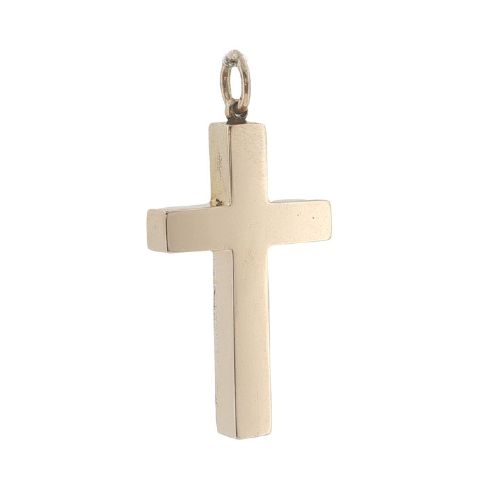
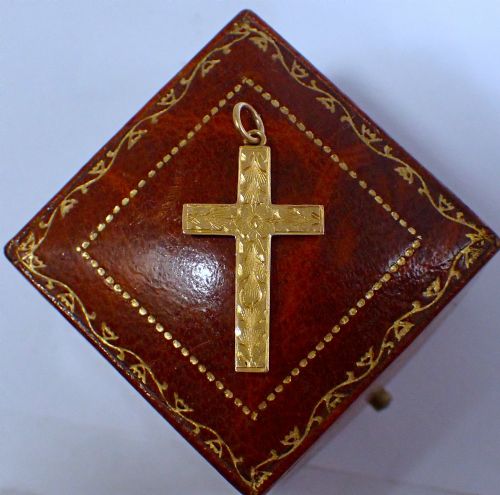
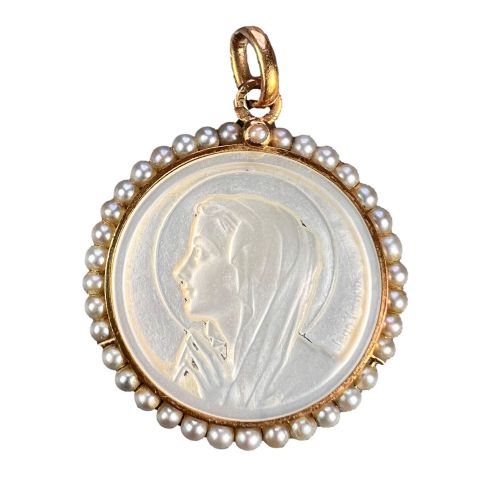
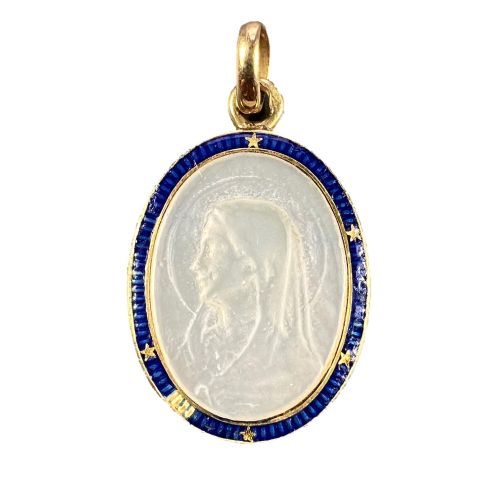
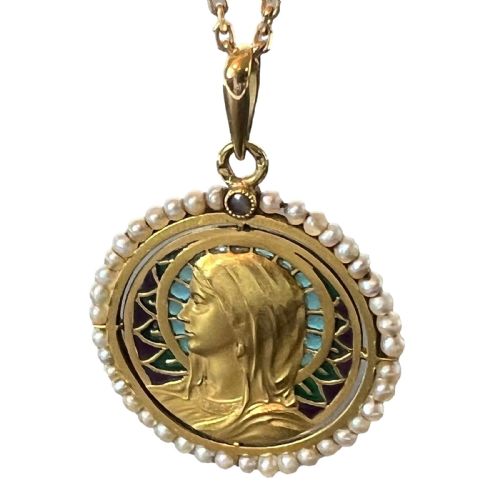
The most common items on this page are French religious medals and charms cast in yellow, rose, and white gold, alongside British gold cross pendants. Subjects frequently depict the Virgin Mary, the Madonna and Child, Saint Christopher, and the Sacred Heart.
Makers and subjects bridge local traditions and international artistry, moving from simple engraved silver crosses to elaborate multi-metal pendants set with pearls and diamonds.
Materials and construction techniques
Construction relies heavily on precious metals, with 18K and 9ct gold forming the primary structure of French medals and British crosses, sometimes complemented by silver, white gold, and platinum.
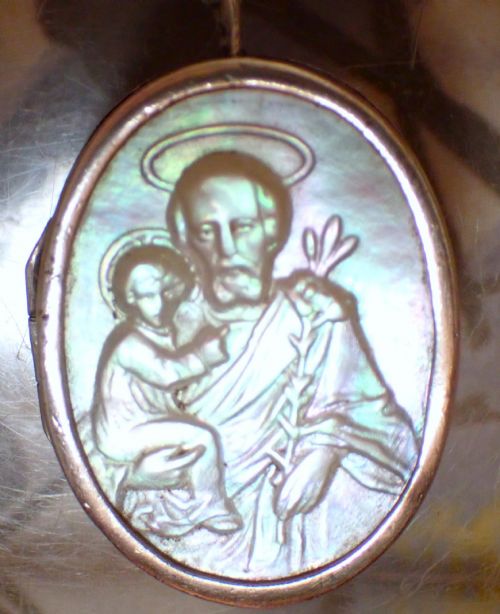
Master craftsmen utilised techniques such as plique-à-jour enamel, translucent coloured enamelling, hand-carving in mother of pearl, and delicate metal engraving to create intricate surface detail.
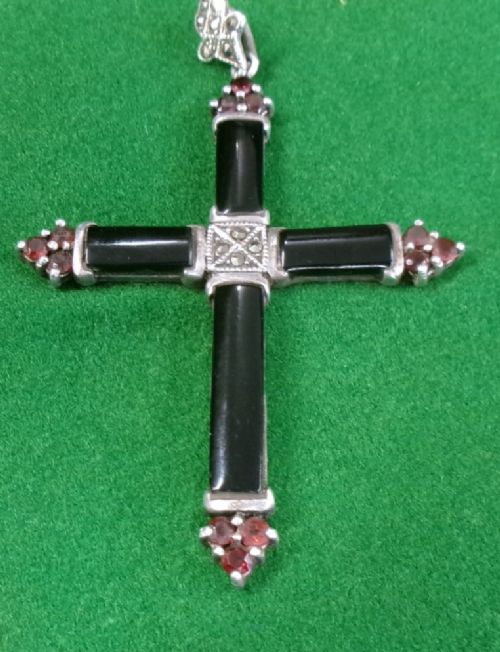
Gemstones including diamonds, seed pearls, moonstones, and marcasite are frequently integrated to highlight borders, halos, and structural motifs.
Listings feature items spanning the Victorian era through the 1950s, incorporating materials such as 18K yellow gold, enamel, and mother of pearl.
Distinctions in craftsmanship and design
Quality rests on the crispness of the metal stamp and the depth of the hand-engraving, particularly on French gold medals where artist signatures distinguish exceptional works from mass production.
The sophistication of decorative techniques, such as the translucent brilliance of plique-à-jour enamel or the precise setting of small diamonds and pearls, elevates a piece above standard devotional items.
Emile Monier·Paul Brandt·Mazzoni·Guilbert·Vernon·Emile Dropsy·Sellier·Rasumny·Tairac·Pageli Perriat
The Vintage Religious Jewellery Glossary
- Plique-à-jour
- An enamelling technique where enamel is applied to a cell-like metal frame without a backing, allowing light to shine through the translucent coloured glass.
- Medal
- A flat, coin-like devotional pendant bearing raised images of saints, holy figures, or sacred symbols, often featuring a maker mark.
- Marcasite
- Small, faceted pieces of pyrite set into silver or base metal to create a sparkling, antique metallic border.
- Cross Pendant
- A suspended Christian symbol designed to hang from a chain, varying from plain gold surfaces to heavily engraved Victorian designs.
- Mother of Pearl
- The iridescent inner layer of certain mollusc shells, carved into devotional plaques depicting sacred figures.
Vintage Religious Jewellery: Frequently Asked Questions
What are vintage religious medals made of?
Most pieces recorded here are fashioned from 18K yellow, rose, or white gold, alongside examples in 9ct gold, silver, and platinum.
Enamel work, mother of pearl, pearls, and diamonds frequently accompany the metal structures.
How can I identify French religious jewellery?
French pieces often take the form of circular or oval medals and charms dedicated to figures like the Virgin Mary or Saint Christopher. Many display small stamped maker marks or artist signatures along the rim.
Stylistic cues range from classic French Art Nouveau and Art Deco curves to traditional devotional iconography.
How do I wear a heavy gold cross pendant?
These substantial gold and silver pendants require a sturdy chain matching the metal purity, whether 9ct or 18K gold. They sit well as standalone statement pieces against simpler necklines.
Ensure any antique bail or jump ring is secure before daily wear.
What periods do these devotional items cover?
The selection spans the late nineteenth century through the Victorian and Edwardian eras, progressing into the Art Nouveau and Art Deco movements of the early twentieth century.
Mid-century examples in white gold and moonstone also appear.