


Vintage Red Settee
A vintage red settee brings character and bold colour to a room, offering practical seating shaped by decades of craftsmanship.
Vintage Red Settee
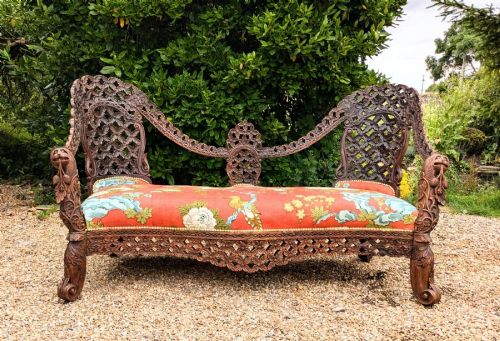
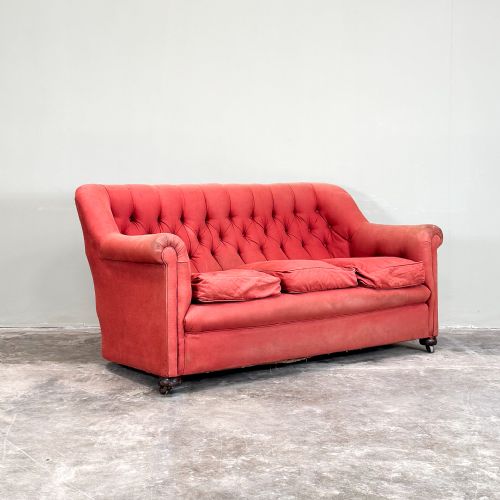
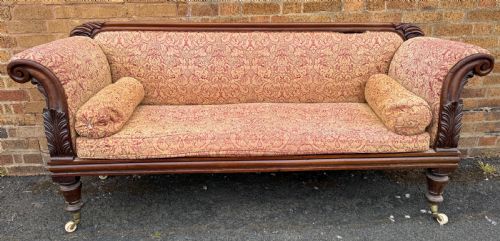
A vintage red settee spans diverse historical periods, ranging from nineteenth century William IV carved mahogany framed scroll-end sofas to Edwardian country house seating and nineteen-thirties deep-seated designs. These pieces appear in varied formats, including serpentine camel back proportions, buttoned leather Chesterfields, and Arts and Crafts two seater arrangements.
Buyers encounter different styles reflecting distinct eras, such as Victorian influences, Queen Anne Revival, and Anglo Indian Bombay framing. Materials and silhouettes shift from formal mahogany and walnut structures to bentwood salon suites and upholstered window seats.
Selecting a vintage red settee involves recognising the balance between period frames and upholstery choices. Pieces range from compact two-seater sofas to larger salon suites, incorporating fabrics like velvet, damask, and leather.
Materials and construction
Frames rely on traditional timbers such as mahogany, walnut, and general hardwoods, providing the structural integrity for carved scrolls, serpentine backs, and exposed woodwork. Brass accents frequently appear on castors or decorative mounts.
Upholstery techniques utilise fabric, velvet, leather, and damask, often fixed with traditional buttoning methods seen on Chesterfield designs. Woodwork displays hand carving, polished finishes, or painted decorative treatments.
One unexpected settee comes upholstered in Alfa Romeo leather, uniting classic automotive styling with domestic seating.
Assessing quality and craftsmanship
The standard of a vintage red settee depends upon the precision of the timber framing and the integrity of the underlying joinery. Hand-carved details and solid mahogany or walnut structures indicate higher workmanship than simpler secondary woods.
Upholstery execution separates standard examples from superior pieces, particularly in the neatness of buttoning, the quality of leather or damask hide, and the resilience of the internal springing.
The Vintage Red Settee Glossary
- Camel back
- A sofa design featuring a serpentine curved top rail that rises in gentle humps resembling a camel. This classical silhouette gained prominence during the eighteenth century.
- Scroll-end
- An arm design that rolls outward in a tight spiral curve. This detail appears frequently on nineteenth-century frames.
- Japanned
- A European imitation of East Asian lacquerwork involving layered varnishes and decorative motifs. This technique creates a glossy, dark surface finish.
- Bentwood
- Wood softened through steaming and bent into curved structural forms. This method defines lightweight nineteenth and twentieth-century seating.
Vintage Red Settee: Frequently Asked Questions
How do I clean leather on a vintage settee?
Clean leather upholstery using a soft, dry cloth to remove surface dust. Apply a specialised leather conditioner periodically to maintain suppleness and prevent cracking.
Avoid harsh chemical cleaners or excess water, which can damage the hide and historical finish. Test any cleaning product on a small, hidden area first.
Are these settees comfortable for daily use?
Many vintage settees provide substantial depth and supportive cushioning suited to everyday lounging. Deep-seated nineteen-thirties models and padded Chesterbells offer particularly relaxed seating.
Consider the seat height and firmness when matching a settee to your living space. Some formal period frames prioritise upright posture over relaxed lounging.
Will a large settee fit my room?
Measure your available floor space carefully, accounting for the outward curve of scroll arms and camel backs. Larger Edwardian and Victorian frames require ample clearance to sit comfortably within a room layout.
Consider doorway widths and stairwells before delivery to ensure straightforward access. Compact two-seater options suit smaller apartments and window seat placements.