
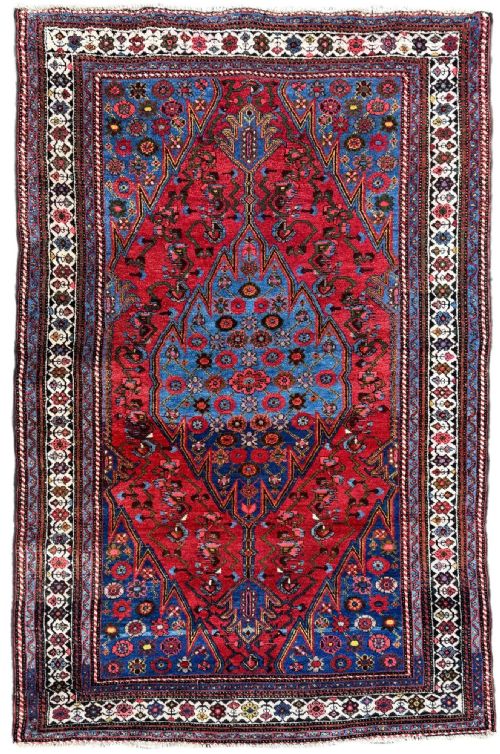
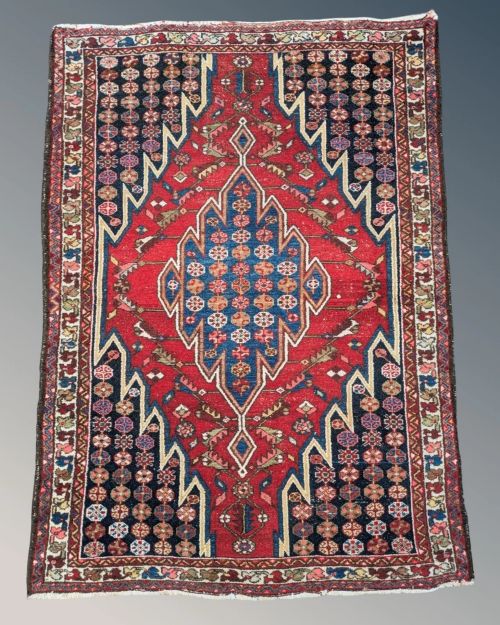
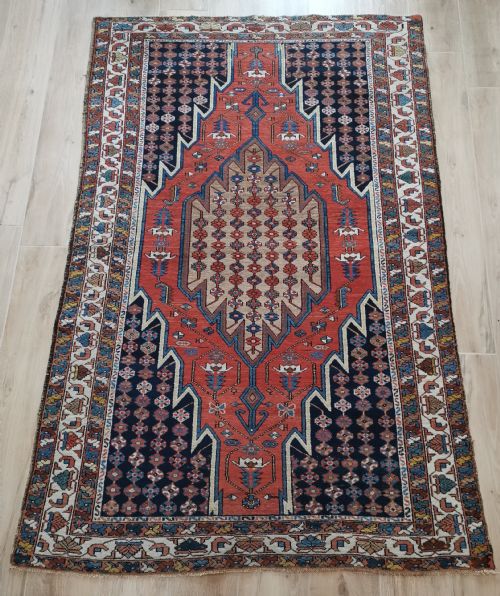
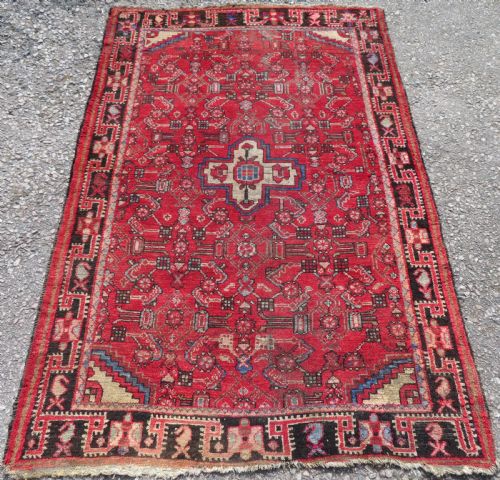
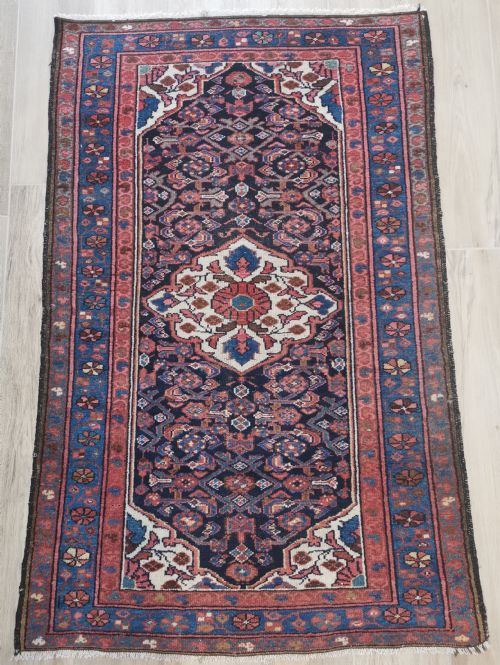
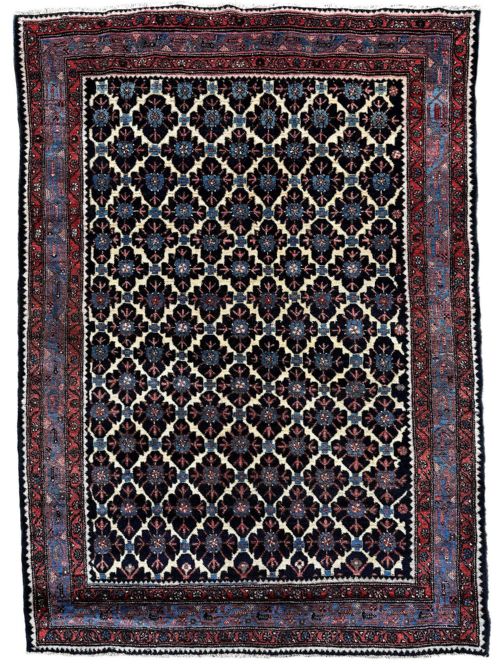
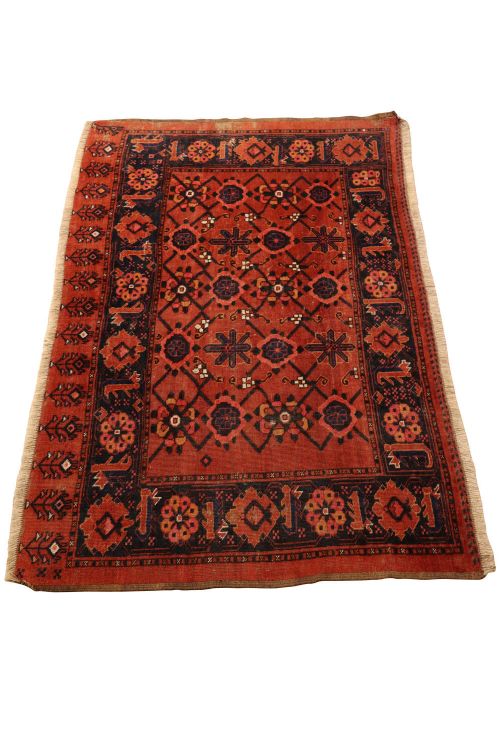


Vintage Red Hamadan Carpet
A vintage red hamadan carpet brings earthy village character and resilient wool structure into a hallway or living space.
Vintage Red Hamadan Carpet
A vintage red hamadan carpet originates from the vast network of weaving villages across the Hamadan region of west Persia. These pieces appear in forms ranging from compact scatter sizes and room-sized formats to long narrow runners suited for hallways.
The selections span production dates from the late nineteenth century through the mid-twentieth century. Stylistic labels include Persian tribal, traditional Persian, and specific village origins such as Mazlaghan, Malayer, and Borodjert.
Buyers look for these floor coverings to anchor a room with deep madder reds, indigo blues, and natural geometric or floral lattices. Each piece reflects the independent design choices of village weavers working in domestic or small workshop settings.
Materials and construction
These floor coverings are constructed using hand-knotted techniques on sturdy cotton foundations. The pile is spun from local sheep wool, providing a heavy texture that absorbs natural dyes with rich depth.
Weavers utilised traditional upright looms in domestic environments, resulting in durable structures designed to withstand decades of heavy foot traffic. Edge finishes and wool quality vary slightly by specific village provenance across the wider Hamadan district.
Village weavers occasionally incorporated tiny stray tufts of brightly coloured wool into dark borders, leaving a cheerful signature of the hand-making process.
Distinctions in quality
Quality in these village carpets rests upon the tightness of the hand-knotting and the clarity of the wool pile. Denser knots allow intricate geometric and medallion patterns to maintain sharp definition across the surface.
The integrity of the cotton foundation and the uniformity of the wool determine how well a runner or carpet ages under heavy use. Finer village examples from Malayer or Borodjert show greater refinement in drawing and dye saturation.
The Vintage Red Hamadan Carpet Glossary
- Hamadan
- A major trading hub and surrounding weaving region in west Persia. Hundreds of distinct villages bring their carpets to this market for distribution.
- Runner
- A long, narrow carpet format designed specifically for corridors, hallways, and staircases. These pieces measure significantly longer than they are wide.
- Kelleh
- A large rectangular carpet format traditionally woven in Persian workshops and village homes. Proportions are typically longer than a standard room-sized rug.
- Mazlaghan
- A specific village style associated with the Hamadan region known for distinct graphic designs. These pieces often feature contrasting central medallions against deep red and blue fields.
- Hand-knotted
- A method where individual lengths of wool yarn are tied by hand onto a warp foundation. This labour-intensive process produces a durable pile that machine methods cannot replicate.
Vintage Red Hamadan Carpet: Frequently Asked Questions
Where were vintage red hamadan carpets made?
These floor coverings were woven in domestic households and small village workshops across the Hamadan province in western Persia. Weavers utilised locally sourced wool and traditional regional patterns passed down through generations.
Individual pieces often bear the specific design characteristics of smaller satellite villages such as Malayer, Mazlaghan, or Borodjert within the wider district.
How do I choose the right size runner?
Measure your hallway or corridor carefully, leaving a border of exposed flooring around the perimeter of the rug. Long narrow formats appear frequently in this category to accommodate traditional passageways.
Check the exact length and width specifications in each listing to ensure doors can clear the pile thickness when opened.
How do I care for a wool village rug?
Vacuum the pile regularly with standard suction attachment without using a rotating brush roll to protect the hand-knotted foundation. Address spills immediately by blotting with a clean cloth rather than rubbing the wool fibres.
Professional cleaning suited for antique vegetable-dyed wool should be utilised periodically to preserve the integrity of the natural materials.
How do I date a Hamadan carpet?
Dating relies on examining the wear patterns, the characteristics of the wool, and the chemistry of the natural dyes. Pieces in this selection span from the late nineteenth century through the 1940s.
Structural details such as hand-spun wool yarns and regional village design motifs help place a carpet within a specific decade.