


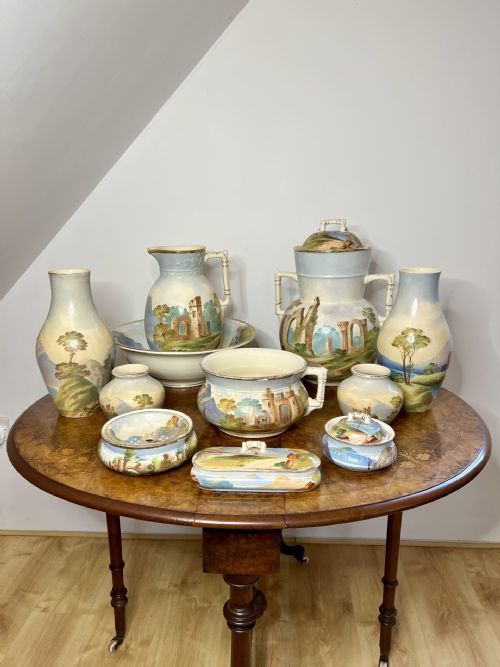


Vintage Pottery Stand
These vintage pottery stand pieces combine utilitarian function with robust ceramic artistry, offering functional display surfaces for plants, desk accessories, and cheese service.
Vintage Pottery Stand
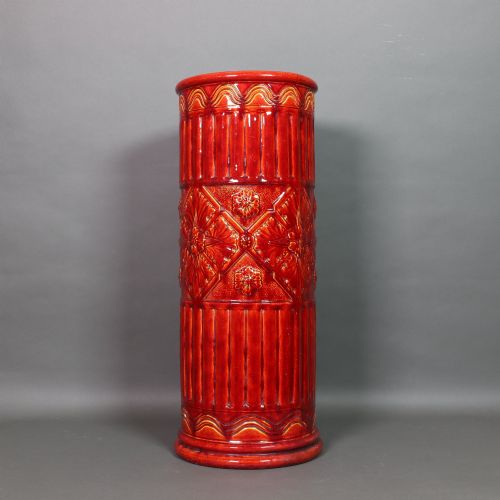
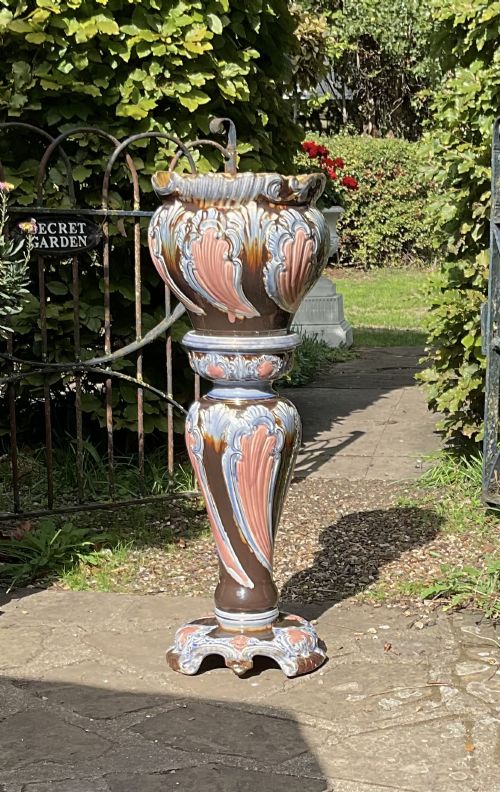
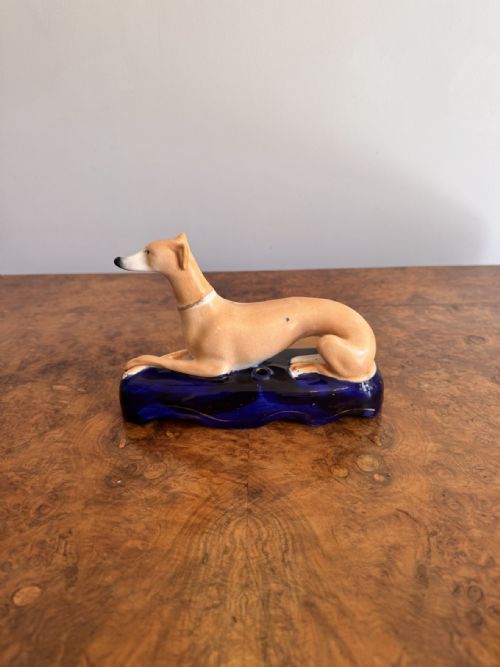
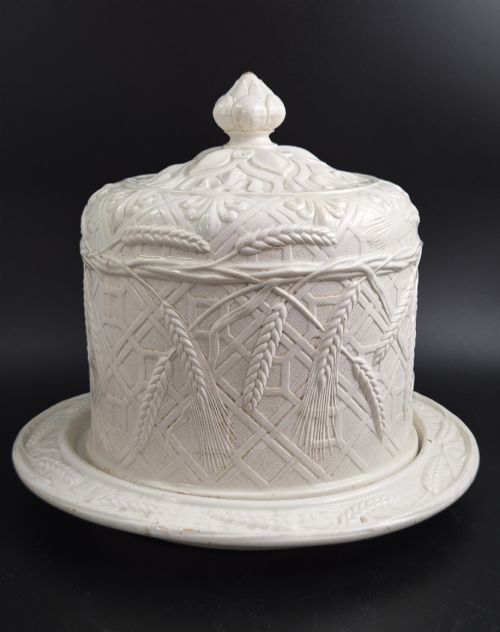
A vintage pottery stand spans a diverse group of ceramic and earthenware items designed to elevate items off surfaces or house items vertically, including jardinieres with matching pedestals, stick stands, inkstands, and cheese domes.
The selections encountered most frequently on this page belong to the Victorian era and the later nineteenth and early twentieth centuries, reflecting the period's preference for ornate display forms in domestic interiors.
Makers utilised various regional styles ranging from British Victorian Staffordshire and ironstone to continental majolica, faience, and Dutch Delft, incorporating aesthetic movement and Art Nouveau ornamentation.
Materials and construction
Potters employed durable ceramic bodies such as ironstone, saltglaze stoneware, and earthenware, shaping them into heavy-duty vessels capable of supporting weight and withstanding moisture from plants or daily utility.
Glazing techniques defined the surface finishes, utilising colourful enamels in majolica wares, bright cobalt blues in Delft pieces, and crisp white glazes for ironstone cheese domes and wash sets.
Vintage Pottery Stand Retail Price Guide 2026
Typical asking prices for vintage pottery stand among the pieces listed under this phrase on Sellingantiques today, from the lower quarter to the upper quarter. They describe what is for sale here now, not the wider market.
Assessing quality
Distinctions in quality rest upon the crispness of the moulded details, the evenness of the glaze application, and whether multi-part sets, such as a jardiniere and its matching pedestal, retain their original pairing.
Pieces bearing distinct attribution to known potteries or displaying ambitious artistic styles like Art Nouveau and Aesthetic Movement demonstrate superior craftsmanship compared to plain utility items.
Royal Doulton·Burmantofts Faience·Julius Dressler·Enoch Wood and Sons·Masons Ironstone
The Vintage Pottery Stand Glossary
- Majolica
- A type of earthenware coated with an opaque tin-glaze and painted with brightly coloured metal oxide pigments. This technique created vibrant, glossy finishes popular on nineteenth-century planters and stands.
- Ironstone
- A dense, durable type of heavy earthenware patented in the nineteenth century to imitate Chinese porcelain. It frequently formed domestic utility pieces such as cheese domes, wash sets, and table stands.
- Faience
- European tin-glazed earthenware decorated with painted designs, often associated with continental and British art pottery workshops of the nineteenth century.
- Inkstand
- A desktop stand incorporating one or more inkwells along with pen holders or sanders. These ceramic and porcelain desk accessories combined practical function with decorative forms.
Vintage Pottery Stand: Frequently Asked Questions
What was a jardiniere and stand used for?
A jardiniere and stand served as a substantial indoor plant holder designed to display large potted palms and ferns in nineteenth-century drawing rooms.
The elevated combination protected floor surfaces from moisture while adding an architectural decorative element to domestic interiors.
How do I distinguish ironstone from earthenware?
Ironstone is a notably heavier, denser ceramic body developed to resist chipping and wear much better than standard porous earthenware.
It rings slightly more when struck and displays a brighter, more opaque white glaze beneath decorative patterns.
Where were stick stands placed in a home?
Stick stands found their place in nineteenth-century hallways and entrance lobbies to hold walking sticks, umbrellas, and parasols.
Their heavy stoneware or glazed earthenware construction provided the necessary stability and waterproof interior basins for wet items.