





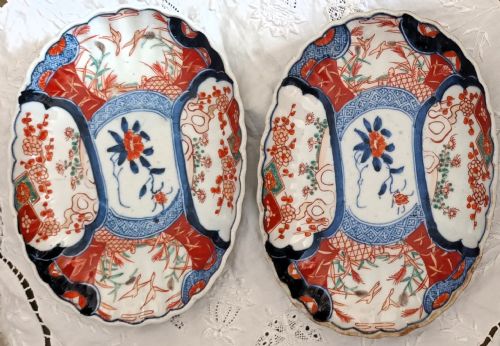


Vintage Pottery Charger
A vintage pottery charger brings scale and history to a wall or table, offering broad decorative surfaces painted with tin glaze, transfer prints, or hand-applied enamels.
Vintage Pottery Charger
A vintage pottery charger is a large decorative plate or serving dish designed primarily for display rather than daily dining. When searching for a vintage pottery charger, collectors encounter significant variations in scale, ranging from standard cabinet plates up to sweeping forty-centimetre earthenware platters.
The pieces appearing here span earthenware, porcelain, and ironstone, originating from British, Dutch, French, Italian, and Japanese makers. Examples frequently date from the seventeenth century through to the Art Deco period, incorporating styles from Dutch Baroque to Moorish and Japanese Meiji designs.
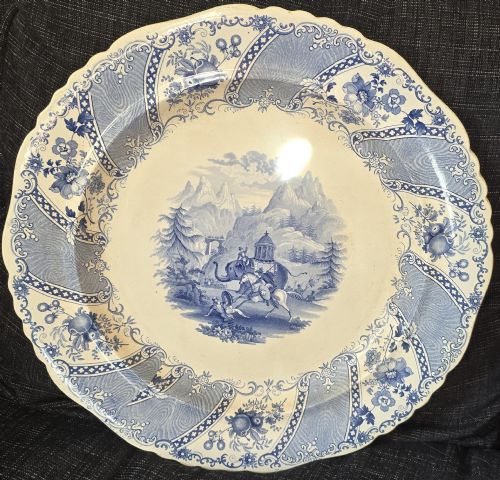
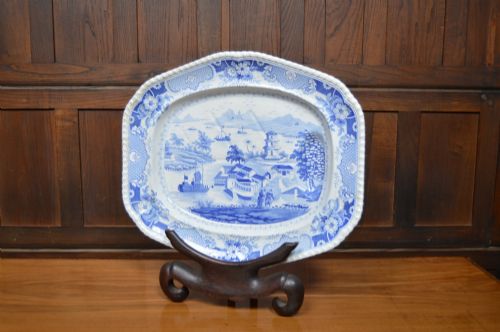
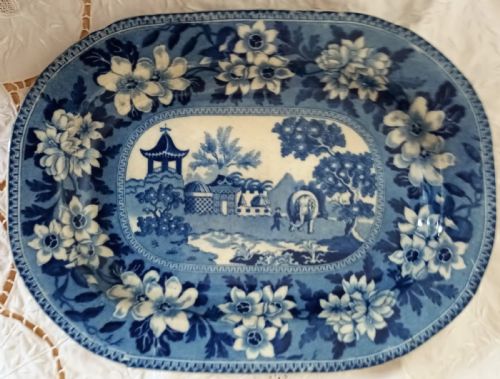
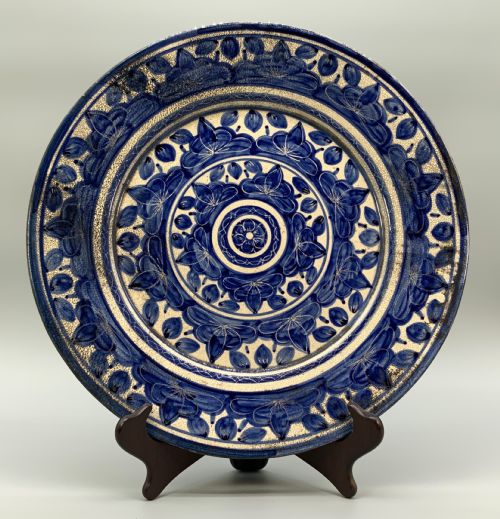
Tin-glazed earthenware and transfer-printed earthenware dominate the selection, often taking the form of wall chargers, deep serving platters, or shallow bowls. Buyers select these items to anchor a wall display or introduce historic patterns into a room.
Materials and production methods
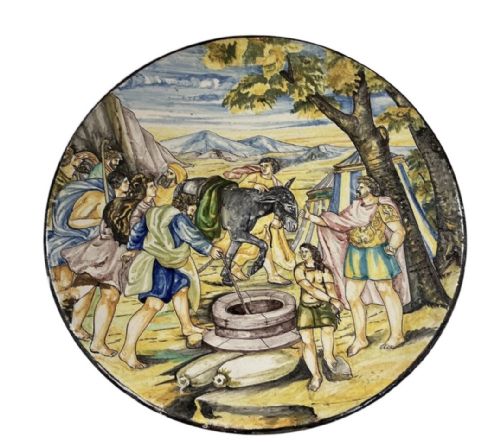
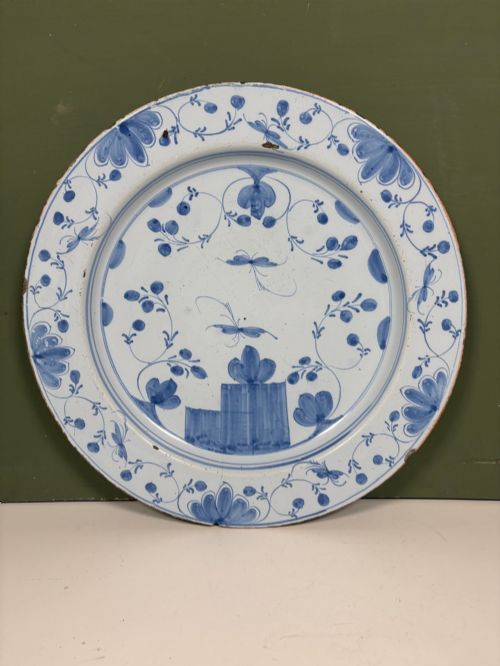
Potters formed these large plates from earthenware or ironstone bodies, often applying an opaque tin glaze to create a smooth white ground for painting. Cobalt oxide and polychrome enamels were then brushed directly onto the raw glaze before firing, or applied over a fired glaze in subsequent stages.
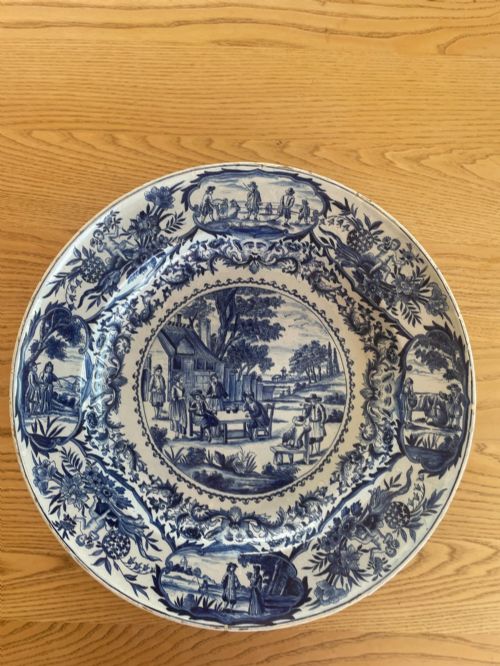
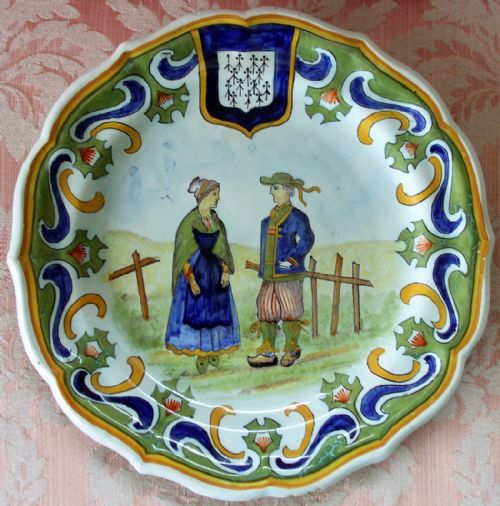
Transfer-printed pieces relied on copperplate engravings to transfer monochrome blue or polychrome designs onto the ceramic body prior to glazing and firing. Later twentieth-century makers utilised tubelining techniques, squeezing raised clay lines onto the surface to contain pools of coloured glaze.
Japanese and European porcelain alternatives relied on hard-paste clays fired at high temperatures, decorated with underglaze blue and overenamel highlights. These diverse techniques allowed makers to produce wide, stable canvases capable of supporting intricate pictorial narratives.
Vintage Pottery Charger Retail Price Guide 2026
Typical asking prices for vintage pottery charger among the pieces listed under this phrase on Sellingantiques today, from the lower quarter to the upper quarter. They describe what is for sale here now, not the wider market.
Several early chargers depict surprisingly fierce tigers and exotic birds painted by artists who had only ever seen domestic cats.
Factors influencing quality
Quality in these large ceramic pieces rests primarily on the crispness of the painting or transfer print and the stability of the broad clay body during firing. Superior examples display confident brushwork, rich cobalt or polychrome pigments, and minimal warping across the wide expanse of the well.
The complexity and ambition of the design separate standard production wares from masterworks, particularly in hand-painted tin-glazed chargers or tubelined Art Deco pieces. Precision in the glaze surface, depth of colour, and clarity of maker stamps or signatures further define the upper tier of the range.
William Smith And Co·John Rogers And Son·Charlotte Rhead·Clarice Cliff·Moorcroft England
The Vintage Pottery Charger Glossary
- Charger
- A large decorative plate or platter traditionally used for display or ceremonial service rather than everyday dining. These wide vessels provide an expansive canvas for painted or printed imagery.
- Tin-Glaze
- An opaque white ceramic glaze produced by adding tin oxide to a lead glaze base. This technique forms a smooth, absorbent surface ideal for hand-painted cobalt and polychrome decoration.
- Transferware
- Pottery decorated by transferring a printed design from a copper engraving onto the ceramic surface using tissue paper. This process allowed complex pictorial scenes to be replicated consistently.
- Tubelining
- A decorative technique where liquid clay is squeezed through a small nozzle onto a flat ceramic body to form raised outlines. These clay barriers separate pools of coloured glaze during firing.
- Polychrome
- Decoration employing multiple distinct colours painted onto the ceramic body or glaze. It contrasts with monochrome blue and white or manganese styles found on earlier earthenware.
Vintage Pottery Charger: Frequently Asked Questions
How were pottery chargers used?
Historic chargers served grand dining tables for ceremonial courses or sat upright on sideboards and buffets to display wealth and artistic taste. Their substantial diameter made them less suited for passing around a table, leading owners to mount them on walls or display them on plate rails.
Today, buyers continue this tradition by hanging large chargers as wall art or setting them on deep ledges. They function well as focal points in traditional or eclectic interiors, bringing historic pattern and generous scale to an empty wall.
How do I date a delft charger?
Dating tin-glazed earthenware involves examining the thickness of the body, the characteristics of the glaze, and the composition of the foot ring. Earlier seventeenth and eighteenth-century examples often display irregular edges, glaze pooling on the underside, and manganese discoloration.
Later nineteenth-century and revival pieces typically feature harder ceramic bodies, brighter chemical pigments, and more uniform machinery-pressed shapes. Comparing the painting style and palette to established historic examples helps narrow down the decade of production.
Can antique chargers be hung on walls?
Many antique chargers feature original foot rings or pierced bases specifically designed for suspension with wire or cord hangers. However, the weight of a large earthenware or ironstone plate requires a secure, properly tensioned spring hanger that distributes pressure evenly around the rim.
When hanging heavier pieces, attaching fixings directly into wall studs ensures safety and stability over time. Regular checks of the hanging wire prevent accidental slips, preserving both the ceramic and the surrounding space.
What is the difference between earthenware and ironstone?
Earthenware is a porous, lower-fired pottery body that requires a complete glaze coating to become waterproof. It tends to be thicker and heavier, forming the traditional base for historic tin-glazed chargers and delftware.
Ironstone is a denser, harder-refined ceramic developed in the nineteenth century to mimic porcelain durability. It results in a heavier, sturdier plate that resists chipping better than standard earthenware while accepting transfer-printed decoration readily.