




Vintage Porcelain Trinket Box
A vintage porcelain trinket box sits on a dressing table to hold small valuables, offering both practical storage and period charm.
Vintage Porcelain Trinket Box
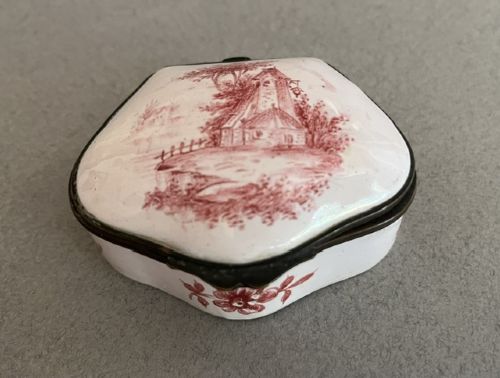
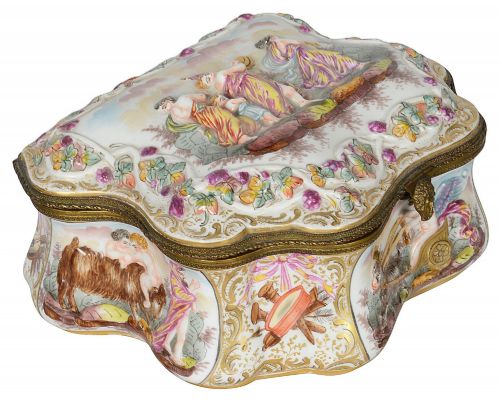
A vintage porcelain trinket box covers a range of small lidded containers designed for jewellery and dressing table use. Buyers searching for a vintage porcelain trinket box encounter various forms including powder boxes, jewellery caskets, and novelty jars.
The pieces on this page span the nineteenth century through the Art Deco era of nineteen thirty. Common styles include Rococo Revival, Edwardian, and Chinoiserie alongside geometric twentieth-century designs.
Origins include French, German, Austrian, and Italian makers. Figures such as flapper girls and jesters frequently appear on the lids of powder bowls from the nineteen thirties.
Materials and construction
Makers shaped these items from porcelain, ceramic, and glaze, often incorporating enamel for surface colour. Metal mounts in brass or gilt brass secure the hinged lids and edges of many boxes.
Gold leaf and gilt provide metallic highlights on nineteenth-century caskets and later decorative bowls. Hand-painted motifs and moulded figural elements require skilled firing and glazing techniques.
Object types span powder bowls, jewellery caskets, vanity sets, and figural jars representing flapper girls, pierrots, and jesters.
Evaluating quality and execution
The integration of metal mounts, including brass hinges and gilt brass frames, affects the overall solidity of the box. Heavy, well-fitted lids indicate careful manufacturing standards in both nineteenth-century and nineteen-thirty pieces.
Meissen·Capodimonte·Limoges
The Vintage Porcelain Trinket Box Glossary
- Porcelain
- A white vitrified ceramic material fired at high temperatures to achieve a hard, non-porous body. It forms the primary substrate for these small boxes and jars.
- Gilt
- A thin layer of gold applied to metal or ceramic surfaces to create decorative metallic accents. This finish appears frequently on nineteenth-century and Edwardian mounts.
- Half doll
- A ceramic upper torso without legs, commonly used as a lid on powder boxes and trinket jars during the Art Deco period. These figures often depict flapper girls or pierrots.
- Casket
- A small decorative box, usually hinged, designed for holding jewellery or precious keepsakes. Nineteenth-century examples often utilise heavy porcelain and brass fittings.
Vintage Porcelain Trinket Box: Frequently Asked Questions
What is a porcelain powder box?
A porcelain powder box is a lidded container originally designed to hold loose cosmetic face powder on a dressing table.
These pieces often double as trinket or jewellery boxes today, featuring decorative lids shaped as human figures or animals.
How do I date a porcelain box?
Dating relies on stylistic clues, such as the geometric lines of Art Deco pieces from nineteen thirty compared to the ornate curves of nineteenth-century Rococo Revival styles.
Maker marks, where present on the base, provide further confirmation of the period of manufacture.
What are half doll boxes?
Half doll boxes are containers where the lid is formed by a ceramic upper body of a person, attached to a fabric skirt or porcelain bowl.
They gained popularity in the early twentieth century, particularly during the Art Deco era.
How do I care for antique porcelain?
Antique porcelain requires gentle cleaning with a soft, dry cloth to remove dust without damaging painted surfaces or gilt details.
Avoid submerging pieces that combine porcelain with brass mounts or delicate enamel work in water.