
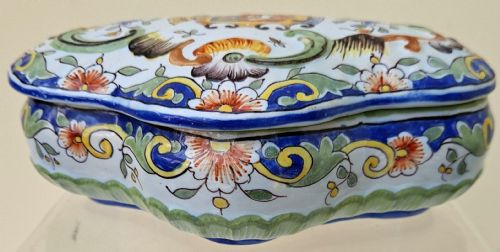


Vintage Ceramic Powder Box
A vintage ceramic powder box brings dressing table elegance into focus, offering porcelain and earthenware forms shaped by Art Deco design.
Vintage Ceramic Powder Box
A vintage ceramic powder box serves as a vanity accessory or dressing table container for cosmetics, most frequently encountered in Art Deco styles from nineteen thirty. These pieces appear as powder bowls, jars, and trinket boxes, often paired with figural lids depicting half doll flapper girls, jesters, or pierrots.
Origins span France, Germany, and Austria, with notable examples originating from Limoges, Desvres, and Rouen. Alongside figural designs, the selection includes Chinoiserie motifs, Neoclassical influences, and French Faience traditions dating back to nineteen ten and nineteen twenty.
How they were made
Manufacturing methods combined traditional ceramic casting with hand-painted artistry, particularly evident in German and French figurative dressing table sets. The application of coloured glazes defined the aesthetic of the period, securing the pigment beneath a durable glossy finish.
Listings feature porcelain and ceramic pieces primarily from the Art Deco era, alongside earlier examples from nineteen ten.
What varies in quality
The sophistication of the glaze and the integration of gilt or gold leaf shape the visual depth of the object. Weight, porcelain translucency, and the clean fit between box and cover mark the standard of the maker's workshop.
Meissen Porcelain·Wedgwood·Limoges
The Vintage Ceramic Powder Box Glossary
- Half doll
- A porcelain upper figure without legs, designed originally to sit atop whisk brooms, tea cosies, or powder box covers. They became immensely popular during the Art Deco period.
- Tin glaze
- An opaque white glaze made by adding tin oxide to lead glaze, providing a smooth surface for painted decoration. It is characteristic of faience traditions.
- Chinoiserie
- European artistic style reflecting Chinese motifs and techniques, often seen on porcelain boxes. It interprets Eastern aesthetics through Western manufacturing methods.
- Faience
- Tin-glazed earthenware produced in France and other European regions. The technique allows for vibrant painted designs fired directly onto the opaque glaze.
- Gilt
- A thin layer of gold applied to the ceramic surface or highlights. It provides metallic contrast against painted enamel and coloured glazes.
Vintage Ceramic Powder Box: Frequently Asked Questions
What were vintage powder boxes used for?
These containers held loose face powder on dressing tables before modern compacts became common. Women used powder puffs to apply cosmetic powder kept inside the decorative bowls.
They also served as general vanity accessories for pins, trinkets, and small personal items. Their decorative lids kept the dressing table tidy while displaying artistic designs.
How do I identify an Art Deco powder box?
Art Deco pieces typically date from around nineteen thirty and feature characteristic geometric lines or stylised figural motifs. Look for half doll flapper girls, pierrots, and bold colour palettes.
French, German, and Austrian potteries dominated this era, often marking their wares with factory stamps on the base. The sculptural form of the lid provides the strongest stylistic clue.
Are these boxes porcelain or earthenware?
The pieces utilise both porcelain and earthenware depending on the factory and period of manufacture. Porcelain offers a whiter, harder, and sometimes translucent body.
Earthenware pieces often feature tin glaze or traditional ceramic glazes. Both materials provided suitable surfaces for the enamels and gilt details applied by decorators.
How should I display a powder box?
Display these items on dressing tables, mantelpieces, or enclosed glass cabinets where their lids can be appreciated. Keeping them away from direct sunlight protects any hand-painted enamel colours.
Handle the covers with care when removing them from the base, as the junction between ceramic sections can be delicate. Placing them on stable flat surfaces ensures safe exhibition.