
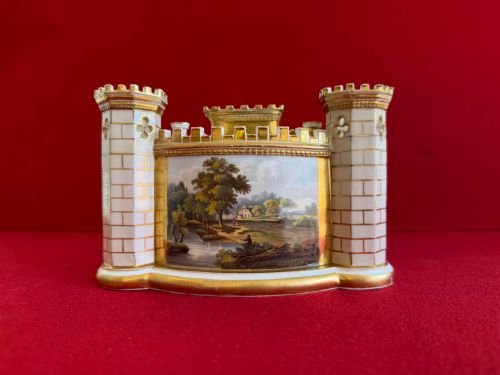


Vintage Porcelain Mantel Ornaments
These vintage porcelain mantel ornaments bring character to a fireplace, spanning Victorian Staffordshire dogs to eighteenth-century Meissen figures.
Vintage Porcelain Mantel Ornaments
Vintage porcelain mantel ornaments comprise decorative figurines, pairs of animals, and figural groups designed to sit upon a fireplace shelf. The selection ranges from eighteenth-century porcelain and mid-century cockatoos to Victorian Staffordshire dogs and greyhounds.
Buyers encounter distinct regional traditions within this group, notably English earthenware spaniels and continental porcelain figures adorned with bocage. Animal pairs and single character figures form the bulk of the domestic and continental output seen here.
The objects bridge multiple centuries of ceramic production, taking in Georgian models, Victorian pairs, and later mid-century interpretations. Each piece serves primarily as a decorative accent rather than a functional vessel.
How they were made
Makers shaped these ornaments using moulded ceramic and porcelain bodies, frequently applying hand-painted glazes, enamel pigments, and gold leaf highlights. Many pieces combine a glazed ceramic base with intricate details like applied floral bocage or copper lustre finishes.
Firing techniques varied from early soft-paste porcelain to sturdier Victorian earthenware bodies. Artisans finished the surfaces with clear or coloured glazes, often incorporating gilt accents to catch the mantelpiece light.
Staffordshire dogs kept watch over Victorian hearths, quietly judging the room while waiting for their owners to return from the park.
What varies in quality
Quality rests in the crispness of the modelling and the precision of the hand-painting upon the porcelain or earthenware surface. Finer examples display detailed facial expressions and carefully applied gilding rather than heavy, uniform brushwork.
The distinction between standard production runs and superior pieces also lies in the delicacy of secondary elements, such as applied foliage or bocage background work. Heavier, simpler castings sit at the sturdier end of the spectrum, whilst detailed figurines represent more ambitious workshop output.
Meissen·Royal Dux·Derby·Royal Worcester·Volkstedt Triebner, Ens & Eckert·T.J Jones·Royal Doulton·Beswick
The Vintage Porcelain Mantel Ornaments Glossary
- Bocage
- Foliate background ornament applied behind ceramic figures, common in eighteenth and nineteenth-century pieces. It usually depicts stylised leaves and branches in high relief.
- Bisque
- Unglazed ceramic body fired once to a matte, porous finish. It reveals the pure texture of the clay or porcelain without a shiny glaze.
- Copper lustre
- Metallic glaze technique producing a warm, reflective copper sheen on earthenware pottery. Staffordshire potters frequently used this finish for dog ornaments.
- Gilt
- Application of gold leaf or gold paint to highlight details on ceramic surfaces. It catches the firelight when placed upon a mantelpiece.
Vintage Porcelain Mantel Ornaments: Frequently Asked Questions
How do I clean antique porcelain ornaments?
Dust these delicate ceramic and porcelain objects gently with a soft, dry brush. Avoid using water or chemical cleaners, especially on pieces with gilt highlights or enamel paint.
Moisture can seep into unglazed areas or older earthenware bodies, risking damage to the fragile structure. Keep them away from direct heat sources like active fires.
Are Staffordshire dogs always sold in pairs?
Staffordshire mantel dogs typically appear as matched pairs intended to sit facing each other at either end of a fireplace. Historically, manufacturers produced them together to balance the mantel display.
Single dogs do exist due to separation over the decades, but matched pairs remain the standard format for these nineteenth-century ornaments.
What is ceramic bisque?
Bisque refers to porcelain or earthenware that has undergone an initial firing without a protective glaze layer. This leaves the surface with a smooth, matte texture resembling marble.
Figurines made this way emphasise the fine details of the modelling over shiny surface reflections.
How do I date a porcelain figure?
Dating relies on stylistic clues, the type of ceramic body, and underlying manufacturing techniques. Eighteenth-century pieces often feature soft-paste porcelain and naturalistic forms, whilst Victorian examples favour heavier earthenware.
Maker marks on the underside, where present, provide a precise guide to the period of production.