


Vintage Porcelain Coffee Cup
These vintage porcelain coffee cup pieces offer delicate forms and hand-painted detail, prized by collectors for their intricate craftsmanship.
Vintage Porcelain Coffee Cup
A vintage porcelain coffee cup selection brings together diverse drinking vessels intended for after-dinner service, ranging from single cabinet cups to complete sets. Buyers searching for a vintage porcelain coffee cup will encounter demitasse cups, cabinet mugs, and matched saucers spanning the nineteenth and twentieth centuries. The pieces originate from prominent English and European makers, demonstrating styles from the Edwardian era to Art Deco and neoclassical revivals.
Most examples found in the current selection include saucer pairings, sometimes accompanied by silver mounts or spoons as part of larger coffee services. Forms vary from simple glazed white porcelain to heavily gilt and hand-painted vessels designed for display as much as for use. These items reflect the changing domestic habits and aesthetic preferences of Victorian, Edwardian, and later households.
Materials and production
Makers shaped these vessels using hard-paste porcelain and bone china, firing the clay at high temperatures to achieve a durable, dense body. Skilled decorators then applied enamel colours and gold leaf highlights by hand, often fixing the metallic details through secondary kiln firings.
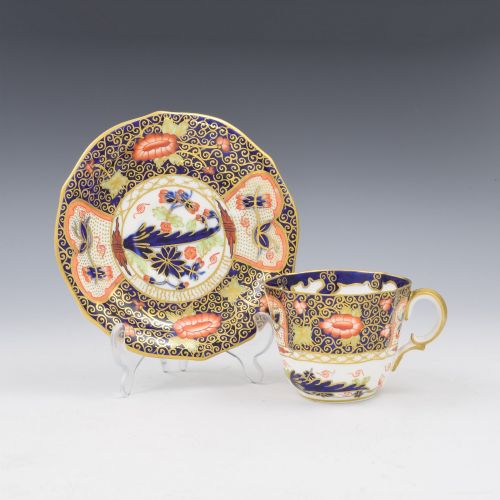
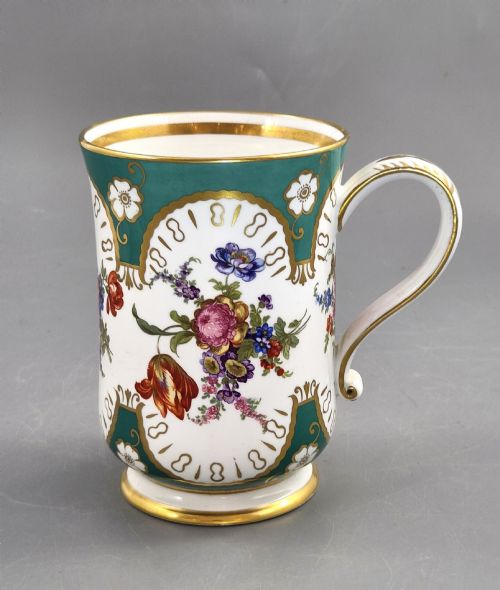
Surface ornamentation frequently incorporates hand-painted motifs, rich green or coloured grounds, and delicate gold gilt framing. Certain items feature intricate silver mountings fitted securely around the ceramic body to form functional handles or decorative rims.
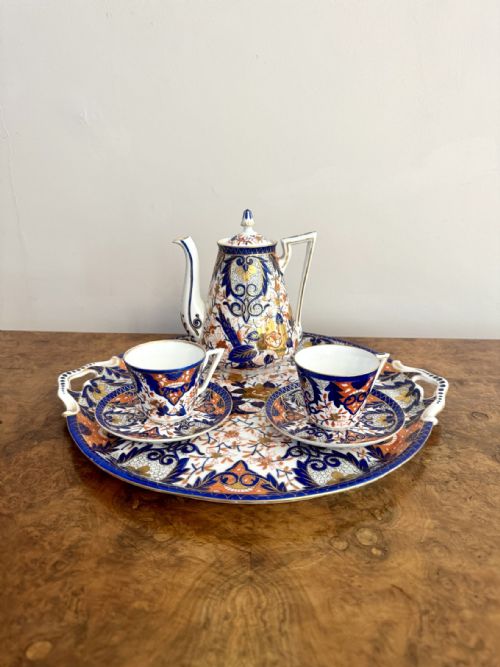
The documented forms range from single cabinet mugs and demitasse cups to large multi-person coffee services and cased sets.
Evaluating the standard
Quality rests upon the precision of the hand-painted brushwork and the preservation of the delicate gold leaf or gilt detailing across the surface. Superior vessels display crisp definition in their enamel pigments and flawless application of the metallic highlights without rubbing or fading.
The fineness of the porcelain body and the complexity of the mould, particularly in shaped cabinet cups and French Rococo Revival forms, indicate the skill of the original workshop. Intact sets with matching saucers and unblemished glaze finishes demonstrate careful preservation over generations.
Royal Crown Derby·Royal Worcester·Coalport·KPM Berlin·Hutschenreuther
The Vintage Porcelain Coffee Cup Glossary
- Demitasse
- A small cup used for serving black coffee or espresso. These vessels typically hold less liquid than a standard tea cup and frequently pair with matching saucers.
- Hard-Paste Porcelain
- A ceramic material composed of kaolin and petuntse, fired at very high temperatures. This creates a dense, vitrified body that resists scratching and absorbs no moisture.
- Gold Leaf
- Very thin sheets of beaten gold applied to the ceramic surface for decoration. It provides a reflective metallic finish that catches the light.
- Imari
- A decorative style characterised by vibrant underglaze blue and iron-red overglaze highlights, often enriched with gold. It originates from Japanese export ware and inspired numerous European interpretations.
- Cabinet Cup
- A decorative ceramic vessel intended primarily for display within a cabinet rather than functional drinking. These pieces often feature elaborate hand-painted scenes and heavy gilding.
Vintage Porcelain Coffee Cup: Frequently Asked Questions
How do I use a vintage coffee cup safely?
These delicate ceramic vessels suit gentle daily use or formal display, provided you handle them with care. Wash each piece strictly by hand in warm water using mild soap rather than placing it in a dishwasher.
Avoid exposing antique porcelain to sudden temperature shifts, such as pouring boiling water directly into a freezing cold cup. Treating the gold gilt and hand-painted surfaces gently preserves the original enamel decoration for years to come.
What is the difference between a teacup and a demitasse?
A demitasse is specifically sized for strong black coffee or espresso, holding a much smaller volume than a standard teacup. They often appear alongside matching saucers as part of after-dinner coffee sets.
Teacups feature a wider, shallower bowl designed for milk and tea infusions. The smaller proportions of the demitasse help retain the heat of concentrated coffee brews.
How do I date an antique coffee cup?
Dating relies heavily upon the maker marks stamped or painted on the underside of the porcelain. Different factories employed specific backstamps, crown motifs, and numerals that changed across decades and reigns.
Stylistic indicators such as Edwardian gilt patterns, Victorian Imari palettes, or Art Deco geometric forms also help narrow down the period. Comparing the paste density and hand-painting style provides further clues to the manufacturing era.
Are these cups safe for hot drinks?
Most antique porcelain and bone china vessels withstand hot liquids perfectly well, having been fired at high temperatures during manufacture. However, pieces with delicate overglaze enamels or worn gold leaf require extra care to prevent further surface loss.
Inspect the glaze for any hairline cracks or deep crazing before use, as thermal shock can weaken compromised ceramic structures.